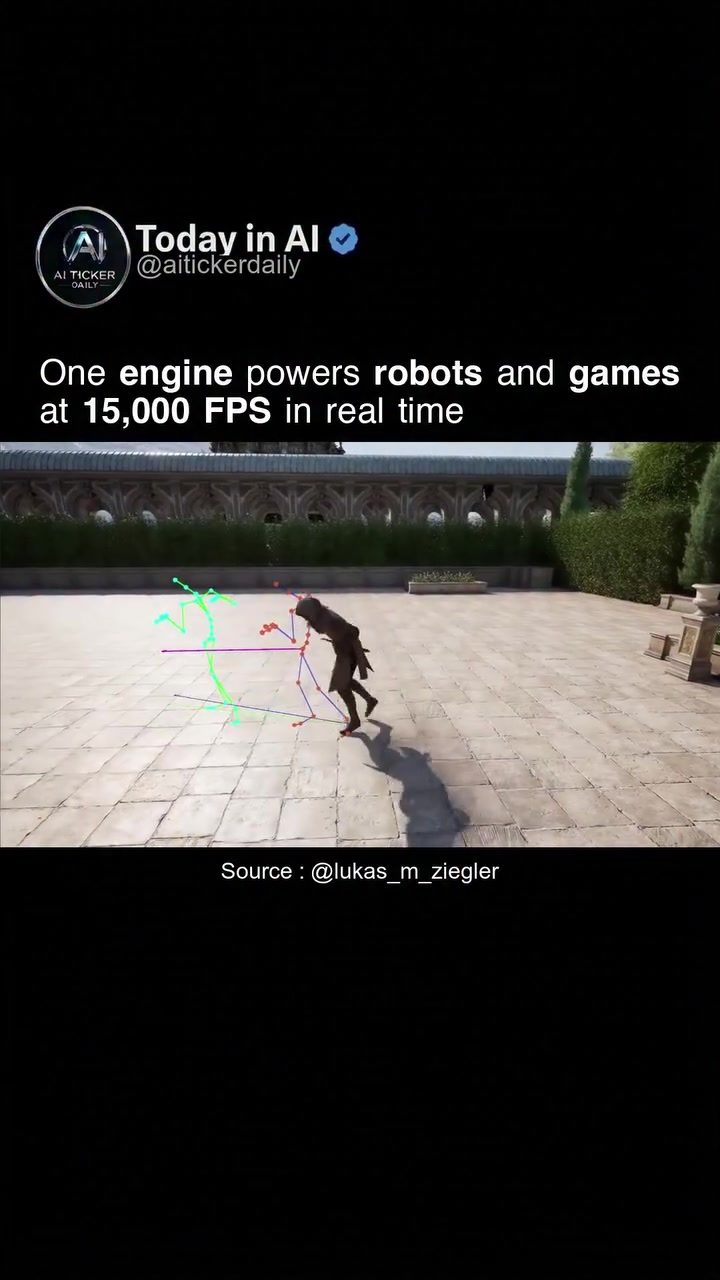
Robot Simulation at 15,000 FPS: The Future of Robotics and Gaming
The realm of robotics and gaming is on the brink of a revolutionary shift with the introduction of NVIDIA AI's MotionBricks. This real-time motion generator promises to redefine how we approach robot simulation and in-game character motion. The capability to run simulations at an astonishing 15,000 frames per second (FPS) is not just a technological marvel; it represents a significant leap in the synergy between simulation and reality.
Why This Matters
The integration of MotionBricks into NVIDIA GR00T for robot motion pipelines underscores a pivotal moment in technological advancement. The ability to simulate robotic actions and in-game motions at such high speeds means that the line between simulated training and real-world application is becoming increasingly blurred. This opens up new avenues for training robots in realistic scenarios, which can have profound implications for industries ranging from manufacturing to healthcare and beyond.
Main Discussion
The Power of Real-Time Simulation
Running simulations at 15,000 FPS is more than just a numerical achievement. It signifies a breakthrough in the responsiveness and accuracy of simulations. For robotics, this means that robots can be trained in highly realistic environments, mimicking real-world conditions with unparalleled precision. The speed at which simulations can be processed allows for more iterations in a shorter period, speeding up the development and testing phases.
Applications in Gaming
In the gaming industry, the ability to generate character motions in real-time at such high speeds can revolutionize gameplay. Characters can react to player actions more fluidly, creating a more immersive and dynamic gaming experience. This real-time motion generation also opens up new possibilities for game developers, allowing for more complex and realistic character interactions and environments.
Bridging Sim-to-Real Robot Training
One of the most exciting aspects of MotionBricks is its potential to bridge the gap between simulated training and real-world robot operations. By making the simulation process more efficient and accurate, developers can ensure that robots are better prepared for real-world scenarios. This translates to safer, more effective robots in various applications, from industrial automation to autonomous vehicles and beyond.
The Role of NVIDIA
NVIDIA's involvement in this technology is crucial. The company has been at the forefront of developing advanced AI and graphics processing technologies. The integration of MotionBricks into NVIDIA GR00T shows their commitment to pushing the boundaries of what is possible in both robotics and gaming. The collaboration between these fields, facilitated by NVIDIA, highlights the potential for cross-disciplinary innovations that can drive both industries forward.
Practical Tips
For Robotics Developers
- Leverage High-Speed Simulations: Incorporate high-speed simulations into your robot training regimens to improve responsiveness and accuracy.
- Utilize Real-Time Feedback: Use the real-time motion generation capabilities to get instant feedback on robot performance, allowing for quicker adjustments and improvements.
- Explore Cross-Disciplinary Innovations: Look into integrating gaming technologies into your robotics projects to enhance simulation and training environments.
For Game Developers
- Enhance Character Realism: Implement real-time motion generation to create more lifelike and responsive characters.
- Experiment with Fluid Interactions: Use the high-speed simulation capabilities to design more dynamic and immersive gameplay experiences.
- Collaborate with Robotics Experts: Explore how robotics simulations can be adapted for gaming, potentially leading to new and innovative game mechanics.
Important Takeaways
- Real-Time Motion Generation: The ability to run simulations at 15,000 FPS is a game-changer for both robotics and gaming.
- Cross-Industry Synergy: The integration of MotionBricks into NVIDIA GR00T highlights the potential for cross-disciplinary innovations.
- Enhanced Training and Realism: High-speed simulations can significantly improve the realism and effectiveness of robot training and in-game character interactions.
Conclusion
The introduction of NVIDIA AI's MotionBricks represents a significant leap in the fields of robotics and gaming. With the ability to run simulations at 15,000 FPS, the future of robot training and in-game character motion looks more realistic and responsive than ever before. By bridging the gap between simulation and reality, this technology opens up new possibilities for developers and users alike, ensuring that the next generation of robots and games will be more advanced and immersive.
Watch the Reel
Questions readers ask
How does NVIDIA's MotionBricks technology work with robotics simulations?
MotionBricks technology by NVIDIA enhances robotics simulations by generating and processing complex motions in real-time. It allows robots to mimic real-world scenarios with high accuracy, enabling more effective training and problem-solving.
What makes a 15,000 FPS simulation significant for gaming and robotics?
A 15,000 FPS simulation is unprecedented, providing ultra-high responsiveness and accuracy for both in-game characters and robotic systems. This speed allows for highly dynamic and immersive gameplay and enables robots to react to environments with remarkable precision.
How can NVIDIA's high FPS simulation benefit various industries?
High FPS simulations can greatly benefit industries that use robots, such as manufacturing, healthcare, and transportation, by enabling robots to be trained in a wide range of complex scenarios. This results in better prepared robots for real-world tasks, enhancing efficiency and safety.
What is the connection between NVIDIA's MotionBricks and gaming?
MotionBricks technology can significantly enhance gaming by allowing in-game characters to have lifelike and responsive movements. This makes gameplay more immersive, as characters can react to player inputs and environmental changes in a more realistic manner.
How does NVIDIA's GR00T integrate with MotionBricks for robotics?
NVIDIA GR00T is designed to provide a comprehensive motion pipeline for robots. When integrated with MotionBricks, GR00T allows robots to simulate a wide range of actions at ultra-high speeds, enhancing the effectiveness of real-time robotics training and development.
What kind of scenarios can robots be trained for with 15,000 FPS simulations?
With 15,000 FPS simulations, robots can be trained in a variety of complex and dynamic scenarios, from navigating intricate environments to performing precise tasks. This high level of simulation helps robots develop the skills needed for real-world applications with greater confidence and accuracy.
Related deep dives
Similar reads based on topic and creator.



Recent articles
Fresh deep dives from the latest Reels we unpacked.




Comments
Be the first to comment.