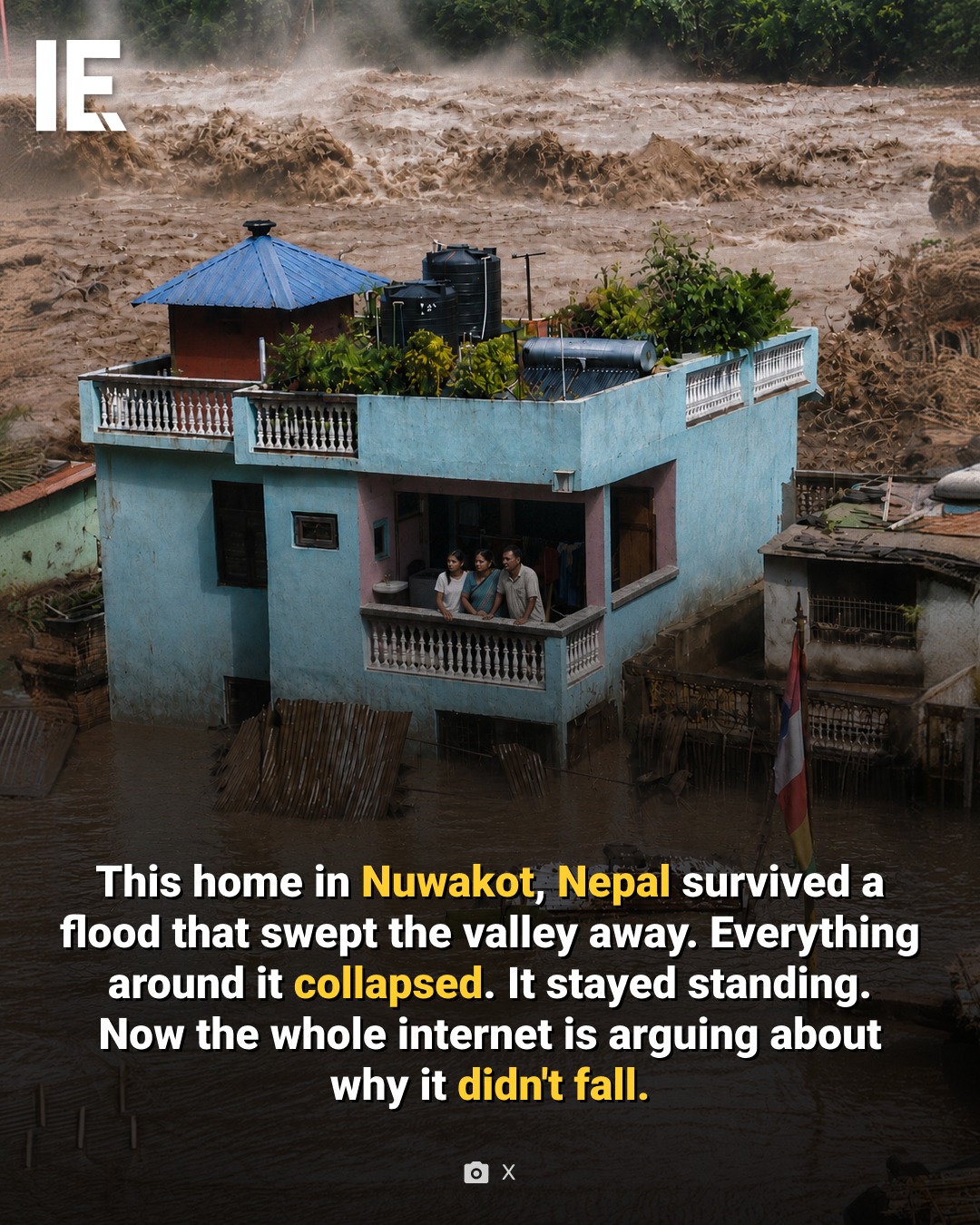
With relentless rainfall came catastrophic flooding in the Nuwakot Valley of Nepal. The lone survivor? A single house amid a crumbled landscape.
The House that Weathered the Flood
Not visible in the aftermath of the devastating flood except for the house with a blue paint that portrayed a scene of total destruction was a home standing tall amidst the debris. The house in Nuwakot, Nepal is resilient, enduring a deluge that swept everything else away in the Trilok Utsav area of Nuwakot. The house still stands intact, while everything around it flattened. While the floodwaters reached unprecedented heights and the base of the house got submerged up to the porch, but the house remained standing. The house is not just a house but a testament to the concept of well engineered structures that prioritize resilience and insurance. The home boasts structural features that make it distinctive from other houses that collapsed around it. Stands strong the house due to its sturdy foundation and reinforced walls. Everyone like structural engineers and the locals alike are debating the resilience of this house and the internet is abuzz with questions and answers, theories and assumptions as to what made the house a survivor.
The Building that Couldn’t be Broken
Resilience is not a term that comes to mind when thinking of Nepalese houses. These houses are surrounded by nature and surrounded by disasters trying to swallow a country that is still growing and developing. Hurricane floods and structural instability and poverty plague the country, but this blue house has become a beacon of hope for the Nepali people. This house is a testament to simple engineering that stood strong amidst the calamities and survived.
Elite Craftsmanship of the House
The house is an example of elite craftsmanship. The house was not built to be just a house, it has a history of protection against extreme weather conditions. Everything around it collapsed while it stood tall. Reports suggest that the house is built with materials that are resistant to floods like steel doors and strong windows and foundations that can withstand immense pressure. The house is a one-of-a-kind structure standing tall against the wrath of nature. The ground level of the building is a sturdy concrete slab which serves as the building's foundation. The floor of the ground level is covered with tiles and the walls are made of bricks. The roof of the building is a reinforced concrete slab. The roof is supported by reinforced concrete beams and columns. The house is equipped with a drainage system and an underground water tank. The house is equipped with electricity and running water. The house is built on a slope and has a large open space at the front of the building. The house is surrounded by a concrete wall which is topped with barbed wire. The front of the building has a large ornate wooden gate. There is a large courtyard inside the building. The house has two levels with a l-shaped structure. The house is built in a style that is unique to the region. The house is built with a front gable with a terra cotta tile roof. The front gable has a lintel over the window. The window is flanked by a pair of single paneled shutters.
The Internet Debate
The house has become a subject of debate on the internet with people trying to figure out why it didn't fall. Some people are attributing it to the fact that the house is a standalone building, but others believe that it could be because of the materials used in the house. Structural Engineers have also reached the consensus that the house could have been built with superior material compared to other houses in the area. The debate continues to rage on the internet as people try to figure out what made this house the sole survivor of the deluge.
The Floods Continue
The flood has brought one thing to the forefront, how we need to focus on some basic building infrastructure to help save lives. Natural disasters are inevitable, but we can build houses that can stand against disasters and this house in Nuwakot, Nepal is a testament to that. It serves as a reminder of the importance of using superior materials in horticulture. It serves as a reminder that we need to focus on basic infrastructure to prevent loss of life and property in case of disasters.
A Flood-Resilient House
For those interested in building a flood-resistant house like the one in Nuwakot, Nepal, the following guidelines can be helpful:
- Elevated Foundation: Ensure the home's foundation is elevated well above the base flood elevation (BFE) for the area. This can be achieved using fill, piers, posts, or columns.
- Design for Flood Forces: Account for flood forces during design, including impact loads from debris, hydrostatic pressure, and dynamic flood forces.
- Waterproof and Watertight: Use waterproof and watertight materials for the house's structure and finish materials. This includes waterproof siding, sealed windows, and watertight doors.
- Flood Vents: Install flood vents to allow water to flow through the house during a flood. This reduces hydrostatic forces on the house and allows it to remain stable amid the flood.
- Non- toxic Materials: Use non-toxic materials for the house, as water can carry toxic materials from the house into the floodplain.
- Flood Proofing: Implement Flood-proofing measures like flood retardant barriers.
Watch the Reel
Questions readers ask
What makes the house in Nuwakot, Nepal, so resilient against floods?
The house's resilience comes from its sturdy foundation, reinforced walls, and materials that are resistant to floods, such as steel doors and strong windows. It's built on a concrete slab foundation, with reinforced concrete beams and columns supporting the roof, and features a drainage system and an underground water tank. The house was built to withstand extreme weather conditions, which is why it remained standing while other structures in the area were destroyed.
How does the design of the house contribute to its ability to withstand floods?
The house's design includes a concrete slab foundation, reinforced concrete beams and columns, and a drainage system. It also has a large open space at the front, which could help to divert floodwaters away from the structure. Additionally, the house is built on a slope, which may have helped to reduce the impact of floodwaters.
Are there any other houses like this one in Nuwakot, Nepal?
The article does not mention any other houses like this one in Nuwakot, Nepal. This house is described as a one-of-a-kind structure that stands out from other houses in the area due to its unique design and resilient features.
What can other homeowners in flood-prone areas learn from this house?
Homeowners in flood-prone areas can learn about the importance of building with resilient materials and designing structures that can withstand extreme weather conditions. Specifically, using a sturdy foundation, reinforced walls, and incorporating features like drainage systems and underground water tanks can help to protect homes from flood damage.
Why is this house considered a beacon of hope for the Nepali people?
This house is considered a beacon of hope because it demonstrates the power of simple, resilient engineering in the face of natural disasters. In a region prone to devastating floods, this house's survival offers a tangible example of what can be achieved with thoughtful construction and highlights the importance of building structures that can withstand extreme weather conditions.
What role do the reinforced concrete beams and columns play in the house's resilience?
The reinforced concrete beams and columns provide structural support to the roof and help to distribute the weight of the building evenly. This makes the house more stable and less likely to collapse under the pressure of floodwaters. They also help to reinforce the walls, making them more resistant to the force of moving water.
Related deep dives
Similar reads based on topic and creator.




Recent articles
Fresh deep dives from the latest Reels we unpacked.




Comments
Be the first to comment.