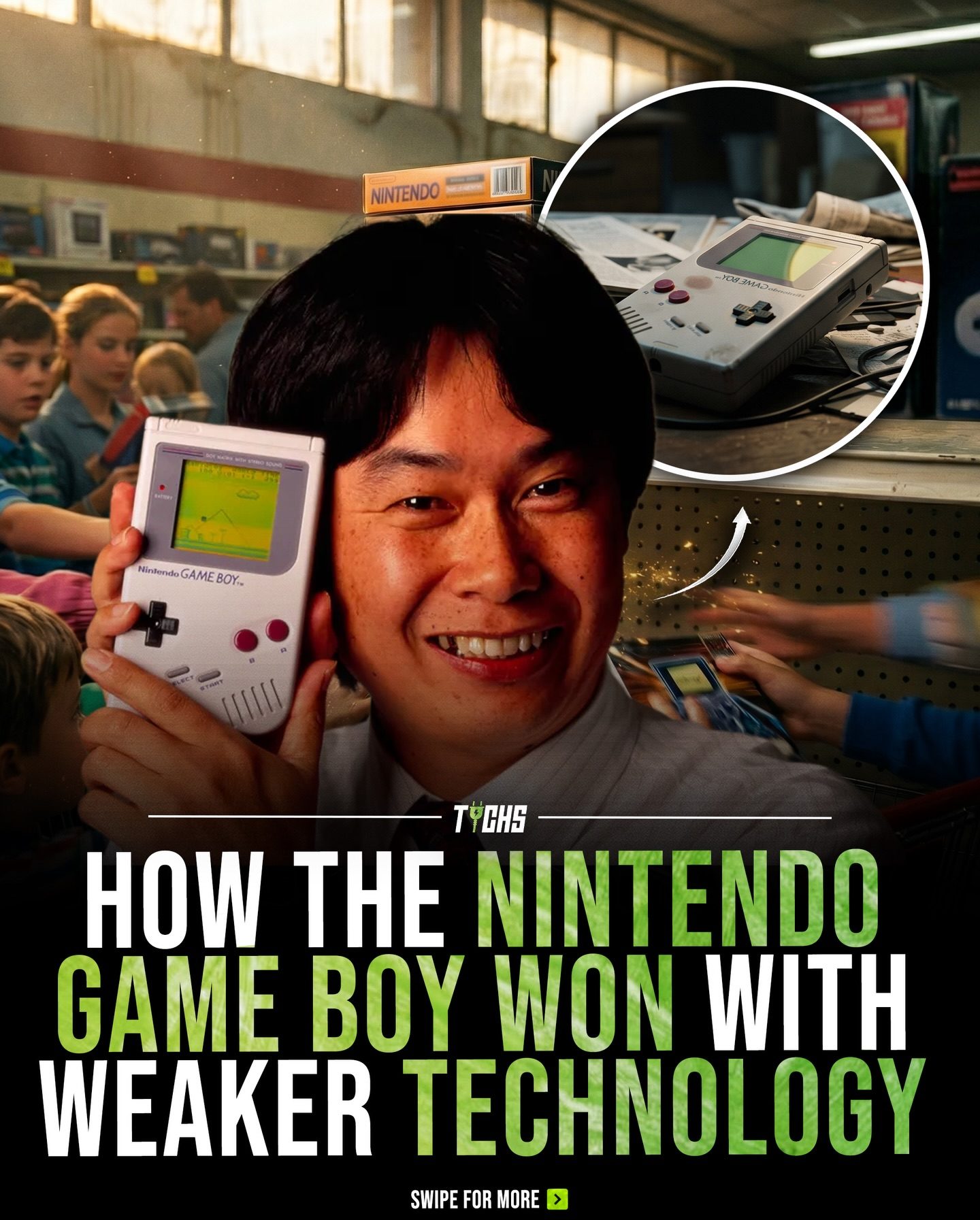
Nintendo Game Boy: The Handheld That Defied Tech Limits
The Nintendo Game Boy, released in 1989, stands as a testament to the power of smart design and strategic innovation. Despite facing criticism for its monochrome screen and outdated specs, the Game Boy managed to win over the gaming world with its focus on practicality, affordability, and real user needs. This handheld game console achieved global success by prioritizing battery life, competitive pricing, and an innovative approach to hardware limitations.
Context: Why This Matters
The Game Boy's story is a lesson in how focusing on user needs and strategic trade-offs can lead to long-term dominance in a competitive market. Its success highlights the importance of understanding what consumers truly value, rather than simply chasing the latest technological advancements. The Game Boy's enduring legacy provides valuable insights into the evolution of handheld gaming and the principles that drive enduring product success.
The Game Boy's Launch and Initial Challenges
The Game Boy was launched at a time when competitors like the Sega Game Gear offered superior visuals and more advanced technology. Critics initially dismissed the Game Boy for its monochrome display and lower resolution. The Game Gear, with its full-color screen, seemed like the clear winner on paper. However, the Game Boy's designers made a critical decision that would change the game.
Pricing Strategy: Accessibility for All
One of the most significant factors in the Game Boy's success was its pricing strategy. Nintendo priced the Game Boy at just $89, far below its competitors. This made handheld gaming accessible to millions of people who might otherwise have been priced out of the market. The affordability of the Game Boy was a strategic move that allowed it to reach a broader audience and establish a strong user base.
Battery Life: The Key to Practicality
The Game Boy's monochrome display, though initially criticized, turned out to be a smart trade-off. The lack of a backlight and the use of only four shades of gray dramatically extended the console's battery life. This design choice allowed the Game Boy to offer a massive 30-hour battery life, making it a practical choice for gamers on the go. In contrast, the Sega Game Gear, despite its better visuals, drained power quickly, limiting its usability.
Design Choices and Innovation
The Game Boy's design was incredibly efficient. Its ultra-efficient 0.7W power consumption and smart LCD technology were revolutionary for the time. The limited 64KB of memory, while seeming restrictive, actually drove developers to create innovative and iconic games. The constraints of the hardware forced creativity, leading to the development of timeless classics like Pokémon Red and Blue.
The Power of Constraints
The Game Boy's limited hardware specs forced developers to think outside the box. They had to optimize their games to run on the console's limited resources, leading to innovative game design and memorable experiences. The constraints of the hardware actually became a driving force for innovation, allowing the Game Boy to produce some of the most beloved games in gaming history.
Practical Tips for Modern Designers
The Game Boy's story offers several practical tips for modern designers:
Focus on User Needs
Understand what your users truly need and value. In the case of the Game Boy, users needed a device that was affordable, had long battery life, and was portable. Nintendo prioritized these factors over raw technological power, and it paid off.
Embrace Constraints
Constraints can drive innovation. Rather than viewing limitations as obstacles, think of them as opportunities to innovate. The Game Boy's designers embraced the constraints of their hardware, leading to the creation of iconic games that have stood the test of time.
The Power of Affordability
Pricing your product competitively can make a significant difference in its adoption. The Game Boy's affordable price point allowed it to reach a broader audience, establishing a strong user base that would support the console for years to come.
Important Takeaways
The Game Boy's success story underscores several important takeaways:
- Smart Design Beats Raw Power: The Game Boy achieved global success by focusing on practical design and user needs, rather than simply chasing technological advancements.
- Affordability Moves Markets: Competitive pricing played a crucial role in the Game Boy's success, making it accessible to a wide range of consumers.
- Constraints Drive Innovation: The limitations of the Game Boy's hardware drove developers to innovate, leading to the creation of iconic games.
Conclusion
The Nintendo Game Boy's success is a testament to the power of strategic design, practicality, and a deep understanding of user needs. By focusing on affordability, battery life, and innovative design, the Game Boy defied its competitors and achieved global dominance. Its legacy serves as a valuable lesson for modern designers, highlighting the importance of constraints, innovation, and user-centered design. Whether you're a gamer or a designer, the story of the Game Boy offers timeless insights into the principles that drive enduring product success.
Watch the Reel
Questions readers ask
What made the Nintendo Game Boy stand out among its competitors in the early 90s?
The Game Boy's standout features included its long battery life, affordability, and a strong lineup of games. Its focus on practicality and understanding real user needs in a portable gaming device allowed it to triumph over rivals with more advanced hardware.
Why did Nintendo choose a monochrome screen for the Game Boy?
Nintendo opted for a monochrome screen to maximize battery life, which was a crucial factor for portable gaming. This design choice, along with competitive pricing, allowed the Game Boy to remain accessible, light, and affordable.
What were some of the most popular Game Boy games that contributed to its success?
The Game Boy had a robust library of games, with titles like 'Tetris,' 'Pokémon Red and Blue,' and 'The Legend of Zelda: Link's Awakening' being particularly popular. These games, combined with the console's portability, created a compelling experience.
What impact did the Game Boy have on the gaming industry?
The Game Boy revolutionized portable gaming by proving that user-friendly design and strategic hardware choices could overcome technical limitations, making gaming accessible to a broader audience. Its success paved the way for future handheld consoles.
How did the Game Boy's design influence the development of future handheld gaming devices?
The Game Boy's design philosophy, which emphasized affordability, battery life, and practicality, influenced later handheld gaming devices. Future models, such as the Game Boy Color, Game Boy Advance, and Nintendo DS, built on this foundation, refining and expanding on the same principles.
What role did third-party developers play in the Game Boy's success?
Third-party developers were crucial to the Game Boy's success by expanding its game library. They contributed a wide range of games that catered to diverse user interests, ensuring that the console remained appealing and engaging to a broader audience over time.
What key design decisions by Nintendo helped the Game Boy remain popular for so many years?
Nintendo's focus on the Game Boy's practicality, affordability, and battery life, as well as its commitment to a robust and varied game library, ensured that the console remained popular. Additionally, the ability to swap games between consoles allowed users to enjoy their games for years, further extending the console's appeal.
Related deep dives
Similar reads based on topic and creator.




Recent articles
Fresh deep dives from the latest Reels we unpacked.




Comments
Be the first to comment.