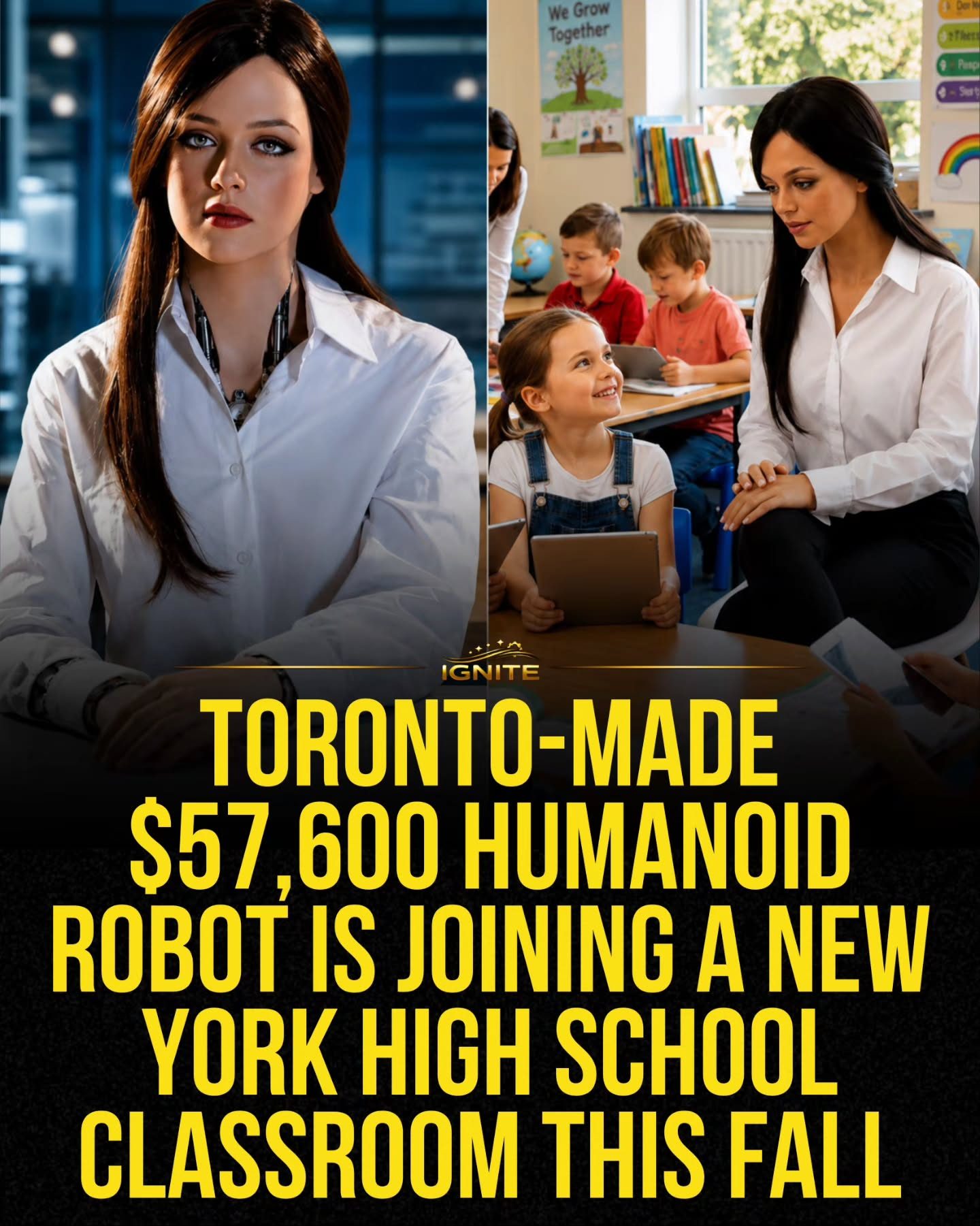
Humanoid Robots in the Classroom
Humanoid robots are becoming an integral part of educational environments, with one such robot from TORONTO-MADE recently being introduced into a New York high school classroom. This addition signifies a growing trend in leveraging advanced robotics to enhance learning experiences and provide practical, hands-on technological exposure for students.
Why This Matters
The integration of a $57,600 humanoid robot into a high school classroom marks a significant shift in educational settings. This technological advancement is not just about the novelty of a state-of-the-art robot in a classroom. It represents a strategic investment in the future of education, where interactive and immersive learning experiences can help students engage with complex subjects, especially in STEM fields.
The Human Element in Robotics
One of the key advantages of using humanoid robots in education is their ability to simulate human interactions. These robots can be programmed to mimic human behavior, making them effective teaching aids. For instance, a robot can demonstrate scientific concepts through physical movements and actions, making abstract ideas more concrete for students.
STEM Education Revolution
The integration of a humanoid robot in a classroom can revolutionize STEM education. Students can engage in hands-on learning by programming the robot, troubleshooting technical issues, or even designing additional functionalities. This practical exposure to robotics and programming can foster critical thinking, problem-solving skills, and a deeper understanding of technology.
Bridging the Gap Between Theory and Practice
Humanoid robots provide a unique opportunity to bridge the gap between theoretical knowledge and practical application. Unlike traditional teaching methods, where students often rely on textbooks and lectures, interactive robots can offer real-time simulations and demonstrations. This approach can make learning more dynamic and engaging, thereby enhancing retention and comprehension.
Practical Tips for Successful Integration
Implementing a humanoid robot in a classroom setting requires careful planning and execution. Here are some practical tips to consider:
Preparing the Classroom
Ensure that the classroom is equipped with the necessary infrastructure to support the robot. This includes a reliable power source, appropriate space, and any necessary software or hardware for operating the robot.
Teacher Training
Provide comprehensive training for teachers to effectively use the robot as a teaching tool. This involves understanding the robot's capabilities, learning how to operate it, and integrating it into the curriculum.
Student Engagement
Encourage students to take an active role in learning about the robot. Organize workshops or hands-on sessions where students can experiment with the robot, program it, and explore its functionalities.
Safety Measures
Implement safety protocols to ensure that the robot is operated safely. This includes guidelines on how to handle the robot, emergency procedures, and regular maintenance checks.
Important Takeaways
The integration of a humanoid robot into a high school classroom is a pioneering step towards the future of education. This innovation has the potential to transform how students learn and interact with technology. The benefits are multifold, from enhancing STEM education to bridging the gap between theoretical knowledge and practical application. However, successful implementation requires careful planning, teacher training, and student engagement.
Conclusion
The introduction of a humanoid robot into a New York high school classroom is a testament to the evolving landscape of education. As technology continues to advance, so too will the ways in which we teach and learn. Embracing these advancements can offer students a more immersive and engaging learning experience, preparing them for a future where technology will play an increasingly integral role.
Watch the Reel
Questions readers ask
How does the humanoid robot enhance classroom learning in the New York high school?
The robot provides an immersive learning experience by simulating human interactions and teaching through physical movements and actions, supplementing traditional textbook lessons.
What is the significance of using a humanoid robot in a high school setting?
The use of a humanoid robot in a high school setting represents a strategic investment in the future of learning, providing students with practical, hands-on technological exposure and interactive learning experiences.
What company produced the humanoid robot introduced in the New York high school?
The humanoid robot introduced in the New York high school was produced by a company called Toronto-Made.
How much did the humanoid robot cost the New York high school?
The humanoid robot cost the New York high school $57,600.
How does the robot provide a more engaging learning experience?
The robot engages students through physical movements and actions, making complex subjects more accessible and interactive, which can help students better understand and retain information.
What are the benefits of using a humanoid robot in high school classrooms?
Benefits include providing students with real-world exposure to advanced robotics, enhancing engagement through interactive and immersive learning experiences, and supplementing traditional teaching methods.
What does the integration of a humanoid robot in the classroom signify for the future of learning?
The integration of a humanoid robot in the classroom signifies a move towards more interactive and immersive learning experiences, preparing students for a future where such technologies are increasingly common.
Related deep dives
Similar reads based on topic and creator.




Recent articles
Fresh deep dives from the latest Reels we unpacked.




Comments
Be the first to comment.