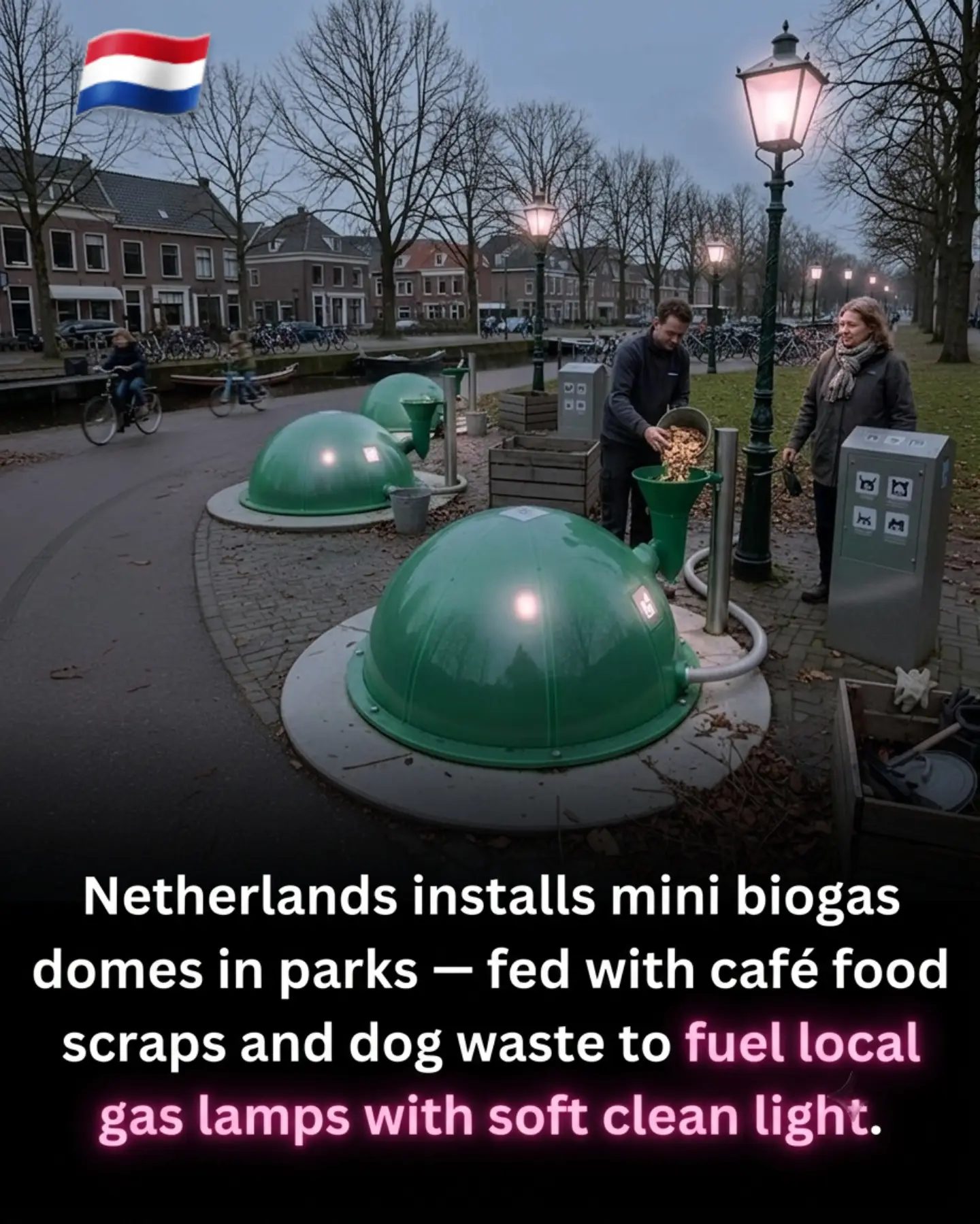
Mini Biogas Domes: A Sustainable Energy Solution in the Netherlands
The Netherlands has embraced an innovative and eco-friendly approach to energy production with the installation of mini biogas domes in public parks. These compact domes are designed to convert organic waste into biogas, which is then used to power local gas lamps, creating a sustainable and efficient energy solution.
The concept of mini biogas domes is not only environmentally beneficial but also aesthetically pleasing, as these installations blend seamlessly into park landscapes, adding a soft, clean light to the surroundings.
These domes are fueled by a mix of café food scraps and dog waste, which are abundant in urban areas, providing a practical solution for waste management. By converting this organic waste into energy, the initiative helps reduce the burden on landfills and incinerators, contributing to a cleaner environment.
Context: Why This Matters
In an era where sustainability is a global priority, initiatives like these are crucial. The escalating problem of organic waste, particularly in urban areas, needs innovative and sustainable solutions. Traditional waste management practices often involve landfilling, which not only occupies valuable land but also contributes to greenhouse gas emissions. Biogas production offers a viable alternative by converting organic waste into a useful energy source, thereby reducing waste and generating power.
Main Discussion
The implementation of mini biogas domes offers a myriad of advantages, both environmentally and socially. Here’s a closer look at the various aspects of this sustainable technology.
Environmental Benefits
Mini biogas domes significantly reduce the environmental impact of organic waste. By converting waste into biogas, they help decrease the volume of waste sent to landfills, which in turn reduces methane emissions. Methane, a potent greenhouse gas, is produced when organic waste decomposes in landfills. By diverting this waste to biogas domes, the emissions are substantially reduced, contributing to a cleaner and healthier environment.
Sustainable Energy Generation
The biogas generated from these domes is used to power local gas lamps, providing a sustainable source of energy. This not only reduces the dependency on fossil fuels but also ensures a continuous and renewable energy supply. The soft, clean light produced by these lamps enhances the ambiance of the parks, making them more inviting for visitors.
Waste Management
One of the primary advantages of mini biogas domes is their ability to handle various types of organic waste, including food scraps and animal waste, which are abundant in urban areas. Cafés and other food establishments produce a significant amount of organic waste, and managing this waste efficiently can be a challenge. By funnelling this waste into biogas domes, the system provides a practical and efficient solution for waste management.
Community Engagement
The installation of mini biogas domes in parks creates a sense of community engagement and environmental awareness. Visitors to these parks can see firsthand how waste is being converted into energy, fostering a greater appreciation for sustainable practices. This visibility can inspire individuals to adopt more eco-friendly habits in their daily lives, contributing to a broader cultural shift towards sustainability.
Practical Tips
Implementing mini biogas domes in parks requires careful planning and execution. Here are some practical tips to ensure a successful initiative.
Site Selection
Choose a location that is easily accessible and visible to the public. Parks are ideal because they receive high foot traffic and offer a suitable environment for the domes. Ensure the location has a constant supply of organic waste, such as from nearby cafés and food establishments.
Waste Collection
Establish a reliable waste collection system to ensure a steady supply of organic waste to the domes. Collaborate with local businesses and residents to collect and transport waste efficiently. Regular pick-up schedules can help maintain the dome's operation and efficiency.
Maintenance
Regularly maintain the biogas domes to ensure they operate at optimal levels. This includes checking the biogas production process, cleaning the domes, and ensuring the gas lamps are functioning correctly. A well-maintained system will provide a consistent and reliable source of energy.
Community Involvement
Engage the local community in the initiative by providing information and education on the benefits of biogas production. Host workshops, seminars, or community events to raise awareness and encourage participation. Community involvement can help sustain the initiative and promote its long-term success.
Important Takeaways
The installation of mini biogas domes in parks is a testament to the Netherlands' commitment to sustainability and innovation. This initiative not only addresses waste management and energy production but also enhances the aesthetics and functionality of public spaces.
The use of organic waste, such as café food scraps and dog waste, highlights the practicality and efficiency of biogas domes. By converting this waste into biogas, the initiative reduces environmental pollution and contributes to a cleaner, greener future.
Community engagement and practical implementation are key to the success of such initiatives. By involving the community and ensuring proper maintenance, the initiative can provide a sustainable and reliable source of energy, benefiting both the environment and the local community.
Conclusion
The integration of mini biogas domes in the Netherlands' parks demonstrates a forward-thinking approach to energy production and waste management. By harnessing the power of organic waste, these domes offer a sustainable solution that benefits both the environment and the community. As more cities and communities embrace similar initiatives, we can look forward to a future where sustainable energy and waste management go hand in hand, creating a cleaner, greener world for all.
Watch the Reel
Questions readers ask
How do mini biogas domes work in public parks?
Mini biogas domes convert organic waste, such as food scraps and dog waste, into biogas through a process of anaerobic digestion. This biogas is then used to power local gas lamps, reducing urban waste and providing a clean, sustainable energy source.
What types of organic waste are used to fuel these domes?
The domes primarily use a mix of food scraps from cafes and dog waste, which are abundant in urban areas. This not only helps in waste reduction but also makes the process efficient and practical.
How do the installations contribute to public spaces?
The installations contribute to public spaces by providing a sustainable source of energy for lighting, reducing the need for traditional electricity. Additionally, the domes are designed to blend seamlessly into park landscapes, enhancing the aesthetic appeal of the surroundings.
Are there any other benefits to using biogas domes in parks?
Yes, biogas domes help in reducing urban waste by converting it into usable energy, thus minimizing the environmental impact. They also promote a cleaner, more sustainable approach to waste management in public spaces.
How effective are mini biogas domes in reducing urban waste?
The effectiveness of mini biogas domes in reducing urban waste is significant. By converting food scraps and dog waste into energy, they help lower the amount of organic waste sent to landfills, supporting a more circular and sustainable urban waste management system.
What is the lifespan of a mini biogas dome installation?
The lifespan of a mini biogas dome installation can vary, but with proper maintenance, these domes are designed to be durable and long-lasting. Regular upkeep and the continuous supply of organic waste are key factors in ensuring their longevity.
Can these biogas domes be installed in other countries?
Yes, the concept of using mini biogas domes for sustainable energy production can be replicated in other countries. However, the success of such installations may depend on factors like local waste management practices, climate conditions, and public acceptance.
Related deep dives
Similar reads based on topic and creator.



Recent articles
Fresh deep dives from the latest Reels we unpacked.




Comments
Be the first to comment.