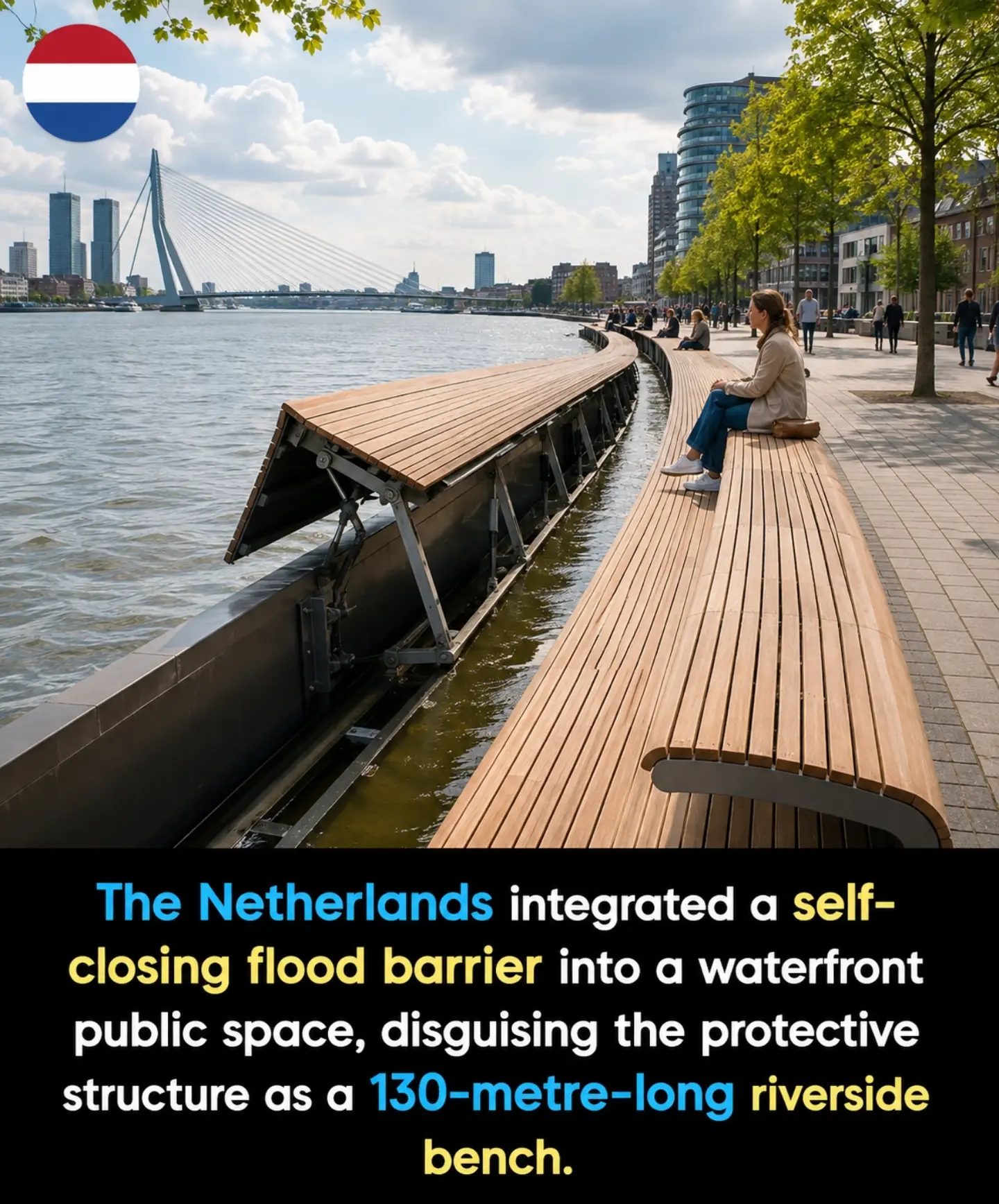
Innovative Flood Barrier in the Netherlands
Flood barriers are crucial for protecting coastal and riverside communities from rising water levels. In the Netherlands, a country renowned for its innovative water management, a unique solution has been implemented: a self-closing flood barrier disguised as a 130-meter-long riverside bench.
Context / Why This Matters
The design of this flood barrier reflects a broader movement in urban infrastructure to integrate protective measures seamlessly into public spaces. By doing so, cities can enhance their resilience to flooding while maintaining aesthetic and functional public areas. This approach is particularly important in a country like the Netherlands, where over 26% of the land is below sea level.
Main Discussion
Integrating Protection with Public Space
The Netherlands has successfully integrated a self-closing flood barrier into a waterfront public space. This barrier, disguised as a 130-meter-long riverside bench, serves a dual purpose: it provides a recreational area for residents and visitors, and it offers protection against flooding. The bench's design is not just aesthetically pleasing but also functional, blending protective infrastructure with public space.
The Mechanics of the Flood Barrier
The flood barrier system is designed to be self-closing, which means it automatically activates when water levels rise. This automatic feature ensures that the barrier can respond quickly to changing conditions, minimizing the risk of flooding. The mechanism involved in the barrier's operation is likely to include sensors that detect water levels and trigger the closure of the barrier.
The Importance of Public Space
Public spaces are essential for community well-being, providing areas for social interaction, relaxation, and recreation. In the case of the Netherlands' flood barrier, the integration of protective infrastructure with a public bench means that the protective measures do not detract from the usability of the space. This approach ensures that the local community continues to enjoy the benefits of the waterfront area while being protected from potential flooding.
The Role of Public Safety
A core aspect of urban infrastructure is ensuring public safety. The innovative flood barrier in the Netherlands exemplifies how protective measures can be designed to be both effective and unintrusive. By disguising the barrier as a bench, the design maintains the aesthetic appeal of the area while providing a crucial safety feature. This dual-purpose design benefits the overall safety and security of the community.
Practical Tips
When considering similar flood protection measures, urban planners can draw several practical lessons from the Netherlands' approach:
- Integrate Protection with Public Space: Ensure that protective measures do not disrupt the usability of public spaces. By integrating flood barriers into existing infrastructure, such as benches, planners can maintain the functionality and aesthetics of public areas.
- Consider Self-Closing Mechanisms: Implementing self-closing mechanisms ensures that flood barriers can respond quickly to changing conditions, minimizing the risk of flooding.
- Maintain Aesthetic Appeal: Design protective measures to be visually appealing and functional. This ensures that the community continues to enjoy the benefits of public spaces while being protected from potential hazards.
Important Takeaways
The innovative flood barrier in the Netherlands demonstrates how protective infrastructure can be integrated seamlessly into public spaces. This approach not only enhances urban resilience but also ensures that the community continues to enjoy the benefits of public areas. By blending protective measures with functional and aesthetically pleasing designs, cities can create safer, more livable environments.
Conclusion
The self-closing flood barrier in the Netherlands, disguised as a 130-meter-long riverside bench, is a testament to the country's innovative approach to urban infrastructure and flood protection. This dual-purpose design serves as a model for cities worldwide, showcasing how protective measures can be integrated into public spaces without compromising their functionality and aesthetics. By adopting similar strategies, urban planners can create resilient communities that are safe and enjoyable for residents and visitors alike.
Watch the Reel
Questions readers ask
How does the 130-meter-long bench in the Netherlands function as a flood barrier?
The bench is designed with a hidden flood barrier that automatically activates when water levels rise. It is engineered to close off the area, preventing floodwaters from entering protected zones, while also serving as a comfortable public space during normal conditions.
What makes this flood barrier unique compared to traditional designs?
This flood barrier is unique because it is seamlessly integrated into a public bench, making it an unobtrusive part of the landscape. Unlike traditional barriers that can be visually intrusive, this design maintains the aesthetic appeal of the riverside area, offering protection without compromising the public's enjoyment of the space.
How does this innovative design benefit the local community?
The design benefits the local community by providing a dual-purpose space that is both functional and safe. Residents can enjoy the bench during daily activities, while also having peace of mind knowing that the area is protected from potential flooding. This integration of protective measures into public spaces enhances the overall quality of life.
What role does this flood barrier play in the Netherlands' water management strategy?
The flood barrier is part of the Netherlands' broader strategy to manage water effectively in a country where over 26% of the land is below sea level. By incorporating protective measures into everyday spaces like benches, the country can ensure that its residents are safe while also maintaining the functionality and beauty of public areas.
Can this design be replicated in other flood-prone areas around the world?
Yes, the design can potentially be replicated in other flood-prone areas. Its success in the Netherlands demonstrates the feasibility of integrating protective measures into public spaces. Other cities can adapt this concept to create flood barriers that are both functional and aesthetically pleasing, enhancing flood resilience and community well-being.
What triggers the flood barrier to activate?
The flood barrier is designed to activate automatically in response to rising water levels. When water reaches a certain height, the mechanism within the bench is triggered to close off the area, providing immediate protection against flooding. This automated response ensures timely action without the need for manual intervention.
How does the design of the bench contribute to the overall aesthetic and functionality of the riverside area?
The bench's design contributes to the overall aesthetic and functionality of the riverside area by offering a seamless integration of protection and public space. Residents and visitors can enjoy a comfortable seating area, while the hidden flood barrier ensures that the space remains safe during high water events. This dual functionality makes the bench a valuable addition to the riverside landscape.
Related deep dives
Similar reads based on topic and creator.




Recent articles
Fresh deep dives from the latest Reels we unpacked.




Comments
Be the first to comment.