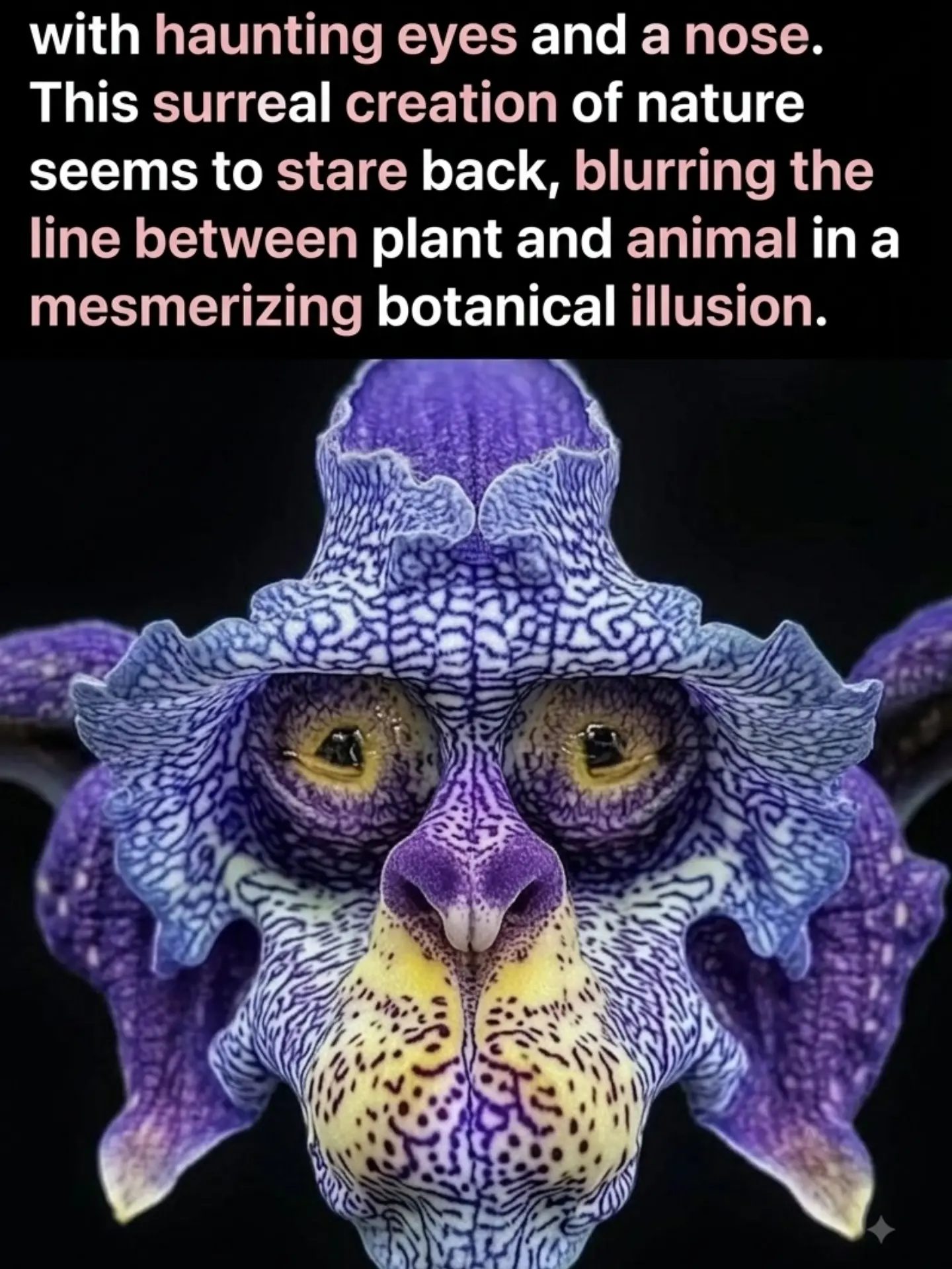
Monkey Orchid: Nature's Botanical Illusion
Hidden in the misty cloud forests, the Monkey Orchid is a fascinating example of nature's ability to mimic other forms of life—specifically, animals. This unique flower resembles a face, complete with haunting eyes and a nose, creating a mesmerizing effect that blurs the line between plant and animal.
Why Cloud Forest Plants Are Special
Cloud forests are high-altitude tropical forests characterized by persistent low-level cloud cover and high levels of humidity. These environments are home to a wide variety of unique plant and animal species, many of which have evolved remarkable adaptations to thrive in these challenging conditions. The Monkey Orchid, found in these forests, is a prime example of how plants can adapt to create an illusion.
The Monkey Orchid
Monkey Orchids are part of the family Orchidaceae, and they are known for their ability to mimic the appearance of animal faces. This mimicry is not just a visual trick; it has evolved over time to attract specific pollinators, such as bees and hummingbirds. The orchid's resemblance to a monkey's face is so striking that it can easily fool the human eye.
How It Mimics an Animal
The Monkey Orchid's petals and sepals are arranged in such a way that they form the appearance of a face. The purple and blue colors of the flower, combined with the intricate patterns, create the illusion of eyes, a nose, and even a mouth. This resemblance is so convincing that it seems to stare back at you, making the experience of encountering a Monkey Orchid a truly surreal one.
The Role of Mimicry
Mimicry in nature is a well-known phenomenon where one organism evolves to resemble another to gain an advantage. In the case of the Monkey Orchid, the mimicry serves a crucial function: it attracts pollinators. The flower's resemblance to a monkey's face can confuse or intrigue pollinators, encouraging them to interact with the flower and spread its pollen. This is an example of how nature's most intricate mechanisms work to ensure the survival and reproduction of various species.
The Magic of Botanical Illusions
Botanical illusions are a captivating aspect of nature. From flowers that look like animals to plants that mimic other plants, these illusions serve various purposes, from defense to attraction. The Monkey Orchid is a perfect example of how plants have evolved to create these mesmerizing effects.
Blurring the Lines
The Monkey Orchid blurs the line between plant and animal life, making it a fascinating subject for both botanists and enthusiasts. This blurring of lines is a result of millions of years of evolution, adapting to specific environments and ecological niches.
The Science Behind the Illusion
The illusion created by the Monkey Orchid is a result of several factors, including color, shape, and pattern. The purple and blue hues, combined with the intricate petal arrangement, create a visual effect that tricks the human eye into seeing a face. This phenomenon is a testament to the intricate and complex ways in which nature works.
Practical Tips for Seeing Botanical Illusions
If you're intrigued by the Monkey Orchid and other botanical illusions, there are a few tips to help you make the most of your experience:
Visit Cloud Forests
Cloud forests are home to a wide variety of unique and fascinating plants. By visiting these forests, you have a chance to see the Monkey Orchid and other botanical wonders in their natural habitat. This also provides an opportunity to learn more about the ecosystems and the role that these plants play in them.
Look for Signs of Mimicry
When exploring nature, keep an eye out for signs of mimicry. This can include plants that look like animals, animals that mimic other animals, and even plants that mimic other plants. These signs of mimicry are often subtle but can be incredibly rewarding to discover.
Research and Observe
Understanding the science behind botanical illusions can enhance your appreciation for them. Researching the different types of mimicry and how they work can provide a deeper understanding of these natural wonders. Observing the plants in their natural habitat can also provide valuable insights into their behavior and adaptations.
Important Takeaways
The Monkey Orchid is a mesmerizing example of nature's ability to create botanical illusions. Its striking resemblance to an animal face is not just a visual trick but a result of millions of years of evolution. This orchid serves as a reminder of the incredible complexity and beauty of the natural world.
Conclusion
The Monkey Orchid, with its haunting eyes and nose, is a fascinating botanical illusion. Found in the misty cloud forests, this flower blurs the line between plant and animal, creating a mesmerizing effect. By understanding the science behind this phenomenon, we can appreciate the intricate ways in which nature works and the remarkable adaptations that plants have evolved to ensure their survival. Whether you find it fascinating or a little eerie, the Monkey Orchid is a testament to the wonders of the natural world.
Watch the Reel
Questions readers ask
What is plant animal mimicry and where can it be observed?
Plant animal mimicry is a phenomenon where plants evolve to resemble animals. This can be observed in various environments, with cloud forests being notable for their abundance of such plants, like the Monkey Orchid, which mimics a monkey face.
How does the Monkey Orchid use its unique appearance to survive?
The Monkey Orchid uses its uncanny resemblance to a monkey face, complete with eyes and a nose, to attract pollinators. This botanical illusion helps the plant thrive in the challenging environment of the cloud forest.
What makes cloud forest flora unique?
Cloud forest flora is unique due to the high-altitude, humid environments which encourage remarkable adaptations. Many plants in these areas, like the Monkey Orchid, have evolved to mimic animals and create illusions to attract pollinators, enhancing their survival.
Are there other plants besides the Monkey Orchid that mimic animals?
Yes, while the Monkey Orchid is a well-known example, there are many other plants, particularly in cloud forests, that mimic animals to attract pollinators or deter herbivores.
How do plants with faces, like the Monkey Orchid, attract pollinators?
Plants with faces, such as the Monkey Orchid, use their unique, eye-catching appearances to attract pollinators. Insects and other pollinators are drawn to these botanical illusions, helping to spread the plant's pollen and ensuring reproduction.
Related deep dives
Similar reads based on topic and creator.




Recent articles
Fresh deep dives from the latest Reels we unpacked.




Comments
Be the first to comment.