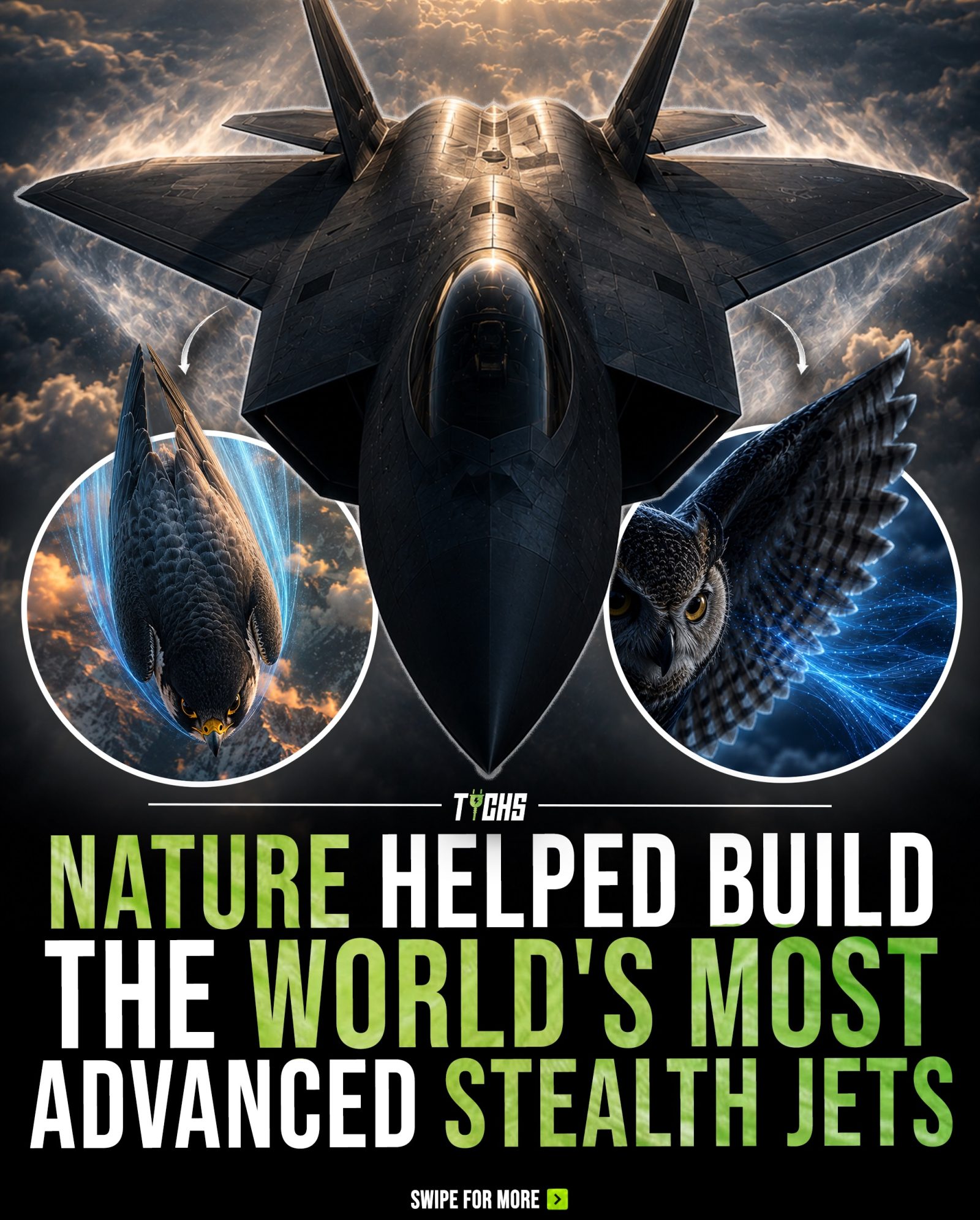
Stealth Jet Design Inspired by Nature
Stealth jet design has long been at the forefront of aerospace innovation, leveraging biological adaptations to create more efficient, quieter, and effective military aircraft. Engineers at TCHS, a leading innovator in stealth technology, have drawn inspiration from the natural world to develop cutting-edge features that enhance the performance and stealth capabilities of their aircraft.
Why This Matters
Modern military operations demand aircraft that can fly undetected and efficiently. Traditional designs often fall short in these areas, but by emulating nature’s time-tested solutions, engineers can overcome many of these challenges. Biomimicry—the practice of mimicking natural processes and structures—has become a cornerstone of advancements in stealth technology. This approach not only improves the performance of military aircraft but also paves the way for future innovations in aviation.
Main Discussion
Biomimicry in Stealth Technology
Nature has provided a wealth of solutions to the unique challenges faced by stealth aircraft. One of the most notable examples is the use of moth eye-inspired radar-absorbing coatings. Moth eyes feature a microscopic structure that minimizes light reflection, making them nearly invisible to predators. Similarly, engineers have developed radar-absorbing materials that reduce the radar signature of stealth jets, making them less detectable by enemy systems.
The design of the aircraft's wings often mimics the aerodynamics of falcons. Falcons are known for their swift and agile flight, capable of precise maneuvers at high speeds. By adopting similar wing designs, stealth jets can achieve greater agility and efficiency, allowing them to perform complex maneuvers with lower fuel consumption.
Thermal Management Systems
Thermal diffusion is another critical aspect of stealth technology. Owls, which are known for their silent flight, have specialized feathers with serrated edges that break up the turbulence created by air moving over the feathers. This adaptation reduces the noise generated during flight. Engineers at TCHS have replicated this design in the exhaust systems of their jets, allowing for quieter operation and improved thermal management, with these mechanisms mimicking the cooling processes of birds.
Adaptive Camouflage
One of the most innovative features inspired by nature is the use of adaptive camouflage. Cephalopods, such as octopuses and cuttlefish, have the ability to change the color and texture of their skin to blend into their surroundings. This capability is achieved through specialized cells called chromatophores, which can expand and contract to alter the appearance of the animal. In the context of stealth jets, electrochromic hull panels emulate this mechanism. These panels can change their color or reflectivity in response to different light conditions, allowing the aircraft to blend seamlessly with the sky or land, reducing its visual signature.
Material Innovations
Shark skin riblet textures are another natural inspiration for stealth aircraft. Sharks have tiny scales, or dermal denticles, that create a rough surface, which reduces drag and increases swimming efficiency. Engineers have adapted this design to create specialized coatings that reduce air resistance, leading to better fuel efficiency and improved aerodynamic performance.
In addition to these features, lightweight bird bone structures have influenced the design of aircraft frames. Bird bones are both lightweight and extremely strong, making them an ideal model for constructing aircraft that need to be both durable and lightweight. By mimicking the internal structure of bird bones, engineers can create stronger, lighter frames for stealth jets.
Neuromorphic Flight Processors
Insects, particularly those with complex sensory and motor systems, have inspired the development of neuromorphic flight processors. These processors mimic the neural networks found in insects, allowing for more efficient and responsive flight control systems. By integrating these processors, stealth jets can perform more precise and agile maneuvers, enhancing their operational capabilities.
Practical Tips
When examining the advancements in stealth jet design, it is clear that biomimicry plays a crucial role. For those involved in aerospace engineering or research, it is beneficial to consider the following tips:
-
Study Natural Solutions: Biomimicry relies on understanding and emulating natural processes. Conducting in-depth research on the mechanisms used by various animals and plants can provide valuable insights for designing new technological solutions.
-
Interdisciplinary Collaboration: Work with biologists, materials scientists, and engineers to develop innovative solutions. Biomimicry often requires a multidisciplinary approach to bridge the gap between natural and synthetic materials and processes.
-
Focus on Efficiency: Stealth aircraft demand high levels of efficiency, especially in terms of fuel consumption and operational effectiveness. By studying natural adaptations, engineers can develop materials and systems that are both efficient and effective.
-
Adaptive Technologies: Consider the use of adaptive technologies, such as electrochromic hull panels, which can change their properties in response to environmental conditions. These technologies can significantly enhance the stealth capabilities of military aircraft.
-
Continuously Innovate: The field of biomimicry is constantly evolving, with new discoveries and applications being made all the time. Stay updated with the latest research and developments to ensure that your designs remain at the cutting edge of technology.
Important Takeaways
-
Biomimicry has significantly influenced modern stealth aircraft design. By drawing inspiration from nature, engineers can create more efficient, quiet, and effective military aircraft.
-
Specific adaptations, such as moth eye-inspired radar-absorbing coatings, falcon-like wing aerodynamics, and owl feather serrations, have been key to improving stealth capabilities.
-
Advanced thermal diffusion and electrochromic hull panels are crucial for maintaining a low thermal and visual signature, respectively.
-
Nature-inspired materials and structures, including shark skin riblet textures and lightweight bird bone structures, enhance the performance and durability of stealth jets.
-
Neuromorphic flight processors, inspired by insect neural networks, provide precise and agile flight control systems.
-
Engineers at TCHS are at the forefront of integrating these natural adaptations into modern military aircraft, pushing the boundaries of what is possible in stealth technology.
Conclusion
The integration of biomimicry into stealth jet design represents a significant leap forward in aerospace technology. By emulating nature's time-tested solutions, engineers can develop more efficient, quieter, and effective military aircraft. The advancements made by TCHS and other innovators in this field highlight the endless potential of biomimicry to inspire future technological developments. As research continues, we can expect to see even more groundbreaking innovations that leverage the wisdom of nature to address the challenges of modern aviation.
Watch the Reel
Questions readers ask
How do moth eyes inspire radar-absorbing coatings on stealth jets?
Moth eyes have a unique structure that minimizes reflection, which is mimicked in radar-absorbing coatings. These coatings help reduce the radar signature of stealth jets, making them less detectable to enemy radar systems. The design of these coatings is directly inspired by the anti-reflective properties found in the eyes of moths, enhancing the jet's stealth capabilities.
What are the benefits of biomimicry in stealth jet wing design?
Biomimicry in wing design, such as using falcon wing structures, can improve aerodynamics and reduce noise. This results in quieter and more efficient flight, which is crucial for stealth operations. The design also enhances the jet's ability to maneuver and maintain stability, making it a more effective aircraft in military scenarios.
How does biomimicry contribute to the efficiency of stealth jets?
Biomimicry helps improve the overall efficiency of stealth jets by optimizing various aspects of their design. For instance, biomimetic coatings can reduce drag, and wing designs inspired by birds of prey can enhance lift and reduce fuel consumption. By emulating nature's time-tested solutions, engineers can create more efficient and effective stealth aircraft.
What role does thermal diffusion play in stealth jet design?
Thermal diffusion is crucial in stealth jet design as it helps manage the heat generated by the aircraft's engines and electronics. Effective thermal management reduces the jet's infrared signature, making it harder to detect by infrared sensors. This is often achieved through specialized coatings and materials that mimic natural heat dissipation processes, such as those found in certain plants and animals.
How does electrochromic technology enhance stealth jet camouflage?
Electrochromic technology allows stealth jets to change their color and reflectivity in response to electrical signals. This enables the aircraft to blend seamlessly into different environments, making it harder to spot visually. By mimicking the adaptive camouflage found in some animals, this technology significantly enhances the jet's stealth capabilities, making it a versatile tool in various operational settings.
What are the primary goals of biomimicry in modern stealth jet design?
The primary goals of biomimicry in modern stealth jet design include enhancing stealth capabilities, improving efficiency, and increasing overall performance. By mimicking natural adaptations, engineers aim to create aircraft that are quieter, more efficient, and better suited for undetected operations. These advancements help meet the evolving demands of modern military missions, ensuring that stealth jets remain at the forefront of aerospace innovation.
Can biomimicry help in reducing the noise of stealth jets?
Yes, biomimicry can significantly contribute to reducing the noise of stealth jets. For example, wing designs inspired by birds of prey can minimize turbulence and reduce noise during flight. Additionally, biomimetic coatings can absorb sound, further enhancing the jet's quiet flight capabilities. This is particularly important for stealth operations, where minimizing noise is crucial for avoiding detection.
Related deep dives
Similar reads based on topic and creator.




Recent articles
Fresh deep dives from the latest Reels we unpacked.




Comments
Be the first to comment.