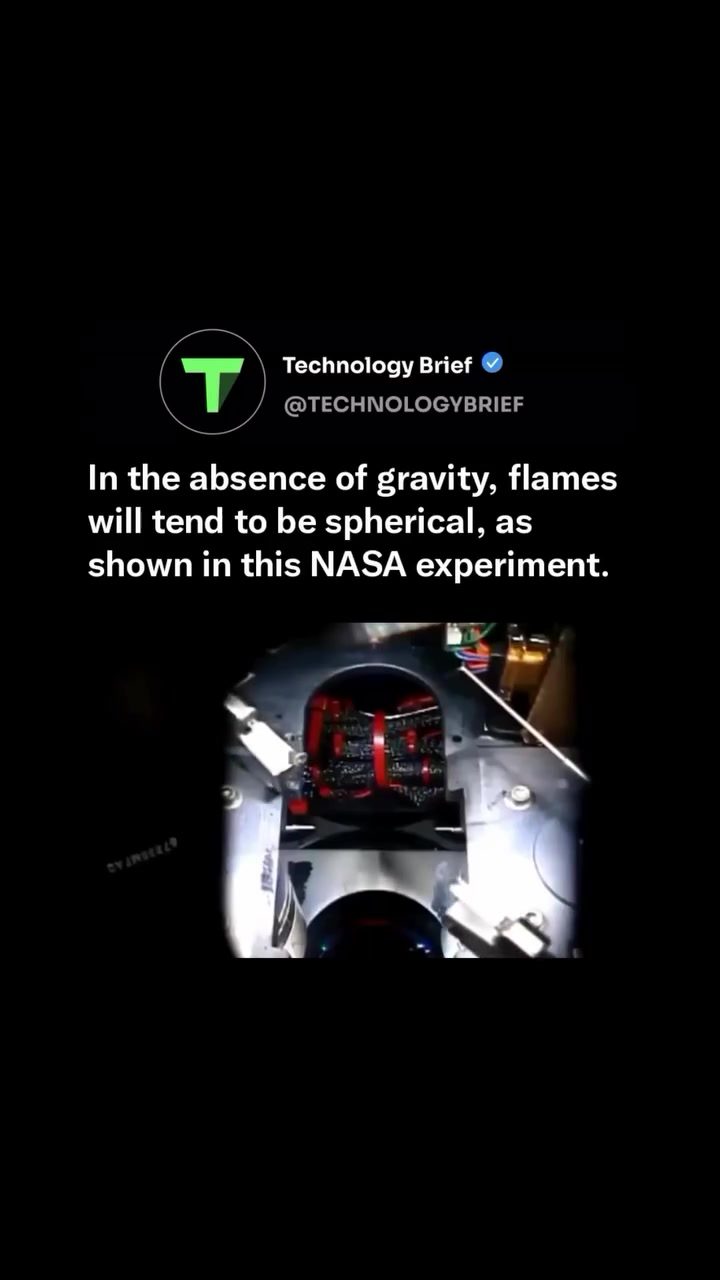
Zero-Gravity Flames: A Fascinating Phenomenon
Flames behave differently in zero gravity, a phenomenon that has captivated researchers and space enthusiasts alike. On Earth, a candle's flame takes its classic teardrop shape because warm air rises and cooler air rushes in from below. However, in microgravity, this up-and-down circulation does not happen, causing the flame to spread outward equally in all directions and form a perfect sphere. This intriguing behavior has been extensively studied by NASA, particularly aboard the International Space Station (ISS).
Why This Matters
Understanding how fire spreads in microgravity is essential for several reasons. Firstly, it's critical for keeping astronauts safe on long missions to the Moon and Mars. Secondly, the insights gained from these studies have practical applications on Earth, such as designing more efficient and lower-pollution combustion engines. The research also sheds light on the fundamental physics of combustion, which has broader implications for various industries.
The Science Behind Zero-Gravity Flames
Microgravity and Flame Behavior
In microgravity, the absence of buoyancy-driven flows allows flames to spread in all directions, forming spherical shapes. This is in stark contrast to Earth's environment, where gravity causes warm air to rise and cooler air to rush in, creating the classic teardrop shape. The Combustion Integrated Rack (CIR) on the ISS has been instrumental in studying this phenomenon since 2008. The CIR is a sealed chamber designed for conducting combustion experiments in a controlled, microgravity environment.
The FLEX Experiment
One of the most significant studies conducted in the CIR is the Flame Extinguishment Experiment (FLEX). This experiment involved igniting droplets of liquid fuel in the chamber and observing the flames that formed. The results were astonishing: the flames were perfectly round, and some fuels, after appearing to go out, would reignite as invisible "cool flames" burning at lower temperatures.
Cool flames are a fascinating phenomenon where the fuel-air mixture ignites at a lower temperature, releasing heat and generating intermediate products that can eventually lead to a hotter, more visible flame. The discovery of cool flames in microgravity has significant implications for understanding combustion processes and improving safety measures in space and on Earth.
Safety and Efficiency
The research on zero-gravity flames extends beyond mere curiosity. Safety is paramount in space missions, and understanding how fire behaves in microgravity is crucial for developing effective fire-suppression systems. On Earth, the findings have led to advancements in designing more efficient combustion engines, which are less polluting and consume fuel more effectively.
Applications on Earth
The knowledge gained from studying zero-gravity flames has direct applications on Earth. Engineers have used these insights to improve the design of combustion engines, making them more efficient and environmentally friendly. The research has also contributed to a better understanding of fire dynamics, which can enhance fire safety measures in various settings, from industrial facilities to residential buildings.
Improved Combustion Engines
One of the most significant practical outcomes of this research is the development of more efficient combustion engines. By understanding how flames behave in microgravity, engineers have been able to optimize the design of engines, reducing pollution and improving fuel efficiency. This has far-reaching benefits for the automotive industry, aviation, and power generation.
Enhanced Fire Safety
The study of zero-gravity flames has also led to advancements in fire safety. Understanding how flames spread and extinguish in different environments has enabled the development of more effective fire suppression systems. This is particularly important in industries where fires pose a significant risk, such as in chemical plants, refineries, and nuclear facilities.
Practical Tips for Understanding Zero-Gravity Flames
While experimenting with zero-gravity flames is beyond the scope of most readers, there are several practical tips for understanding and appreciating this fascinating phenomenon:
- Watch Documentaries and Videos: There are numerous documentaries and videos available that showcase experiments conducted in microgravity. These visuals provide a clear understanding of how flames behave in the absence of gravity.
- Read Research Papers: NASA and other space agencies regularly publish research papers on their experiments. These papers offer in-depth insights into the science behind zero-gravity flames and their practical applications.
- Visit Science Museums: Many science museums have exhibits that demonstrate the effects of microgravity on various phenomena, including flames. These exhibits often include interactive displays that allow visitors to explore the science hands-on.
Important Takeaways
- Flame Shape: In microgravity, flames tend to form spherical shapes due to the absence of gravity-driven convection.
- Safety in Space: Understanding flame behavior in microgravity is crucial for ensuring the safety of astronauts on long space missions.
- Practical Applications: The research on zero-gravity flames has led to the development of more efficient combustion engines and improved fire safety measures on Earth.
- Cool Flames: Some fuels in microgravity can reignite as invisible "cool flames" burning at lower temperatures, which has significant implications for understanding combustion processes.
Conclusion
The study of zero-gravity flames is a compelling area of research that has yielded valuable insights into the behavior of fire in microgravity. The experiments conducted aboard the ISS, particularly the FLEX series, have provided a wealth of data that has been applied to improve safety measures in space and enhance combustion technologies on Earth. Whether you're a space enthusiast, an engineer, or simply curious about the science of fire, understanding the behavior of zero-gravity flames offers a fascinating glimpse into the intersection of space exploration and everyday technology.
Watch the Reel
Questions readers ask
Why do flames form spheres in zero gravity instead of the teardrop shape seen on Earth?
In zero gravity, there is no buoyancy-driven flow, meaning warm air does not rise and cool air does not rush in from below as it does on Earth. This lack of convection causes the flame to spread outward equally in all directions, forming a perfect sphere.
What is the primary reason NASA studies flames in microgravity?
NASA's primary goal in studying flames in microgravity is to ensure the safety of astronauts on long missions. Understanding how fire spreads in these conditions is crucial for developing effective fire prevention and suppression methods in space.
How does NASA conduct its microgravity combustion experiments?
NASA conducts its microgravity combustion experiments primarily aboard the International Space Station (ISS). Researchers use specialized equipment to safely ignite and observe flames in a controlled, microgravity environment.
What are some practical applications on Earth from studying zero gravity flames?
Studying zero gravity flames can provide insights into creating more efficient and low-pollution combustion engines on Earth. The unique behavior of flames in microgravity can help researchers develop better combustion techniques and optimise fuel efficiency.
What hazards do flames in zero gravity pose to astronauts?
Flames in zero gravity can spread more rapidly and in unpredictable directions due to the lack of buoyancy-driven airflow. This poses a significant risk to astronauts, as fires can quickly engulf a spacecraft and endanger the crew. Understanding these hazards is vital for enhancing space safety.
What unique challenges does studying flames in zero gravity present?
Studying flames in zero gravity presents unique challenges, such as the lack of familiar reference points and the need for specialized equipment. Researchers must also contend with the limited space and resources available aboard the ISS, making experiments more complex and challenging..
What is the significance of the teardrop flame shape on Earth?
The teardrop shape of a flame on Earth is due to the rising of warm air and the inflow of cooler air from below, creating a characteristic teardrop shape. This shape is a direct result of the buoyancy-driven convection process that does not occur in microgravity.
Related deep dives
Similar reads based on topic and creator.




Recent articles
Fresh deep dives from the latest Reels we unpacked.




Comments
Be the first to comment.