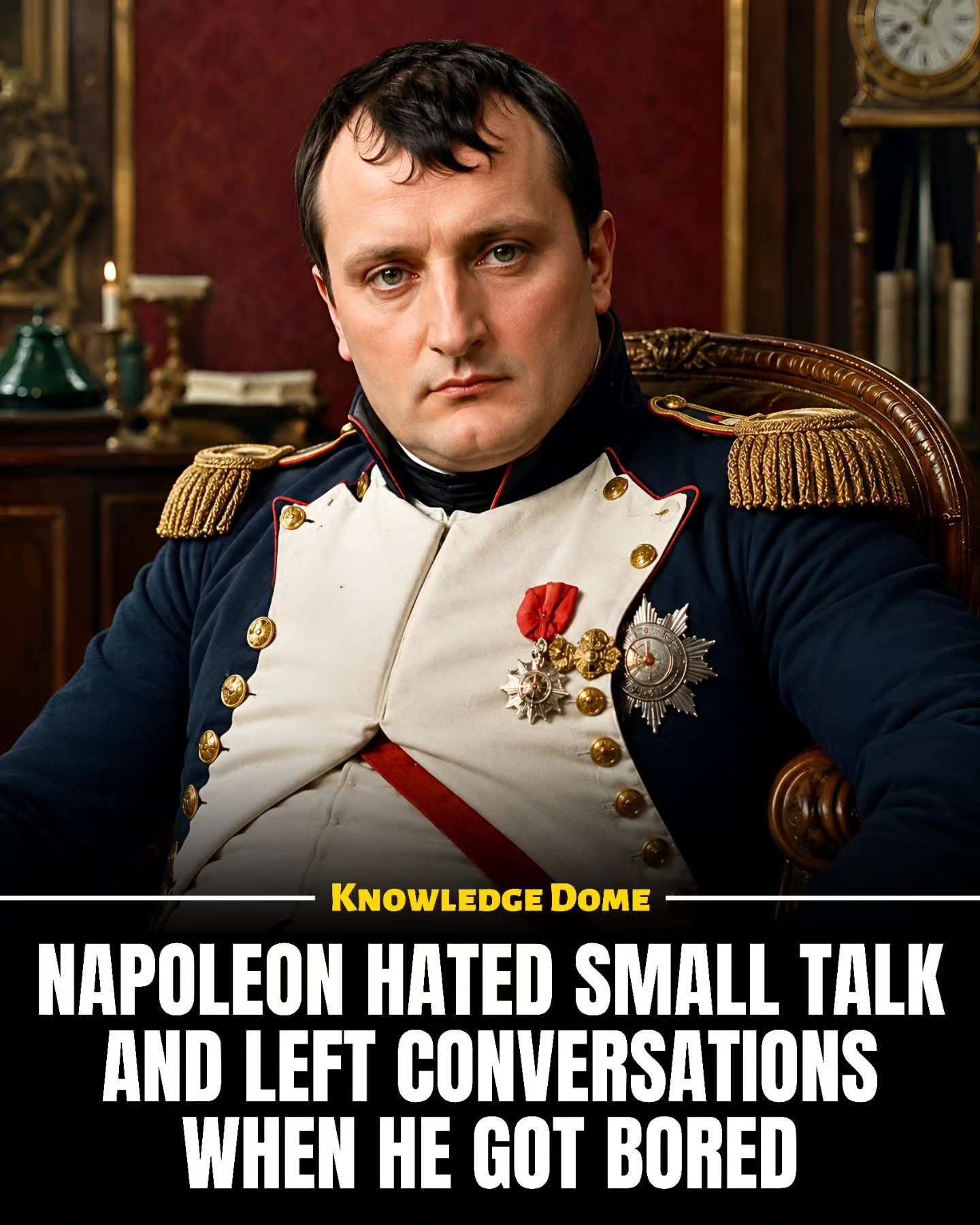
Napoleon Bonaparte's Impatience with Small Talk
Napoleon Bonaparte, a name synonymous with military prowess and political acumen, was known for his unique approach to conversation. He was particularly impatient with small talk, often losing interest quickly if a conversation seemed boring or useless. This preference for direct, purposeful discussion reveals much about his character and priorities.
Why this matters
Understanding Napoleon's disposition towards conversation can provide insights into his leadership style and decision-making processes. His impatience with small talk underscores his focus on efficiency and clarity, traits that were crucial to his success as a military leader and statesman.
Napoleon's Priorities
Napoleon's dislike for small talk was rooted in his pragmatism. He valued useful ideas and conversations that had a clear purpose. His interests lay in military plans, politics, and science—areas that required focused, meaningful discussions. Small talk, which he saw as empty and superficial, held little value for him. He was not interested in engaging in conversations just to be polite; he wanted every discussion to have a purpose and contribute to a greater goal.
Napoleon’s Military and Political Acumen
Napoleon's military and political aspirations meant that he needed to make quick, informed decisions. Small talk, with its lack of substance, was a waste of his time. He needed conversations that provided him with actionable information, strategic insights, and practical advice. This focus on substance over style was a key part of his leadership.
The Value of Direct Communication
Napoleon's preference for direct, to-the-point conversations reflects his desire for clarity and efficiency. He wanted people to speak plainly and get to the point quickly. This approach not only saved time but also ensured that discussions were productive and goal-oriented. It also highlighted his need for clarity in communication, a trait that was invaluable in military and political scenarios.
Practical Tips on Conversation
For those seeking to emulate Napoleon's effective communication style, several practical tips can be gleaned from his approach.
Emphasizing Purpose
Always ensure that your conversations have a clear purpose. Before engaging in a discussion, define what you hope to achieve. This could be gaining information, making a decision, or solving a problem. By keeping the goal in mind, you can steer the conversation towards a productive outcome.
Avoiding Small Talk
While small talk can be a useful social lubricant, it's important not to let it dominate your interactions. If you find yourself in a situation where small talk is prevalent, try to introduce topics that have more substance. This doesn't mean you should avoid lighthearted conversation altogether, but rather, balance it with more meaningful discussions.
Getting to the Point
Napoleon's impatience with small talk underscores the importance of getting to the point quickly. When you have something important to say, don't beat around the bush. Be direct and concise, and encourage others to do the same. This not only saves time but also ensures that everyone involved is clear on the main points of the discussion.
Prioritizing Substance
Focus on conversations that have real meaning and value. This means prioritizing discussions that are related to your goals, whether they are personal, professional, or strategic. By prioritizing substance, you can make better use of your time and ensure that your conversations are more productive.
Important Takeaways
Napoleon Bonaparte's impatience with small talk serves as a reminder of the importance of direct, purposeful communication. By prioritizing substance over style, you can ensure that your conversations are productive and meaningful. Whether you're a leader, a strategist, or simply someone seeking to improve their communication skills, Napoleon's approach offers valuable insights.
Focus on Efficiency
Efficiency in communication is key. Avoid small talk when possible, and always ensure that your conversations have a clear purpose. This not only saves time but also ensures that your discussions are productive and goal-oriented.
Value Substance
Substance should always be valued over style. Focus on conversations that have real meaning and value, and prioritize discussions that are related to your goals. By doing so, you can make better use of your time and ensure that your conversations are more productive.
Conclusion
Napoleon Bonaparte's impatience with small talk offers a valuable lesson in the importance of direct, purposeful communication. By prioritizing substance over style, focusing on efficiency, and ensuring that conversations have a clear purpose, we can make our interactions more productive and meaningful. His approach, while blunt, provides a model for effective communication in both personal and professional settings.
Watch the Reel
Questions readers ask
Why did Napoleon Bonaparte dislike small talk?
Napoleon Bonaparte disliked small talk because he valued efficiency and pragmatism. He preferred direct, purposeful conversations that had clear goals and outcomes, aligning with his strategic and pragmatic leadership style.
How did Napoleon's conversation style reflect his leadership traits?
Napoleon's conversation style mirrored his leadership traits by emphasizing clarity and purpose. He was impatient with idle chatter, preferring discussions that moved swiftly to actionable points, reflecting his decisive and results-driven approach in both military and political settings.
What were the key priorities that drove Napoleon's disdain for small talk?
Napoleon's key priorities included efficiency and pragmatic outcomes. He saw small talk as a waste of time that did not contribute to achieving tangible results, which were crucial to his success as a military leader and statesman.
How did Napoleon's impatience with small talk influence his military strategies?
Napoleon's impatience with small talk influenced his military strategies by fostering a culture of direct communication and decisive action. His insistence on purposeful conversations ensured that his orders were clear and executed with precision, enhancing his tactical effectiveness.
What insights can be gained from Napoleon's dislike for small talk about his decision-making processes?
Understanding Napoleon's dislike for small talk provides insights into his decision-making processes, which were characterized by a focus on clarity and direct action. He preferred to cut through unnecessary details, allowing him to make swift, informed decisions.
How did Napoleon's pragmatic approach to conversations contribute to his political success?
Napoleon's pragmatic approach to conversations contributed to his political success by enabling him to address issues directly and resolve conflicts efficiently. His direct, purposeful discussions helped build alliances, negotiate treaties, and navigate the complex political landscape of his time.
What can modern leaders learn from Napoleon's preference for direct conversations?
Modern leaders can learn to prioritize clear, purposeful communication. By avoiding unnecessary small talk and focusing on actionable points, leaders can enhance their decision-making processes, improve efficiency, and achieve better outcomes, much like Napoleon.
Related deep dives
Similar reads based on topic and creator.



Recent articles
Fresh deep dives from the latest Reels we unpacked.




Comments
Be the first to comment.