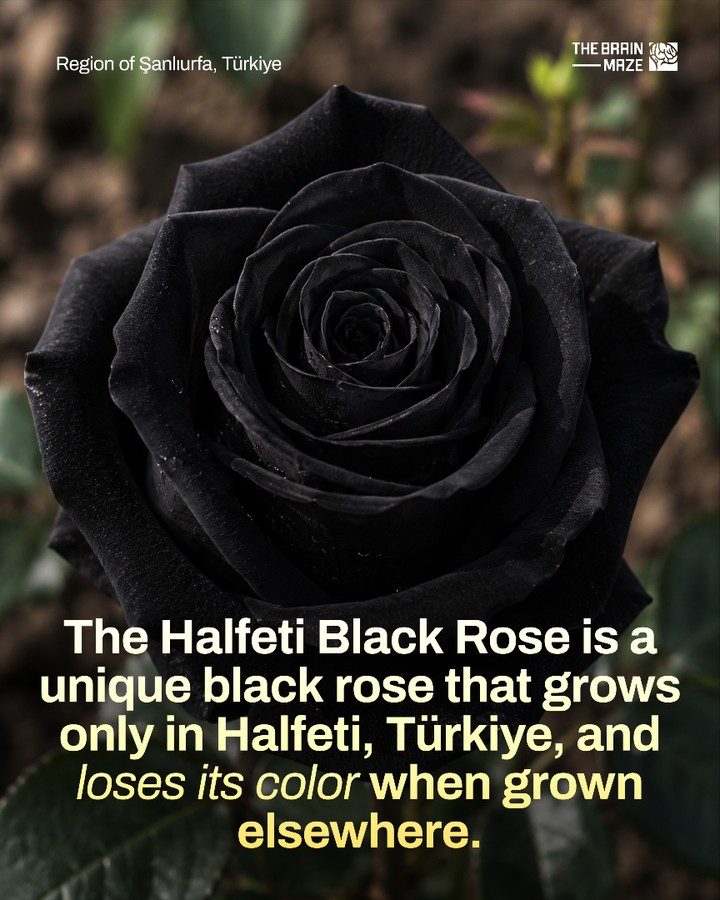
The Enigmatic Black Rose of Halfeti
The Halfeti Black Rose is a botanical marvel found exclusively in the Halfeti region of Şanlıurfa, Türkiye. This rare rose is renowned for its unique near-black petals, which are a result of the region's distinctive soil composition, climate, and water conditions. Despite being genetically a deep crimson rose, the environmental factors in Halfeti transform its petals into a striking near-black hue, making it one of the most extraordinary floral specimens in the world.
Why Black Rose in Türkiye is Unique
The Halfeti Black Rose's uniqueness lies in its inability to replicate its distinctive color when cultivated elsewhere. This rare rose thrives only in its native region, a fact that has intrigued botanists and nature enthusiasts alike. The distinct environmental conditions of Halfeti influence everything from the rose’s color to its growth patterns.
Soil Composition
Halfeti's soil is rich in minerals and nutrients, creating an ideal environment for the Black Rose. The unique soil profile includes a blend of clay and organic matter that provides the necessary nourishment for the plant to develop its deep, dark hue. This soil composition is not found elsewhere, making it impossible to replicate the rose's unique color outside of its native habitat.
Climate
The climate in Halfeti is another critical factor contributing to the rose's distinctive appearance. The region experiences a semi-arid climate with hot, dry summers and mild winters. This climate, combined with the soil conditions, encourages the plant to produce its near-black petals. The temperature and humidity levels in Halfeti are finely tuned to support the rose's unique characteristics, a delicate balance that cannot be easily replicated elsewhere.
Water Conditions
The water sources in Halfeti play a pivotal role in the growth and coloration of the Black Rose. The region's water is rich in minerals, which the plant absorbs during its growth cycle. This mineral-rich water, combined with the unique soil and climate, contributes to the rose's deep, dark color. In other locations, even with the same soil and climate, the water composition being different leads to the plant losing its unique color.
Genetic Factors
While environmental factors are crucial, the genetic makeup of the Halfeti Black Rose also contributes to its uniqueness. The rose is genetically a deep crimson rose, but the environmental conditions in Halfeti induce it to produce near-black petals. This genetic predisposition, when combined with the specific environmental conditions, results in the plant's extraordinary coloration.
Main discussion
Environmental Conditions
The Halfeti Black Rose thrives in a specific set of environmental conditions that are not found anywhere else in the world. These conditions include the region's unique soil composition, climate, and water sources. The combination of these factors creates an ideal environment for the rose to develop its distinctive near-black petals. Any deviation from these conditions, such as attempts to cultivate the rose in different regions, results in the plant losing its unique color and producing dark red blooms instead.
Geographical Isolation
Halfeti's geographical isolation has played a significant role in preserving the unique characteristics of the Black Rose. The region's remoteness has protected the plant from external influences that could potentially alter its genetic makeup or environmental conditions. This isolation has allowed the rose to maintain its distinctive color and grow naturally without human intervention.
Botanical Wonders
The Halfeti Black Rose is not the only botanical wonder in the region. Şanlıurfa, the province where Halfeti is located, is home to various other unique plant species. The region's diverse flora and fauna make it a hotspot for botanical research and conservation efforts. The Halfeti Black Rose, however, stands out due to its striking color and the mystery surrounding its uniqueness.
Botanical Research
The Halfeti Black Rose's unique characteristics have attracted the attention of botanists and researchers from around the world. Numerous studies have been conducted to understand the factors contributing to the rose's distinctive color. While many theories have been proposed, the exact mechanisms behind the plant's unique coloration remain elusive. Researchers continue to explore the environmental and genetic factors that make the Halfeti Black Rose so special.
Practical tips for those who wish to grow roses
While it's not possible to replicate the Halfeti Black Rose's unique color in different regions, there are several practical tips that can help gardeners grow roses successfully. By understanding the basic conditions required for a rose to thrive, you can create an environment that supports its growth and health.
Soil Preparation
Choose a planting location with well-draining soil and ample sunlight. Roses thrive in slightly acidic to neutral soil with a pH between 6.0 and 7.0. Add organic matter, such as compost or well-rotted manure, to improve soil structure and fertility. Ensure the soil is loose and aerated to promote root development.
Watering
Provide consistent moisture to your roses, especially during the growing season. Water deeply once or twice a week, depending on rainfall and soil conditions. Avoid overwatering, as it can lead to root rot and other fungal diseases. Mulching around the base of the plant can help retain moisture and suppress weeds.
Pruning
Prune your roses regularly to encourage healthy growth and flowering. Remove dead, diseased, or damaged canes, as well as any crossing branches that may rub against each other. Prune in early spring, just as new growth begins, to shape the plant and promote bushier growth. Deadheading spent flowers can also encourage repeat blooming.
Fertilization
Use a balanced, slow-release fertilizer to provide essential nutrients for your roses. Apply fertilizer in early spring, just as new growth begins, and again in mid-summer to support continuous blooming. Be sure to follow the manufacturer's instructions for proper application rates.
Important Takeaways
- The Halfeti Black Rose is a unique botanical wonder found only in the Halfeti region of Şanlıurfa, Türkiye.
- Its distinctive near-black petals are a result of the region's unique soil composition, climate, and water conditions.
- Attempts to cultivate the rose elsewhere result in dark red blooms rather than the iconic near-black color.
- The Halfeti Black Rose is a rare and delicate plant that requires specific environmental conditions to thrive.
- While it's not possible to replicate the rose's unique color in different regions, understanding the basic conditions required for a rose to thrive can help gardeners grow healthy and beautiful blooms.
Conclusion
The Halfeti Black Rose stands as a testament to the wonders of nature and the delicate balance of environmental factors that make unique species thrive. Its near-black petals, a result of the region's unique soil, climate, and water conditions, make it a botanical marvel. While efforts to cultivate it elsewhere have failed, the Halfeti Black Rose continues to captivate botanists and nature enthusiasts alike. For those wishing to grow roses, understanding and replicating the basic conditions needed for healthy growth can lead to beautiful blooms, even if the iconic near-black color remains elusive.
Watch the Reel
Questions readers ask
What makes the Halfeti Black Rose's color so unique?
The Halfeti Black Rose's near-black color is due to the specific environmental conditions of the Şanlıurfa province in Turkey. The region's mineral-rich soil, particular climate, and water conditions interact with the rose's deep crimson genetics to create this striking hue, which cannot be replicated elsewhere.
Why can't the Halfeti Black Rose be cultivated in other environments?
The Halfeti Black Rose is deeply dependent on the unique environmental factors of its native region. The specific combination of soil composition, climate, and water conditions in Halfeti is not found elsewhere, making it impossible to cultivate the rose with its distinctive color successfully in other environments.
Where exactly is the Halfeti Black Rose found?
The Halfeti Black Rose is exclusively found in the Halfeti region of the Şanlıurfa province in Turkey. This region provides the precise conditions necessary for the rose to develop its unique near-black petals.
What is the genetic background of the Halfeti Black Rose?
Genetically, the Halfeti Black Rose is a deep crimson rose. It is the environmental factors in the Halfeti region, such as the soil, climate, and water, that cause the rose's petals to transform and appear nearly black.
What makes the Halfeti Black Rose a unique floral specimen?
The Halfeti Black Rose is considered unique due to its inability to thrive and maintain its distinctive color outside of its native region. The combination of its genetic makeup and the specific environmental conditions of Halfeti make it one of the world's most extraordinary floral specimens.
Why do botanists and nature enthusiasts find the Halfeti Black Rose intriguing?
The Halfeti Black Rose intrigues botanists and nature enthusiasts because of its rarity and the unique environmental dependency. The fact that it cannot be successfully cultivated elsewhere, despite numerous attempts, adds to its allure and mystery.
What role does the soil in Halfeti play in the unique color of the Halfeti Black Rose?
The soil in Halfeti is rich in minerals, which contributes significantly to the unique near-black color of the Halfeti Black Rose. This specific soil composition interacts with the rose's genetics and other environmental factors to create its distinctive hue.
Related deep dives
Similar reads based on topic and creator.




Recent articles
Fresh deep dives from the latest Reels we unpacked.




Comments
Be the first to comment.