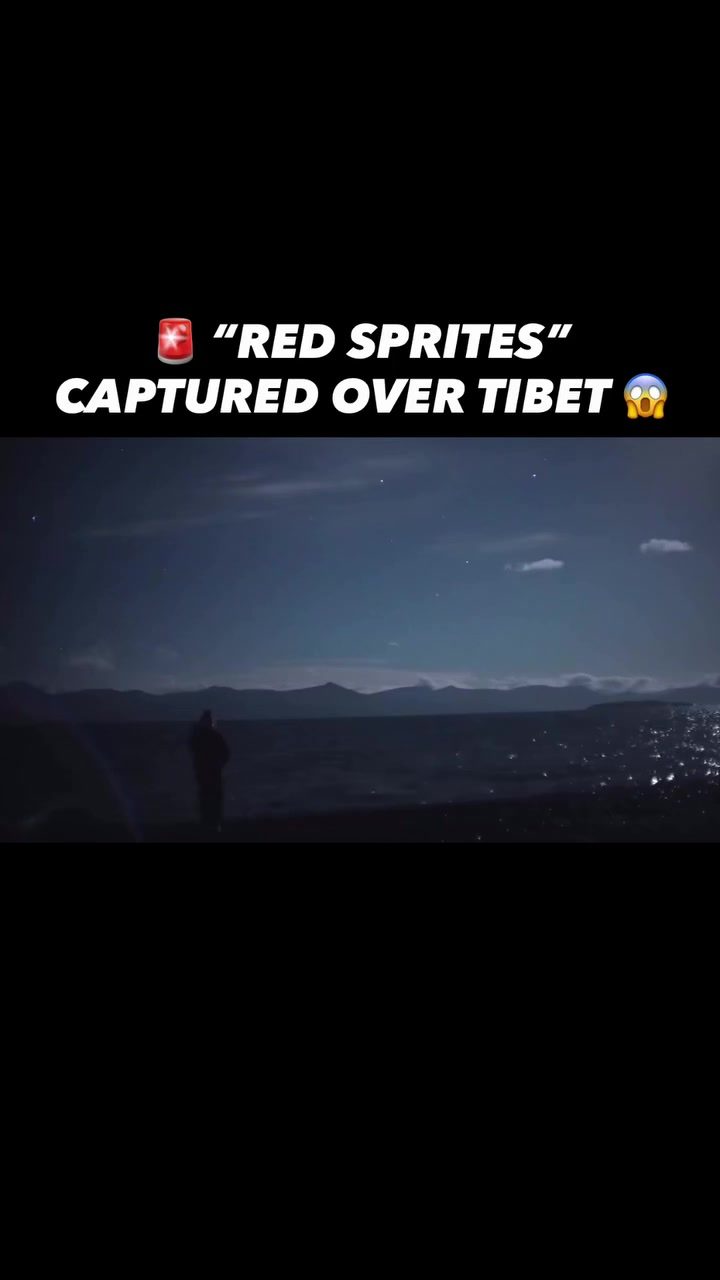
Red Sprites: Mysterious Electrical Phenomena in Tibet's Night Sky
Red sprites are a rare and captivating natural phenomenon that occur high above thunderstorms. Captured in a striking time-lapse video over the mountainous landscape of Tibet, these enormous electrical discharges shoot up from the tops of storms into the upper atmosphere, creating brief but mesmerizing flashes of red and green light. These sprites are notoriously difficult to observe due to their high altitude and fleeting duration, lasting only milliseconds.
Why This Matters
The observation of red sprites is significant for several reasons. Firstly, they provide a unique window into the complex electrical processes that occur within our atmosphere. Secondly, their occurrence over Tibet, a region known for its unique geological and meteorological conditions, adds an intriguing layer to our understanding of these phenomena. Lastly, the increasing frequency of sightings and documentation of red sprites raises questions about their potential connection to broader environmental changes.
Understanding Red Sprites
What Are Red Sprites?
Red sprites are large-scale electrical discharges that occur high above thunderstorms, typically around 50-90 kilometers above the Earth's surface. They are called "sprites" due to their elusive and fleeting nature, often appearing as brief, reddish flashes in the night sky. These electrical phenomena are much larger than typical lightning bolts, sometimes stretching tens of kilometers in length.
How Do They Form?
The exact mechanisms behind the formation of red sprites are still not fully understood. However, scientists believe they are associated with positive cloud-to-ground lightning strikes. When a powerful positive lightning bolt hits the ground, it can create a brief but intense electric field that extends high into the atmosphere. This field can ionize the air, creating the spectacular displays of light that we see as red sprites.
Characteristics of Red Sprites
Red sprites are characterized by their rapid and transient nature. They typically last only a few milliseconds, making them extremely difficult to capture on camera. Despite their brief duration, they can emit a significant amount of energy, comparable to the energy released by a powerful lightning bolt. Additionally, red sprites often appear in clusters, with multiple discharges occurring in quick succession.
Red Sprites Over Tibet
Unique Geographical Conditions
Tibet's unique geographical and meteorological conditions make it an ideal location for observing red sprites. The region's high altitude and frequent thunderstorms create a conducive environment for the formation of these electrical phenomena. The mountainous landscape also provides a clear vantage point for capturing their elusive displays.
Capturing the Phenomenon
Capturing red sprites on camera is a challenging task due to their high altitude and brief duration. The time-lapse video over Tibet, which shows the red and green flashes, highlights the rarity of this event. The footage provides a rare glimpse into the mesmerizing and mysterious world of upper-atmosphere electrical phenomena.
Why Are Red Sprites Important?
Scientific Research
Red sprites are of great interest to scientists studying atmospheric electricity and weather patterns. Their study can provide valuable insights into the complex electrical processes that occur within our atmosphere. Understanding these processes can help improve weather forecasting models and enhance our knowledge of thunderstorm dynamics.
Environmental Indicators
Some scientists suggest that red sprites may be more than just natural electrical events. Their increasing frequency and documentation raise questions about their potential connection to broader environmental changes. As the Earth's climate continues to change, monitoring and studying these phenomena can provide valuable data on how atmospheric conditions are evolving.
Public Awareness and Fascination
Red sprites also capture the public's imagination, sparking curiosity and fascination with the natural world. Their elusive and mysterious nature makes them a subject of intrigue for both scientists and enthusiasts alike. Documenting and sharing these phenomena can inspire further exploration and study of our planet's atmospheric processes.
Practical Tips for Observing Red Sprites
Observing red sprites requires a combination of the right conditions, the right equipment, and a bit of luck. Here are some practical tips for increasing your chances of witnessing this elusive phenomenon:
-
Choose the Right Location: Select a location with clear skies and minimal light pollution. High-altitude regions with frequent thunderstorms, such as Tibet, are ideal for observing red sprites.
-
Use High-Speed Cameras: Red sprites last only milliseconds, so a high-speed camera is essential for capturing their fleeting displays. Look for cameras with frame rates of at least 1,000 frames per second.
-
Set Up Your Equipment: Position your camera to face the night sky, focusing on the area above thunderstorms. Use a sturdy tripod to keep the camera steady and ensure clear, sharp images.
-
Monitor Weather Conditions: Keep an eye on weather forecasts and monitor thunderstorm activity. Red sprites are most likely to occur during intense thunderstorms, so be ready to capture them when conditions are favorable.
-
Be Patient: Observing red sprites requires patience and persistence. You may need to spend several nights monitoring the sky before witnessing this elusive phenomenon.
Important Takeaways
- Red sprites are rare and elusive electrical discharges that occur high above thunderstorms.
- Their formation is associated with powerful positive lightning strikes that create intense electric fields.
- Tibet's unique geographical and meteorological conditions make it an ideal location for observing red sprites.
- Studying red sprites can provide valuable insights into atmospheric electricity and weather patterns.
- Capturing red sprites on camera requires high-speed equipment and a bit of luck.
Conclusion
Red sprites are a fascinating and mysterious natural phenomenon that continue to captivate scientists and enthusiasts alike. Their brief but spectacular displays over Tibet highlight the wonders of our planet's atmospheric processes. By studying and documenting these elusive electrical phenomena, we can deepen our understanding of the complex interactions that occur within our atmosphere. Whether they are purely natural events or indicators of broader environmental changes, red sprites offer a glimpse into the awe-inspiring beauty of our world.
Watch the Reel
Questions readers ask
What are red sprites and where do they occur?
Red sprites are brief, bright flashes of light that appear high above thunderstorms. They are typically observed in the upper atmosphere, around 50 to 90 kilometers above the Earth's surface. The recent sighting in Tibet's night sky is a remarkable example of this phenomenon.
Why are red sprites significant?
Red sprites are significant because they offer a glimpse into the complex electrical processes happening in the upper atmosphere. They may also have potential environmental and societal impacts, as they can influence the chemical composition of the atmosphere and potentially disrupt radio communications.
What makes red sprites difficult to observe?
Red sprites are notoriously elusive due to their high altitude, rapid duration, and the fact they occur above storms. Their fleeting nature, lasting only milliseconds, makes them challenging to capture on camera. However, advances in technology have made it possible to capture these phenomena in striking detail, such as in the recent time-lapse video over Tibet.
What causes the red and green colors in red sprites?
The red and green colors in red sprites are due to the excitation of nitrogen molecules in the upper atmosphere. When electrical discharges occur, they energize these molecules, causing them to emit light at specific wavelengths that correspond to red and green colors.
How do red sprites form and what is the impact of their occurrence?
Red sprites form when a strong electrical field, generated by a thunderstorm, accelerates electrons to near the speed of light. These high-speed electrons then collide with other atmospheric molecules, causing them to emit light. The impact of their occurrence is not fully understood, but they may play a role in atmospheric chemistry and potentially influence climate patterns.
How do atmospheric electricity play a role in the formation of red sprites?
Atmospheric electricity, particularly the strong electric fields generated by thunderstorms, is crucial for the formation of red sprites. These electric fields accelerate charged particles, which then collide with atmospheric molecules, leading to the emission of light that creates the mesmerizing red and green flashes seen in red sprites.
Can red sprites be seen from the ground?
Red sprites are typically difficult to see from the ground due to their high altitude and brief duration. However, they can sometimes be spotted with the naked eye under ideal conditions, such as during a powerful thunderstorm when the sky is clear above. In many cases, specialized cameras or time-lapse videos are used to capture these elusive phenomena.
Related deep dives
Similar reads based on topic and creator.




Recent articles
Fresh deep dives from the latest Reels we unpacked.




Comments
Be the first to comment.