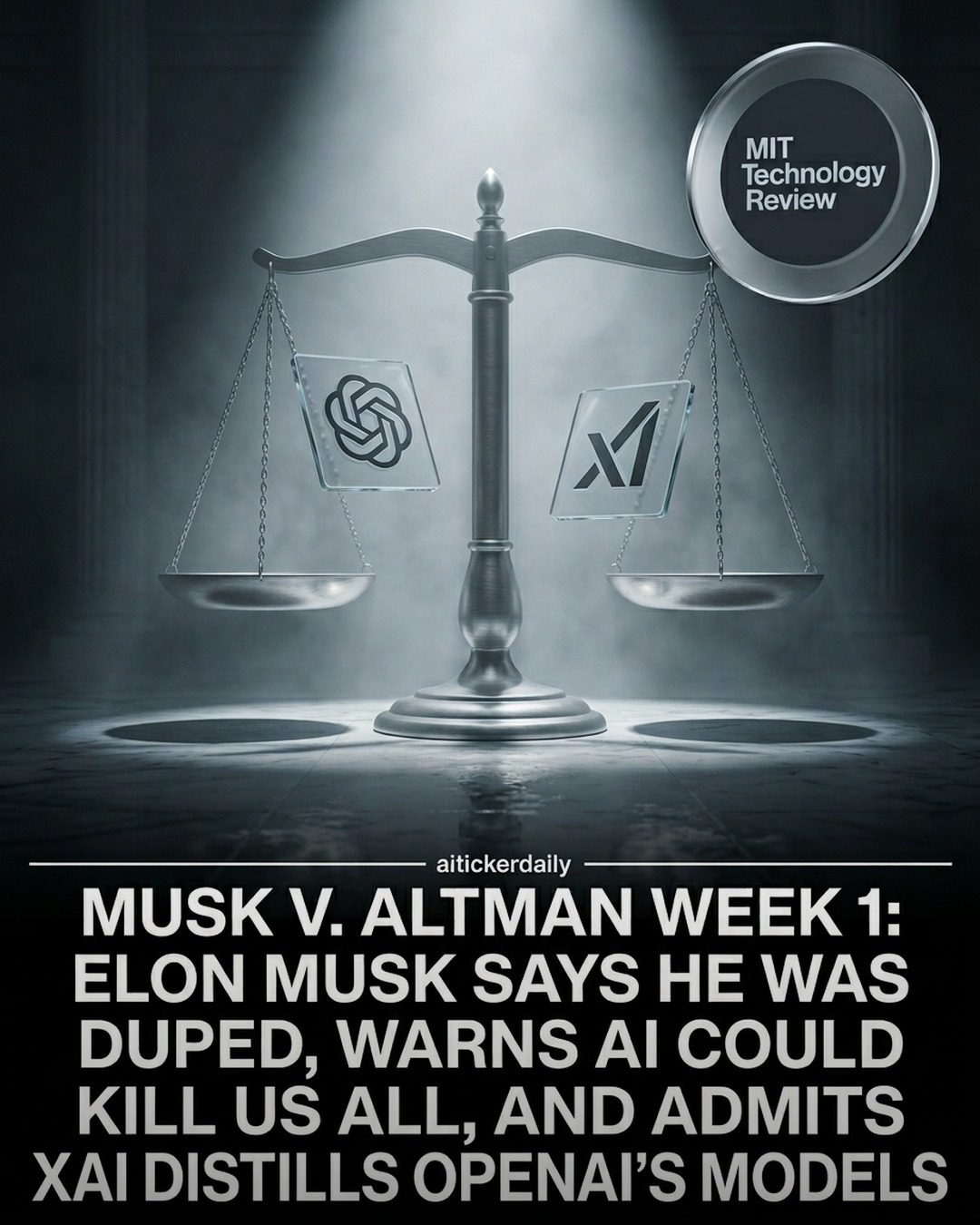
The trial between Elon Musk and OpenAI has sparked significant interest in the AI community and beyond. The legal battle revolves around Musk's claims that Sam Altman and Greg Brockman, key figures at OpenAI, misled him into funding the venture. The trial has also brought to light important discussions about the potential risks associated with AI development and the governance of AI research.
Context / Why This Matters
The trial raises critical questions about the future of AI development, especially regarding governance and potential risks. As AI continues to integrate into various aspects of society, it's crucial to understand the legal and ethical implications of how these technologies are developed and deployed. The dispute between Musk and OpenAI highlights the complexities of AI governance and the need for clear guidelines and regulations.
The trial also sheds light on the economic and structural aspects of AI research. With Musk's claims of being misled, the trial presents a deeper signal about the mission claims and nonprofit remedies within the AI sector. This is particularly relevant for enterprise buyers who rely on AI technologies, as the outcomes of this trial could influence their decisions and partnerships.
Main Discussion
Musk's Claims and AI Risk Warnings
Elon Musk has publicly stated that Altman and Brockman misled him, leading him to invest in OpenAI. This allegation is central to the trial and has significant implications for AI governance. Musk's warnings about the potential risks of AI, including the possibility that AI could pose an existential threat to humanity, are also a focal point of the trial.
These warnings align with broader discussions in the AI community about the need for responsible AI development. The trial underscores the importance of transparency and accountability in AI research, especially when it comes to funding and governance.
OpenAI's Shift to a For-Profit Structure
One of the key points of contention in the trial is OpenAI's shift towards a for-profit structure. This shift has raised questions about the organization's mission and goals. Originally founded as a nonprofit, OpenAI's move to a for-profit model has significant implications for its governance and the potential risks associated with AI development.
The trial also involves disputes over governance and potential risks associated with AI development. This includes discussions about the ownership and control of AI technologies and who should benefit from them.
xAI and OpenAI Models
The news cycle has also highlighted xAI's role in distilling OpenAI models. This development is significant because it involves the use of AI to improve upon existing AI models, which could have implications for the future of AI development and the trial's outcomes.
xAI's distillation of OpenAI models also raises questions about intellectual property and the ownership of AI technologies. As AI continues to evolve, these issues will become increasingly important, and the trial between Musk and OpenAI could set important precedents in this area.
Institutional Signals and Enterprise Buyers
The trial between Musk and OpenAI carries deeper institutional signals that could send ripples through the AI sector. When marquee labs like OpenAI and xAI argue over structure and economics in court, enterprise buyers pay close attention. These buyers are concerned about mission claims, nonprofit remedies, and who owns the narrative behind inference contracts.
The trial’s proceedings may influence how enterprise buyers perceive the reliability and ethical standing of AI labs. This perception can affect partnerships, investments, and overall trust in AI technologies. If the trial results in OpenAI's nonprofit arm recovering ill-gotten gains, it could be seen as both a cleaner claim and a tactic to prolong the lawsuit. Either way, the nuances of such proceedings will undoubtedly shape industry standards and practices.
Practical Tips
For anyone involved or interested in the AI sector, the trial between Musk and OpenAI offers several practical lessons:
-
Transparency and Accountability: Ensure that your AI initiatives are transparent and accountable. This includes clear communication about funding, governance, and potential risks.
-
Ethical Considerations: Consider the ethical implications of your AI projects. This includes issues like data privacy, bias, and the potential for misuse.
-
Regulatory Compliance: Stay up-to-date with the latest regulations and guidelines related to AI. This can help you avoid legal disputes and ensure that your projects are compliant with industry standards.
-
Strategic Partnerships: Be strategic in your partnerships and collaborations. Consider the long-term implications of your decisions, especially when it comes to funding and governance.
-
Risk Assessment: Conduct thorough risk assessments to identify and mitigate potential risks associated with AI development. This includes both technical and ethical risks.
Important Takeaways
The trial between Musk and OpenAI is a landmark event in the AI industry. It highlights the importance of transparency and accountability in AI development, as well as the need for clear guidelines and regulations. The outcomes of this trial could have far-reaching implications for the future of AI, particularly in terms of governance, economics, and potential risks.
The trial also underscores the importance of mission and values in the AI sector. As AI continues to evolve, it's crucial for organizations to align with their mission and values, and to be transparent about their goals and objectives.
For enterprise buyers, the trial serves as a reminder to pay close attention to the institutional signals being sent by marquee labs. The outcomes of this trial could influence their decisions and partnerships, as well as their overall perception of the AI industry.
Conclusion
The trial between Elon Musk and OpenAI is a significant event in the world of AI. It brings to light important discussions about governance, potential risks, and the future of AI development. As the trial unfolds, it will be crucial for all stakeholders to pay close attention to the proceedings and their implications.
Watch the Reel
Questions readers ask
What are the main allegations made by Elon Musk against OpenAI?
Elon Musk has primarily claimed that Sam Altman and Greg Brockman, key figures at OpenAI, misled him into investing in the venture, which was originally intended to be a nonprofit entity. Musk alleges that the organization has since deviated from its original mission, raising concerns about the transparency of AI funding and the true intentions of OpenAI's leadership.
What does the recent trial reveal about AI governance and legal guidelines?
The trial has underscored the need for clear legal and ethical guidelines for AI development and deployment. It has highlighted the complexities of AI governance, including the importance of transparency in funding and the potential risks associated with rapid AI advancement. The legal battle may set precedents for future AI-related disputes and regulations.
Why is the transparency of AI funding a significant issue in this trial?
Transparency in AI funding is crucial for ensuring that AI development aligns with societal benefits and ethical standards. The trial has brought to light concerns about how AI ventures are funded and managed, particularly when they transition from nonprofit to for-profit models. This transparency is essential for maintaining public trust and accountability in AI development.
What are the potential risks associated with AI advancement, as discussed in the trial?
The trial has raised awareness about several risks, including the potential misuse of AI technologies, the creation of autonomous systems that could act against human interests, and the societal impacts of AI deployment without adequate ethical considerations. These risks underscore the importance of responsible AI development and the need for comprehensive governance frameworks.
Why is the trial between Musk and OpenAI important for the AI community?
The trial is significant for the AI community because it addresses fundamental issues related to AI governance, funding transparency, and ethical considerations in AI development. It serves as a catalyst for broader discussions about the future of AI and the need for clear guidelines to mitigate potential risks. The outcome of the trial could influence how AI technologies are developed and regulated in the future.
How does the trial impact the debate about AI nonprofit concerns?
The trial has reignited concerns about the transition of AI ventures from nonprofit to for-profit models, raising questions about the original intentions of founders and the accountability of AI organizations. This debate highlights the need for robust frameworks to ensure that AI development remains aligned with public interest and ethical standards, regardless of the organizational structure.
What warnings has Elon Musk issued regarding AI development?
Elon Musk has repeatedly warned about the potential dangers of unchecked AI development, emphasizing the need for caution and regulatory oversight. He has highlighted the risks of creating superintelligent AI that could surpass human intelligence and autonomous systems that could pose existential threats. Musk's warnings have contributed to broader discussions about the responsible governance of AI technologies.
Related deep dives
Similar reads based on topic and creator.




Recent articles
Fresh deep dives from the latest Reels we unpacked.




Comments
Be the first to comment.