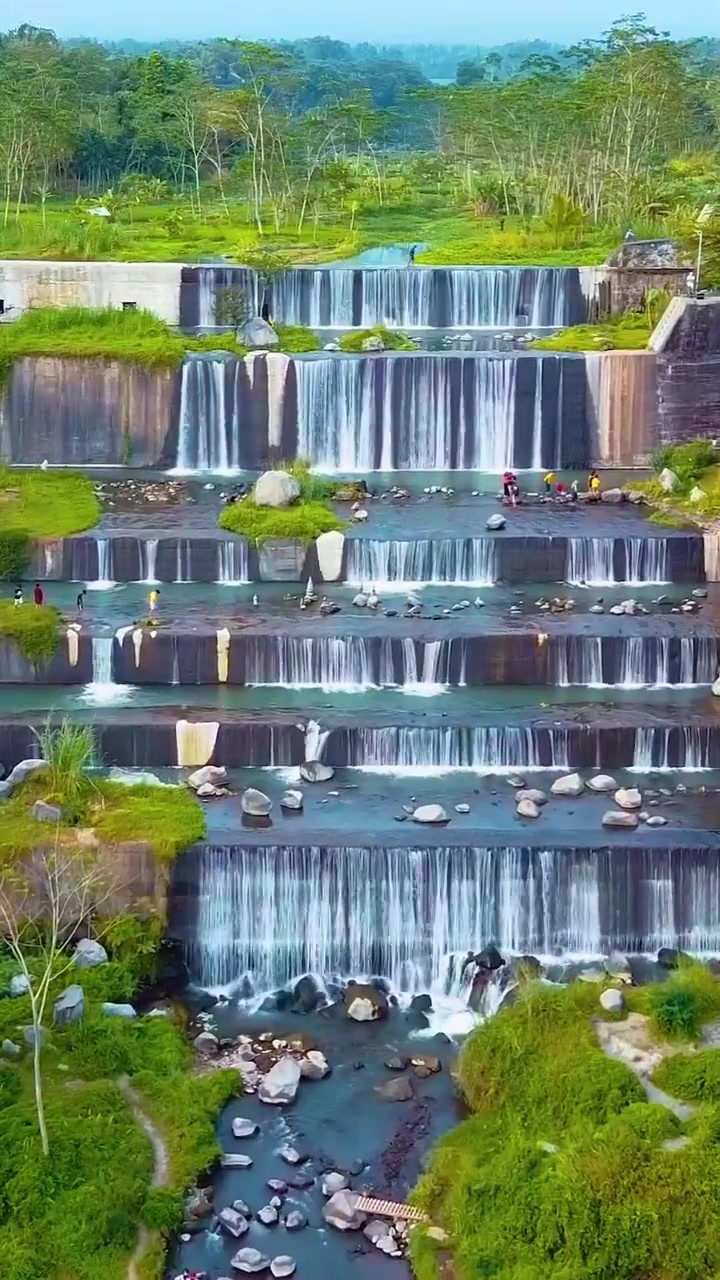
Plunging below rocky outcroppings, the waterfall cascades into pools that stretch up and down staggered levels. People catch their breath. This is no subtle stream — the waterfall owns its environment. The water thrashes past, filling the air with cool mist. Cascading waterfalls are an iconic display of nature's power, but there's more to the experience than photos can capture. For waterfall travelers, the journey and the scene are equally important.
The Anatomy of a Waterfall
Waterfalls come in many forms, but the example pictured is a stepped waterfall. The water runs down a series of stairs: each step added to the water’s momentum. Such waterfalls build anticipation. As water rushes down each level, it breaks into smaller streams and pools, forming a multi-tiered structure where water is constantly in motion. This layered design gives the scene a relaxing rhythm as water crashes against rocks and gathers in pools. The resulting sound, a constant thunderous roar, creates a symphony that soothes the mind and awakens the senses. The experience is often a destination adventure. Finding them involves navigating trails and rocky steps. Some traversal can be part of the thrill, too. Visitors must mind their own rocky steps to take it all in: waterfalls are often in areas that require some planning, hiking, or climbing, making it both a physical and mental challenge.
The Calm Amid the Storm
Creating a tranquil atmosphere is a key factor of the experience. Nature enthusiasts may find themselves drawn towards waterfalls for the tranquility they offer. A waterfall offers a chance to step away from the daily grind. However, finding a waterfall is not just about the destination. It’s about what visitors bring with them. Water can be the catalyst to important conversations and to a clearer connection with nature. Many visitors may also seek waterfalls for the spiritual experience, the feeling of being small in the presence of powerful nature.
Where to Look
Waterfalls can be found across all continents. But some landscapes are particularly well known for their waterfalls:
Rivers and Mountain Environments
The surrounding environment heightens the viewing experience. Rivers churn on their journey to the sea, and waterfalls are part of the ride — they may drop into pools, streams, lakes, or further down. For some, waterfalls are more than just sights. Water echoes off the stone, heightening the experience. Many visitors describe feeling the waterfall’s energy.
Natural Parks and Reserves
Such locations are often protected to prevent damage to the site or intrusion to wildlife. Some of the most iconic waterfalls can be found in these environments — often with paths and overlooks for visitors. Waterfalls are an excellent way to engage with nature, making the journey meaningful. For example, the pathways towards waterfalls may be dirt trails or boardwalks with signage to provide context for the sights and sounds.
A Tourist's (Potential) Guide to Waterfalls
Waterfalls draw millions of visitors every year. Waterfalls can be located in natural environments, remote rural areas, or nearby urban areas. Visiting them is all about the journey, as well as the destination.
- Research First: Understand the local waterfalls, whether they are difficult to access, how to get there, and what to bring with you.
- Prepare for the Journey: Waterfalls may be near the destination, but visitors need to prepare for the trip itself. Depending on the travel, visitors may need to plan what to carry from food, clothing, or any safety gear.
- Hiking Boots: Boots and sturdy footwear are often a must, especially if the path includes rocky steps, and even if the terrain is not steep, don’t underestimate the water.
- Food and Water: Carry enough food and water for the journey. Prepare for height and humidity — waterfalls can be hot and cold.
Everyone's Waterfall
Experience a waterfall, and the experience is forever etched in memory. The roar, the power, and the serenity are all part of the journey. Some visitors may feel a sense of peace and calm. It’s more than just the sight — waterfalls are a part of the landscape, creating a feeling of awe and wonder. It stays with you long after you’ve left.
Watch the Reel
Questions readers ask
What makes a multi-tiered waterfall different from other types of waterfalls?
A multi-tiered waterfall, like the one described, is characterized by its stepped structure. Water cascades down a series of levels, each adding to the water's momentum and creating a layered, rhythmic flow. This design not only makes the waterfall visually stunning but also enhances the soothing sound of the falling water, creating a unique auditory experience.
How do the surroundings influence the experience of visiting a waterfall?
The surroundings significantly enhance the waterfall experience. For instance, rivers and mountain environments add to the dramatic effect, with waterfalls often dropping into pools or streams. Natural parks and reserves, with their protected paths and overlooks, offer a more structured and informative journey, making the visit both enjoyable and educational.
What kind of preparation should visitors make before visiting a waterfall?
Visiting a waterfall often involves some level of physical activity, such as hiking or climbing, so visitors should be prepared for that. It’s also important to check the specific waterfall’s location and any required permits or guidelines, as many are in protected areas. Additionally, visitors should bring appropriate gear, such as sturdy footwear and weather-appropriate clothing, to ensure a safe and enjoyable experience.
What is the spiritual significance of waterfalls for some visitors?
For many, waterfalls offer a spiritual experience. The sheer power and beauty of the falls can make visitors feel small and connected to something greater than themselves. This environment can foster a sense of peace and clarity, providing a unique opportunity for reflection and introspection.
Are there any notable waterfalls around the world that are particularly famous for their multi-tiered structure?
While the article doesn’t name specific waterfalls, there are several renowned multi-tiered waterfalls around the world. For example, Iguazu Falls in South America and Victoria Falls in Africa are famous for their multi-tiered structures and the dramatic impact they have on visitors.
Can visitors interact with the waterfall in any way, and if so, how?
While the article emphasizes the importance of the journey and the scene, it doesn’t explicitly mention direct interaction with the waterfall. However, some waterfalls do offer opportunities for visitors to get close to the water, feel the mist, or even swim in nearby pools, depending on the location and safety guidelines.
What should visitors expect from the sound and atmosphere of a multi-tiered waterfall?
The sound of a multi-tiered waterfall is often described as a thunderous roar, which can be both soothing and invigorating. The layered design of the waterfall creates a constant, rhythmic sound as water crashes against rocks and gathers in pools, providing a calming backdrop for visitors to enjoy the natural surroundings.
Related deep dives
Similar reads based on topic and creator.




Recent articles
Fresh deep dives from the latest Reels we unpacked.

Comments
Be the first to comment.