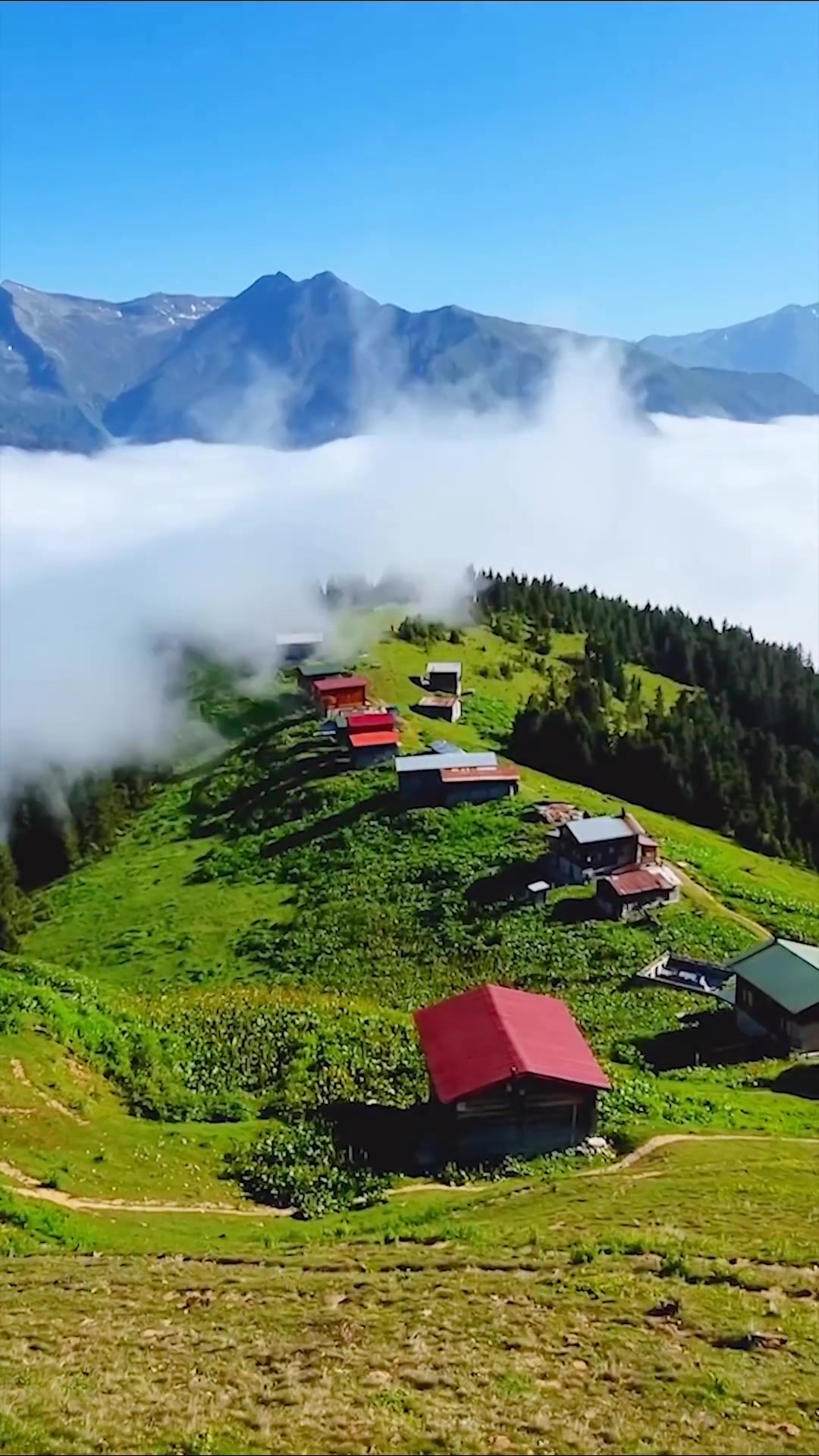
Aerial views capture the beauty of a remote village in the mountains, revealing the picturesque landscape of traditional wooden houses partially obscured by clouds — this visual “poetry” has long been appreciated.
The Art of the Mountain Village Portrait
Mountain village landscapes are more than just scenery: they are living testaments to human adaptation and harmony with nature. The video focuses on a village nestled in a lush green valley, showcasing traditional wooden houses scattered across the hillside. These human-made structures coexist seamlessly with the natural environment, offering a serene view that is both picturesque and reflective of a centuries-old way of life. The visual perspective is crucial in this style of photography. Aerial views, in particular, offer a unique vantage point that reveals the interconnectedness of the built environment and the landscape. They provide a sense of scale and depth, allowing viewers to appreciate the village's structure and layout. When clouds drift in, the village becomes a mysterious endeavour partially obscured by the clouds. This adds a poetic, almost surreal element to the scene, which makes the image all the more compelling. Here, the symmetry, spacing, and arrangement of houses merge with the natural elements, creating a composition that is both aesthetically pleasing and thought-provoking. The visual shows the shifting of perspectives: the alteration between the dense, partially covered houses, and the clear, pristine sky highlights the interplay between contrast and harmony.
How Mountain Scenery Became Popular
Aerial photography has become increasingly popular, not just as a hobby but as a form of art that captivates viewers. This concept of “sublime” lush green valleys and traditional wooden houses is deeply rooted in a broader fascination with nature and rural life. Mountain villages, in particular, have long captured the imagination of photographers and artists — think of theality of photographer Ansel Adams, whose work brought the grandeur of the American landscape into the public eye. The appeal lies in the contrast between the rugged, untamed beauty of the mountains, and the quaint, human-scale construction of the village. Additionally, the digital age has democratized this type of photography. The video was likely captured by a drone, which is readily available today. This accessibility has broadened the appeal and increased the frequency of such outdoors shots.
Aerial views reveal the architecture
Mountain villages are often characterized by their unique architectural styles, which have evolved over centuries to suit the local environment. Traditional wooden houses, for instance, are common in many mountain regions, providing insulation from extreme temperatures and offering durability in rugged terrain. Traditional wooden houses in mountain villages like this one, often have unique design features like sloping roofs, large balconies, and thick wooden beams. These features not only provide structural support but also reflect the local cultural and aesthetic preferences. The houses are typically nestled closely together, creating a sense of community and shared space that is characteristic of rural mountain settlements. The arrangement of these houses is often dictated by the topography of the land, with buildings situated on terraces or along narrow paths.
The Play of Light and Shadow
The interplay of light and shadow is a crucial element in capturing the beauty of a mountain village. This interplay also enhances the visual interest. Because of the emergence from fog, some parts of the village are revealed while some are partially obscured. This shifting play of light and shadow draws attention to the village's form and texture. The soft, diffused light often found in such landscapes casts a gentle, ethereal glow, highlighting the natural beauty of the surroundings. This contrast enhances the textures and contours of the houses and the landscape, creating a sense of depth and dimension.
The Cloudy canvases
The village’s beauty stands out even more prominently against the backdrop of the dramatic interplay of clouds. The presence of clouds adds a dynamic, ever-changing element to the scene, creating a sense of movement and fluidity that complements the more static elements of the landscape. This combines to create mixed welcome of light and shadow. This duality heightens the emotional resonance of the image, evoking a sense of tranquility and mystery. The clouds not only provide a dramatic backdrop but also create a sense of depth and distance, emphasizing the vastness of the landscape. Clouds can obscure the view, revealing elements of the village and the landscape gradually and in different ways, allowing for multiple interesting compositions within a single scene.
The Aerial View
Aerial views provide a unique perspective that allows viewers to appreciate the beauty of the valley. It offers a different, wide-angle way of seeing the village, providing a sense of scale and depth that is not possible from ground level. The high vantage point reveals the intricate layout of the village, the arrangement of the houses, and the natural flow of the landscape. Aerial views are particularly striking in this case because the village is partially obscured by fog, creating a veil-like effect that adds an air of mystery and intrigue. This contrasts sharply with the open sky and clear areas, creating a dynamic interplay of visibility and concealment. This additional dynamic contrasts highlights the natural and human-rounded elements, making the entire landscape visually and intellectually engaging.
Exploring the Valley
The best places for experiencing landscapes such as those found in the video are probably tourist destinations or national parks that feature such mountain villages. Some popular choices include: Wooden Houses: Many travel agencies organize trips that focus on traditional wooden architecture, including guided tours and photo shoots. Local Guides: Many villages offer guided tours with local guides who can provide insights into the history, culture, and architecture of the region.
Capture the Moment
Equipment:
Drones: For aerial views, a drone is essential. Consider investing in a high-quality drone with a built-in camera to capture detailed aerial footage.
Techniques:
Lighting: The best time to capture the village is during the golden hours — just after sunrise or before sunset. The soft, warm light during these times can add a magical glow to the scene, enhancing the overall aesthetic.
Shooting:
High Altitude: When shooting from a drone, try to maintain a high altitude to capture the entire village and its surroundings. This will provide a better context and a more comprehensive view of the landscape.
Post Production:
Editing Tools: Use editing software to enhance the colors, contrast, and sharpness of the images. Software like Lightroom or Photoshop can help bring out the best in your photographs.
Publishing:
Platforms: Share your photos and videos on platforms like Instagram, where the visual appeal of these landscapes can gain significant attention and appreciation.
Envisioning the Future
The intersection of nature and human habitation showcases the timeless beauty of mountain villages. However, the increasing popularity of aerial photography means there is a risk that these villages may become over-touristed, potentially disrupting the delicate balance of rural life. The preservation of these landscapes, however, is crucial to maintaining their serene, untouched appeal. The picturesque, remote village showcased in the video invites us to appreciate these landscapes in a deeper, more meaningful way. Whether through photography or travel, experiencing these places firsthand can inspire a sense of awe and a deeper connection to the natural world.
Watch the Reel
Questions readers ask
What makes aerial views of mountain villages so captivating?
Aerial views offer a unique perspective that shows how human-made structures blend with nature. They reveal the layout and scale of the village, making it look both picturesque and thought-provoking. The interplay of clouds and the village adds a poetic, surreal element that enhances the visual appeal.
How do traditional wooden houses in mountain villages reflect their environment?
These houses are designed with features like sloping roofs and thick wooden beams to withstand harsh weather conditions. Their design and materials reflect the local culture and the need for durability in rugged terrain and insulation against extreme temperatures.
Why have mountain village landscapes become so popular in photography?
The popularity stems from the contrast between rugged mountains and quaint villages, which has long fascinated artists. The accessibility of drones has also made it easier for more people to capture these stunning landscapes and share them widely, increasing their appeal.
What role do clouds play in aerial photography of mountain villages?
Clouds add a dynamic, almost surreal element to the scene. They can partially obscure the village, creating a sense of mystery and depth. This contrast between the dense, partially covered houses and the clear sky highlights the interplay between harmony and contrast in the landscape.
How has the digital age impacted the popularity of mountain village aerial photography?
The digital age has made aerial photography more accessible with the use of drones. This technology has allowed more people to capture and share stunning aerial views, making this type of photography more popular and widespread.
Are there specific architectural features common to mountain village houses?
Traditional wooden houses in mountain villages often have sloping roofs, large balconies, and thick wooden beams. These features provide structural support and insulation, while also reflecting local cultural and aesthetic preferences. The arrangement of these houses often creates a sense of community and shared space.
Can I achieve similar aerial views with my smartphone?
While smartphones have advanced cameras, achieving the same aerial views typically requires a drone. Drones provide the necessary height and stability to capture the unique perspective and scale of mountain villages. However, some smartphones can be attached to small, portable drones or stabilizers for a similar effect, though the quality might not match that of a dedicated drone camera.
Related deep dives
Similar reads based on topic and creator.
Recent articles
Fresh deep dives from the latest Reels we unpacked.


Comments
Be the first to comment.