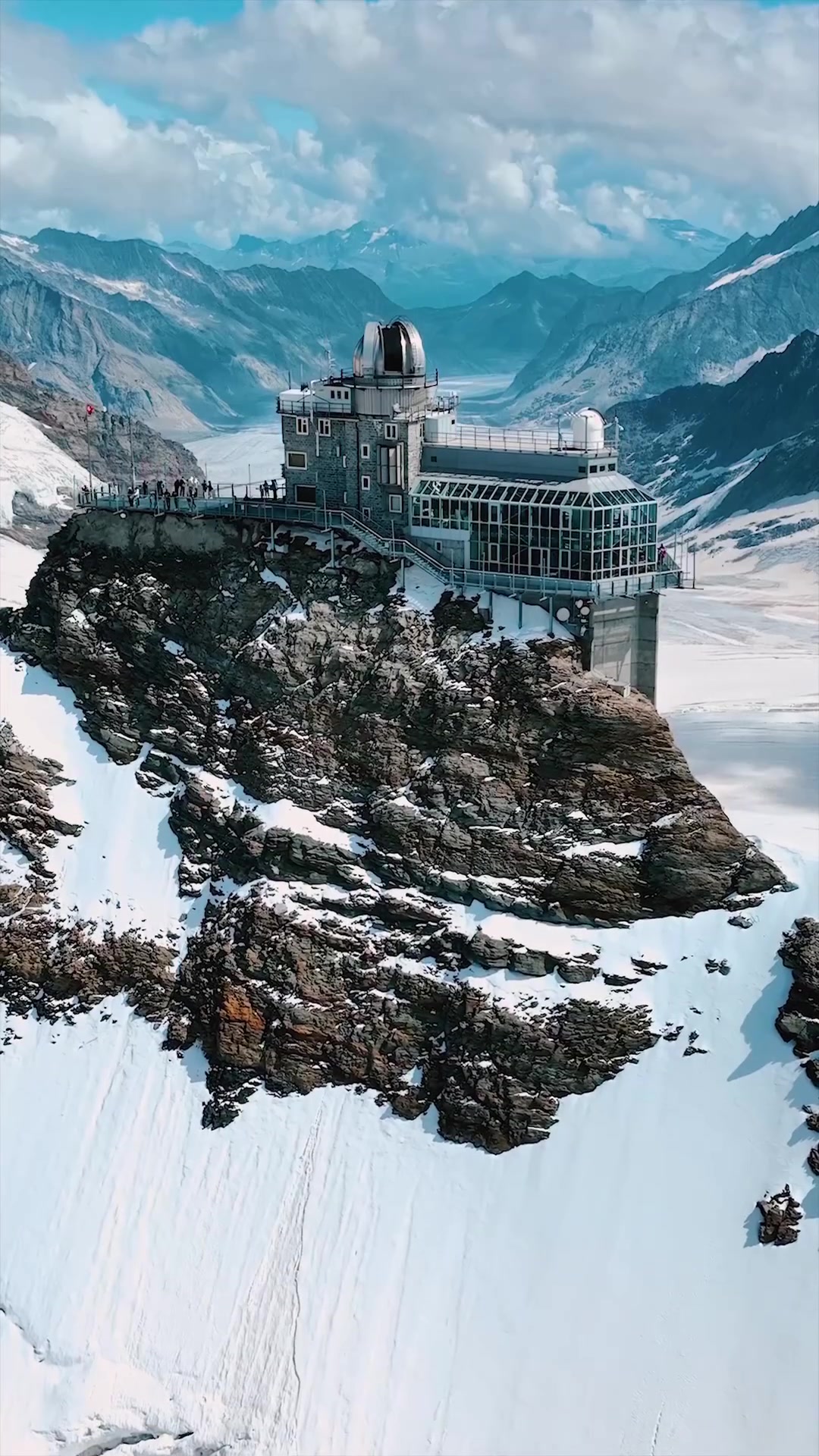
A hardy structure clings to a rocky mountain peak, as ancient as the glacier below and as contemporary as the drone that captured it. The building at the heart of the sweeping mountain panorama is not mere shelter. Its distinct architectural design hints at a larger purpose beyond mere habitation. This observation station stands as a testament to human innovation — a place to conduct research in a unique landscape. The structure houses specialized equipment, allowing scientists to study the mountain environment, from the peaks to the glaciers, without stepping outside. Extending outwards with a series of antennas and sensors, the building acts as a center for data collection, monitoring weather patterns, and more.
The Last Bastion of Latitude
Mountain research stations like this one are the rare outposts of human presence in extreme environments. They provide scientists with the tools and shelter to conduct long-term studies in remote locations. Perched at high altitudes, these stations offer unparalleled access to unique ecosystems and atmospheric conditions. Glaciers, like the one winding through the valley in the video, are critical indicators of climate change, and installing labs at the ends of the earth provides data that might otherwise go uncollected.
Perspective from the sky
Aerial footage of these research stations provides a compelling view of their impact on the landscape. Perched atop a rocky peak, these structures become visual markers of human curiosity and scientific ambition. The vantage points are more than just eye-catching — they offer a way of understanding how remote scientific research is conducted.
Aerial Command Centers
What elevates these stations is their multifunctional design. Each angle of this station's architecture reveals more about its purpose: The central part acts as living quarters; dormitories, labs, and offices accommodate a small team of scientists, while the antennas and sensors connected to the station are no doubt collecting atmospheric data. The high altitude and isolation present significant challenges. Staying warm and navigable are a key part of the design. The structure is angled in a way that might allow snow to melt and flow away, preventing it from piling up on the roof and causing structural damage. The viewing platforms, topped with antennas, are arranged in such a way that it seems like they might be designed to maximize their angle of view and reach. The station's communications equipment might be tackling the problem that comes hand in hand with being in such a remote location: getting data in and out. The station has some of the stronger antennas available, but the lack of infrastructure in such a remote area might be causing some issues — data gathered from various sensors needs to zip straight to scientists in lower altitudes.
The Art of Isolation
Buildings like these offer a fascinating glimpse into the logistics of isolating scientific research. Utterly cutting-edge research conducted by lone scientists in remote locations. The structure would have been constructed in a manner to ensure that the equipment is shielded from temperature variations and harsh winds, yet still able to conduct the research it was built for. Built for scientific study, this station is a marvel of how modern creators navigate challenging environments. Built to be completely self-sustaining, they serve as a testament to practical innovation. The designers had to think of every possible eventuality and counter it with the design. There would be no coming back from the nearest town.
Icy Companions
The station sits in a deep, snow-capped valley, a micro climate where glaciers are actively carving the landscape. Glaciers like these are unique environments, and they hold a treasure trove of scientific data. Research at stations like these can provide insights into climate change, geology, and even astrobiology, by analyzing the microorganisms that thrive in the extreme conditions.
The reach of the research stations
On the mountain frontlines
These stations are front and center of the climate change conversation. Scientists conduct experiments that track changes in atmospheric conditions, glacier movement, and wildlife patterns, providing essential data for climate models. The information gathered not only aids our understanding of the natural world but can also inform policy decisions and disaster preparedness. These stations are the real outposts of innovation. Directly highlighting the facts that are being collected by these stations and their implications as a whole.
Is it all worth it?
This type of structure is a remarkable feat of engineering. It could be designed in a way to allow the scientists to collect relevant data — but what about the rest? The construction is likely to have involved a good deal of machinery and possibly a helicopter, which could do considerable damage to the environment. Though the key point is that this is a building, not a cog in a machine. It is essential to keep in mind that by providing a home to these scientists, we are also. The same qualities that make these stations essential for scientific research also pose unique challenges. Year-round occupancy in such isolated locations presents logistical and psychological challenges, which scientists need to navigate carefully. The people in these stations are not only far away from the rest of the world but also from each other. They also need to guarantee that the station itself does not make an adverse impact on the very landscape it's there to study. If the station doesn't have a protective seal to prevent dust and debris from entering the various outlets, then the data can be skewed.
Maintaining Mountain Perches
Any student of geographic research will need to get their hands on some tools and supplies, including all your standard hiking equipment along with some more specialized items. Scientists traveling to these stations typically require practical, durable clothing and equipment to withstand the extreme conditions. The station's location is essentially dependent on aiding the minimal impact it causes. There's a reason why these stations sometimes look as though they are standing on stilts. These buildings are constructed with specialized materials and techniques to withstand extreme weather conditions and require regular maintenance to ensure their functionality. Any key equipment that could potentially be compromised due to a breakdown must be protected.
Watch the Reel
Questions readers ask
What kind of research is done at these remote mountain research stations?
These stations focus on studying unique ecosystems and atmospheric conditions, with a particular emphasis on glaciers. Glaciers are crucial indicators of climate change, and the data collected at these stations helps scientists understand broader environmental trends. The specialized equipment housed within the stations allows for comprehensive studies without the need for frequent outdoor excursions.
How do these research stations manage to stay functional in such harsh conditions?
The design of these stations is tailored to withstand extreme environments. For instance, the structure is angled to prevent snow buildup, which could cause structural damage. Additionally, the stations are equipped with strong antennas and sensors to collect atmospheric data, even in remote locations where infrastructure is limited.
What challenges do scientists face when working at these high-altitude research stations?
Scientists at these stations face significant challenges, including extreme weather conditions and isolation. The stations are designed to provide shelter and essential amenities, but the harsh environment and lack of infrastructure can make data transmission and navigation difficult. The structure's design helps mitigate some of these issues, but working in such remote locations remains a formidable task.
How does the architecture of these research stations support their scientific mission?
The architecture is multifunctional, with distinct sections for living quarters, labs, and offices. The design also includes antennas and sensors that are strategically placed to maximize data collection and communication capabilities. The angled structure helps manage snow buildup, ensuring the station remains functional despite the harsh conditions.
What role do drones play in the operation of these research stations?
Drones provide valuable aerial footage that offers a unique perspective on the stations and their surroundings. This footage not only showcases the impact of these structures on the landscape but also helps scientists monitor the environment and the station's condition from a distance, aiding in both research and maintenance efforts.
Are there any other research stations like this one around the world?
Yes, there are several research stations around the world that operate in similar extreme environments. These stations are often located at high altitudes or in remote polar regions and serve as outposts for scientific research on climate change, glaciers, and unique ecosystems. Each station is designed to withstand the specific challenges of its location, much like the one featured in the article.
Related deep dives
Similar reads based on topic and creator.


Recent articles
Fresh deep dives from the latest Reels we unpacked.


Comments
Be the first to comment.