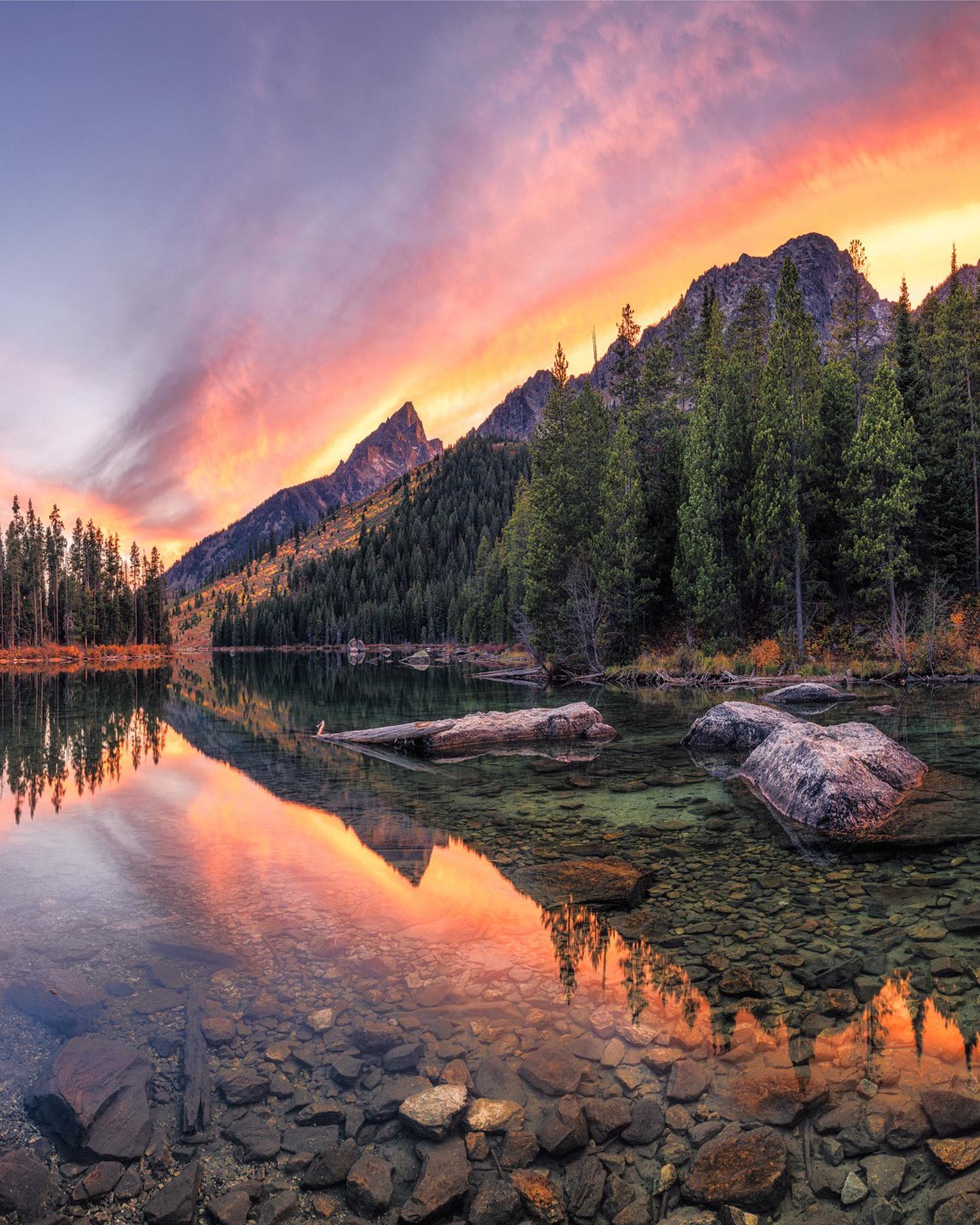
Catching Light and Shadow in Spacious Landscapes
Imagine fields as vast as continents, mountains towering through mist, and lakes mirroring the sky, as if both earth and water embrace it. Scenic mountain landscapes have a unique way of making the world feel both intimate and infinite, as seen one recent reel. Though not everyone can see these sights firsthand, landscape photography packs a punch — from mountaintop reflections to the immense serene skies. Landscape photography captures the beauty of natural settings, often blending various techniques to convey the sheer size, scale, and drama of wide-open, wild places. One of the key distinctions of scenic mountain landscapes versus other photography genres is the focus on the interplay of light and the vastness of the scene — whether it is a vibrant sunset, a golden hour glow, or a reflective pool mirroring a mist-kissed mountain.
The distillation of wilderness
The beauty of scenic mountain landscapes is that they capture the essence of those wild places while being accessible to any viewer, even on a device screen at a desk. The popularity of landscape photography grew alongside the rise of outdoor recreation and mountain guides/courses. As people became more mobile, we became more curious of the world. Cameras made that curiosity accessible. Commercially, landscape photography can be a driver of travel. Once just scenic wall art, landscape photography now helps sell adventures and trips to people around the world.
### What makes a frame
There are many distinctions within landscape photography. The reel starts with a lake reflecting vibrant hues. The lake provides a calm surface for the sky to mirror itself, creating a symmetrical scene that is pleasing to the eye. A lake is not always just a lake on a photo — it becomes a pool where time and the sky meet. Next, the rustic landscape includes a winding road and a mountain. Winding roads are a popular inclusion in landscape photographs. They provide a sense of depth and intrigue, suggesting a journey or adventure. The road draws the eye in, leading to the mountain and beyond. The winding road might be in motion, of course. Lastly, the reel frames a rustic barn and a field with mountains as the backdrop. Barns and rustic landscapes are a common theme in landscape photography, often evoking nostalgia or a sense of home. The contrast between an old barn and the surrounding natural beauty adds a sense of history and timelessness to the image.
### Techniques uniquely harnessed by photographers
Photographers must harness techniques like using a wide angle lens with a low aperture to capture the full scale of the scene. For instance, a lake reflected against mountains can easily be marred — weather conditions, the angle of the sun, or objects on the lake surface could interrupt the perfect reflection. Time, effort, and skill transform a scene into a landscape photograph. Long exposure photography is also popular in landscape photography, especially with lake or river scenes. These photos can create a soft, dreamy effect as they capture the movement of water, clouds, or other elements.
### Becoming engrossed in the scene
The reel showcases photographs that create an emotional connection with the viewer through the concept of immersion. The scene is immersive enough to drive the viewer to engage with the image — whether it is the reflection of a lake, the winding road, or the rustic barn. The idea of experiencing the scene in person can appeal to visitors or notably inspire locals.
### Places and frames that made it mainstream
The popularity of landscape photography has a long history that goes back to the 1800s. With the invention and improvement of the camera, landscape photographs began to gain popularity, and the photography genre was born. The camera itself, whether it was a box or a tripod rig, got viewers on mounting points. The photographer maneuvers around the subject — and gets the frames that sell the experience.
The beauty of limits
Proper exposure, a tripod for stability, and patience for planning and waiting for the perfect moment are essential skills of the photographic trade, including scenic mountain landscapes. To attempt landscape photography, patience and understanding are essential. One must constantly test different angles, lighting, and compositions to achieve the desired result. Familiarize yourself with the equipment, such as different lens types, tripods, and filters. Research the best times of day for lighting and be prepared to wait for the perfect shot. Use wide-angle lenses to capture expansive scenes.
- Know your gear: wide-angle lenses and tripods are particularly useful.
- Understand light: Golden hour and blue hour are ideal for capturing the best light and colors.
- Plan compositions: Consider leading lines, reflections, and symmetry.
- Be patient: Wait for the perfect moment and conditions.
- Experiment: Try different techniques, such as long exposures or HDR, to create unique effects.
The perfect frame
Seeing the world through a frame is a transformative experience. Snatching it in a photo can be a lifelong, lived experience of this amazing world: Land, sky, and everything in between. The images showcased in the reel are a testament to the beauty and power of scenic mountain landscapes. They capture the essence of nature, evoking a sense of awe and wonder. Whether it's the vibrant sunset reflecting off a lake, the winding road leading to a distant mountain range, or the rustic barn nestled in a field, each photograph tells a story and invites the viewer to explore and appreciate the natural world's grandeur.
Watch the Reel
Questions readers ask
What kind of equipment do I need to capture stunning mountain landscapes?
To capture stunning mountain landscapes, you'll need a good camera with a wide-angle lens to capture the vastness of the scene. A tripod is also essential for keeping your camera steady, especially for long exposure shots. Additionally, a filter set (like a polarizing filter) can help manage reflections and enhance colors, while a lens hood can prevent lens flare.
Can I use a smartphone to take good mountain landscape photos?
Yes, you can use a smartphone to take good mountain landscape photos, especially if you have a good eye for composition. Modern smartphones have high-quality cameras that can capture impressive details. To get the best results, use a tripod or a stabilizer to keep your phone steady, and consider using apps that offer manual controls for better exposure and focus.
How do I capture the perfect reflection of a mountain in a lake?
Capturing the perfect reflection of a mountain in a lake requires patience and the right conditions. Look for a calm day with minimal wind to ensure the water's surface is still. Position yourself at an angle where the mountain and its reflection are symmetrical. Use a wide-angle lens with a low aperture to capture as much of the scene as possible. A polarizing filter can also help reduce glare and enhance the reflection.
What is the best time of day to photograph mountain landscapes?
The best times of day to photograph mountain landscapes are during the golden hours — just after sunrise and just before sunset. During these times, the light is softer and warmer, creating a beautiful glow that can enhance the colors and textures of the landscape. Additionally, the low angle of the sun during these hours can create dramatic shadows and highlights, adding depth to your photos.
How can I make my mountain landscape photos stand out?
To make your mountain landscape photos stand out, focus on unique compositions and perspectives. Include interesting elements like winding roads, rustic barns, or bodies of water that reflect the scenery. Experiment with different techniques like long exposure photography to capture the movement of water or clouds. Additionally, pay attention to the interplay of light and shadow, and use filters to enhance colors and reduce glare.
What are some common mistakes to avoid in mountain landscape photography?
One common mistake in mountain landscape photography is not using a tripod, which can result in blurry photos, especially in low light or with long exposure shots. Another mistake is not paying attention to the weather or time of day, which can affect the quality of light and the overall mood of the photo. Additionally, overlooking the foreground and background can lead to a lack of depth and interest in the image.
What are some good apps for editing mountain landscape photos?
There are several good apps for editing mountain landscape photos, such as Adobe Lightroom Mobile, Snapseed, and VSCO. These apps offer a range of tools for adjusting exposure, contrast, and color, as well as applying filters and effects. For more advanced editing, consider using desktop software like Adobe Photoshop or Lightroom, which offer even more control and precision.
Related deep dives
Similar reads based on topic and creator.


Recent articles
Fresh deep dives from the latest Reels we unpacked.


Comments
Be the first to comment.