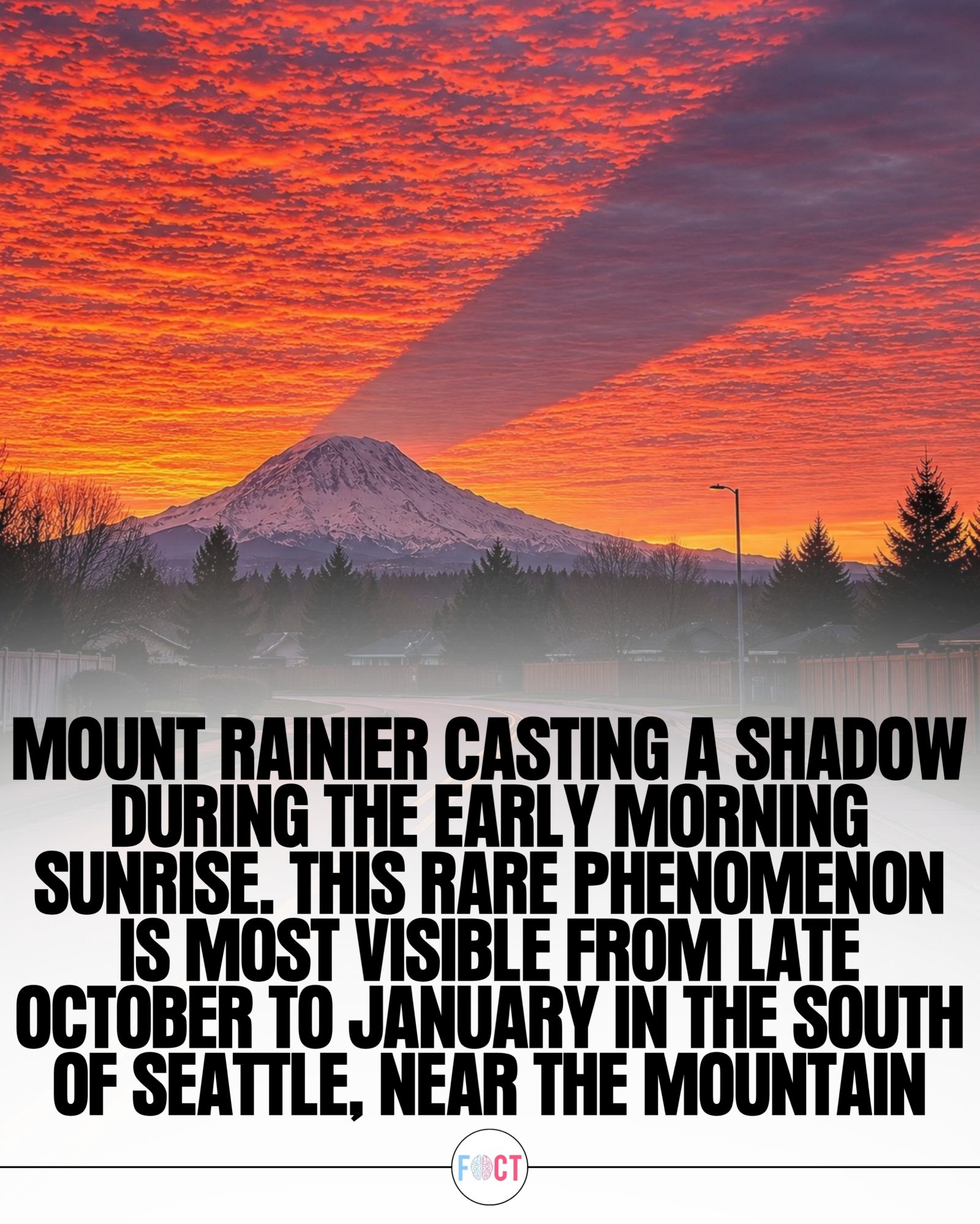
Mount Rainier Shadow Phenomenon
Witnessing the shadow of Mount Rainier at sunrise is an awe-inspiring sight. This natural phenomenon occurs when the early morning sun aligns perfectly behind the mountain, casting its distinctive silhouette onto clouds at just the right altitude. The spectacle is visually stunning and best observed from specific locations and during particular times of the year.
Context / Why This Matters
The Mount Rainier shadow phenomenon is not just a fleeting moment of natural beauty; it is a geographic marvel that highlights the interplay between the Earth's rotation, the sun's position, and the unique topography of the Pacific Northwest. Understanding this phenomenon helps us appreciate the harmony between natural forces and the beauty they create. For residents of the Seattle area and visitors alike, knowing when and where to view this rare sight can enhance their appreciation for the region's natural wonders.
Main Discussion
The Science Behind the Phenomenon
The phenomenon occurs due to the precise alignment of the sun, Mount Rainier, and the observer. During early morning sunrises, particularly from late October to January, the sun is low in the sky and can cast a distinct shadow of the mountain onto the clouds. This alignment is most visible from the southern areas of Seattle and surrounding regions, where the landscape is flat enough to observe this remarkable effect.
Ideal Viewing Conditions
To get the best view of this phenomenon, several factors must align:
-
Time of Year: The ideal time to view the shadow is from late October to January. During these months, the sun's angle and the cloud formations create the perfect conditions for the shadow to be visible.
-
Time of Day: Early morning sunrises are crucial. The sun must be low in the sky and aligned behind the mountain to cast its shadow.
-
Location: The southern parts of Seattle and areas near the mountain offer the best vantage points. The flat landscape allows for an unobstructed view of the shadow cast onto the clouds.
Geographical Significance
Mount Rainier, an active volcano located in the Cascade Range, is a prominent feature of the Pacific Northwest. Its towering presence and the surrounding landscape make it an ideal subject for viewing unique natural phenomena. The mountain's shadow not only adds to its mystique but also serves as a reminder of the dynamic geological processes at play.
Practical Tips
Viewing the Mount Rainier shadow phenomenon requires planning and the right conditions. Here are some practical tips to help you experience this natural wonder:
1. Plan Ahead
Check weather forecasts to ensure clear skies and optimal cloud conditions. The presence of clouds at the right altitude is crucial for the shadow to be visible.
2. Choose the Right Location
Head to the southern parts of Seattle or areas near the mountain. Common viewing spots include:
- Lake Washington: The northern shore of the lake can offer a clear view of the mountain and its shadow.
- Des Moines: Located in the South of Seattle, this area provides excellent vantage points for the phenomenon.
- Kitsap Peninsula: Further south of Seattle, this peninsula offers a different perspective and a chance to see the shadow from a different angle.
3. Arrive Early
Get to your chosen location well before sunrise to set up and get comfortable. Arriving early also ensures you have time to adjust your camera settings if you plan to photograph the event.
4. Bring the Right Gear
If you plan to capture the phenomenon, bring a good camera with a tripod. A telephoto lens can help you zoom in and capture the details of the shadow. Additionally, warm clothing and a thermos of coffee or tea can make the wait more comfortable.
5. Be Patient
Sunrises can be unpredictable, and the exact moment the shadow appears can vary. Be patient and enjoy the surrounding beauty while you wait.
Important Takeaways
Understanding and experiencing the Mount Rainier shadow phenomenon is more than just a sightseeing activity; it's an opportunity to connect with nature's intricacies. Here are the key takeaways:
- Timing Matters: The phenomenon is most visible during specific times of the year and day.
- Location Is Key: The southern parts of Seattle and areas near the mountain offer the best views.
- Natural Beauty: The event highlights the beauty of natural processes and the interplay between geographic features and atmospheric conditions.
Conclusion
The Mount Rainier shadow phenomenon is a rare and breathtaking sight that showcases the beauty and complexity of our natural world. It's a reminder that the Earth is full of wonders waiting to be discovered. Whether you're a local or a visitor, experiencing this phenomenon is a memorable way to connect with the unique geography of the Pacific Northwest. So next time between late October and January, step out early to catch a glimpse of this mesmerizing sight.
Watch the Reel
Questions readers ask
What causes the Mount Rainier sunrise shadow phenomenon?
The Mount Rainier sunrise shadow occurs when the early morning sun is positioned directly behind the mountain, casting a long, distinct shadow onto clouds at a specific altitude. This alignment is influenced by the Earth's rotation and the sun's position, creating a striking visual effect.
When is the best time to see the Mount Rainier sunrise shadow?
The optimal times to observe the Mount Rainier sunrise shadow are in late October and January. During these periods, the sun's angle and the mountain's position create the most favorable conditions for viewing this rare sight.
Where are the best locations to view the Mount Rainier sunrise shadow from Seattle?
Some of the best spots to view the Mount Rainier sunrise shadow from Seattle are in South Seattle. Areas that offer clear, unobstructed views of the mountain and the surrounding sky, such as high points or open spaces, are ideal for witnessing this natural marvel.
Is the Mount Rainier shadow phenomenon a regular occurrence?
No, the Mount Rainier shadow phenomenon is not a regular occurrence. It requires specific atmospheric and astronomical conditions to align perfectly, making it a rare and sought-after sight for many.
Why does the Mount Rainier shadow appear more frequently in late October and January?
In late October, the sun is positioned at a specific angle that creates a long shadow from Mount Rainier. In January, the tilt of the Earth's axis affects the sun's position, which causes the shadow to align with the mountain and cast a particularly distinct silhouette.
What makes the Mount Rainier sunrise shadow a notable sight in the Pacific Northwest?
The Mount Rainier sunrise shadow is notable for its visual impact and the unique interplay of natural forces required to produce it. It underscores the beauty of the Pacific Northwest region and the fascinating interplay between the sun, the Earth, and the landscape.
How can I plan to see the Mount Rainier sunrise shadow?
To plan for viewing the Mount Rainier sunrise shadow, check weather forecasts for clear skies and pick a date in late October or January. Choose a viewing spot in South Seattle that offers an unobstructed view of the mountain and arrive early to set up and enjoy the breathtaking sight.
Related deep dives
Similar reads based on topic and creator.


Recent articles
Fresh deep dives from the latest Reels we unpacked.




Comments
Be the first to comment.