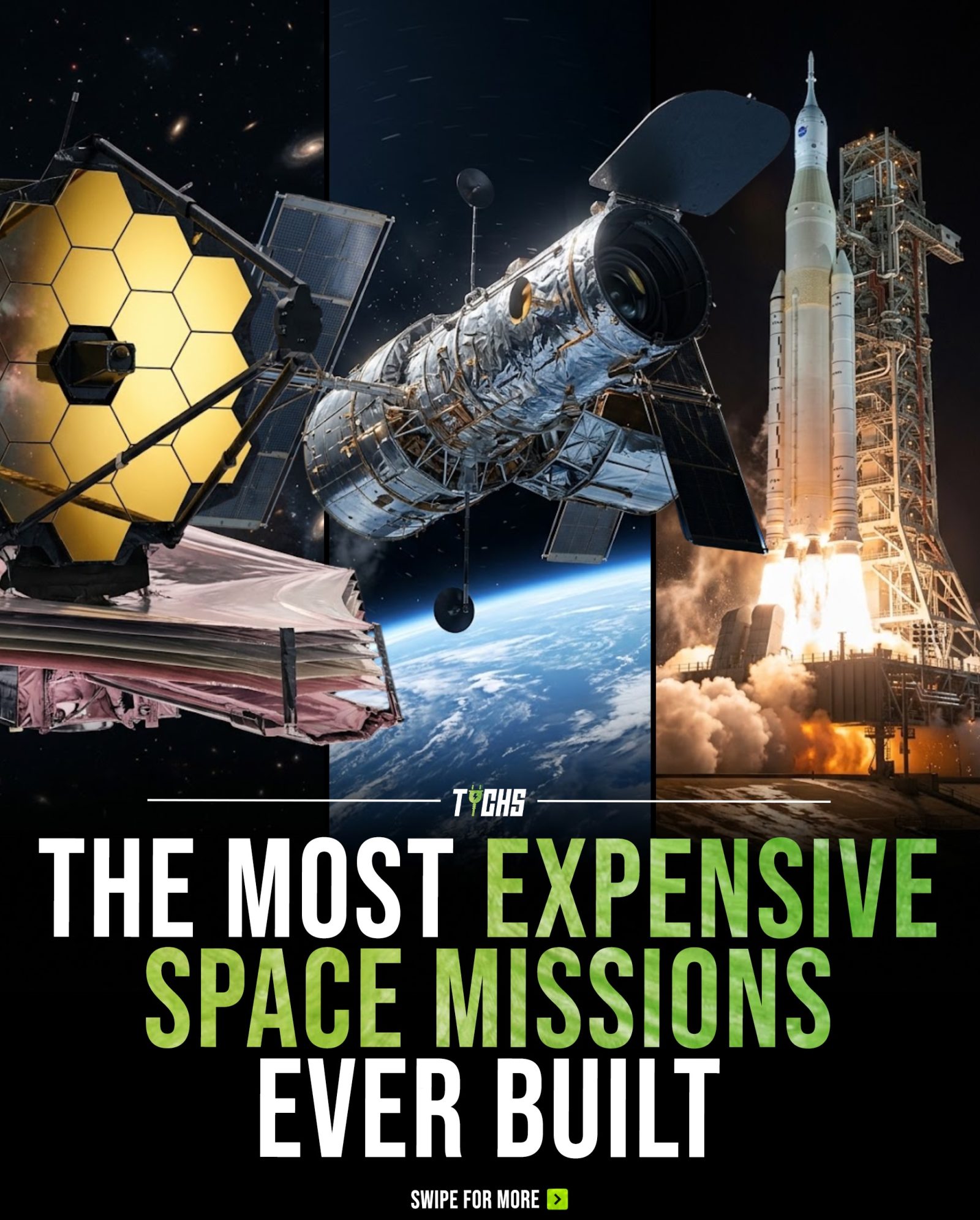
Expensive Space Missions
Space exploration has always been an ambitious and costly endeavor, with some missions costing more than entire countries' annual budgets. The most expensive space missions ever undertaken have pushed the boundaries of science, navigation, and space travel, but at a staggering financial cost.
Why this matters
The financial scale of space missions underscores the immense resources and global cooperation required to advance space exploration. Understanding these costs helps contextualize the risks, rewards, and advancements that come with space exploration.
The Most Expensive Space Missions
Salyut 6
Salyut 6, a Soviet space station, is among the most expensive space missions ever built, costing around $9 billion. Launched in 1977, Salyut 6 was the first space station to support long-duration missions and facilitated significant scientific research. Its success paved the way for future space stations and highlighted the potential of sustained human presence in space.
Apollo Program
The Apollo program, which famously landed humans on the moon, was an enormously expensive endeavor. While the exact cost has varied depending on the source, estimates have run as high as $150 billion in today’s dollars. The Apollo program not only achieved the monumental feat of lunar landings but also drove technological innovations that benefited various industries on Earth.
Hubble Space Telescope
The Hubble Space Telescope, launched in 1990, cost approximately $10 billion. Hubble has provided groundbreaking insights into the universe, including detailed images of distant galaxies, nebulae, and stars. Its contributions to astronomy have been immense, offering unprecedented views of the cosmos and deepening our understanding of celestial phenomena.
James Webb Space Telescope
The James Webb Space Telescope, launched in 2021, is one of the most advanced and expensive space missions to date, costing around $10 billion. Its primary mission is to study the early universe, exoplanets, and the formation of stars and galaxies. The Webb Telescope is designed to observe infrared light, allowing it to see through cosmic dust and peer into the farthest reaches of space.
Global Positioning System (GPS)
The Global Positioning System (GPS) is a network of satellites that provides location and time information globally. The initial development and deployment of GPS cost around $12 billion. GPS has revolutionized navigation, enabling everything from military operations to everyday activities like driving and hiking. Its precision and reliability have made it an indispensable tool in modern society.
Space Launch System (SLS) and Orion
The Space Launch System (SLS) and Orion spacecraft, part of NASA's ambitious program to return humans to the moon and eventually Mars, have cost a total of $23 billion. The SLS is designed to be the most powerful rocket ever built, capable of carrying heavy payloads beyond low Earth orbit. The Orion spacecraft is intended for crewed missions, providing a habitation and exploration platform for future space travel.
International Space Station (ISS)
The International Space Station (ISS) is one of the most expensive and complex engineering projects ever undertaken. The ISS has cost an estimated $150 billion. This collaboration between multiple space agencies, including NASA, Roscosmos, JAXA, ESA, and CSA, has allowed for long-term scientific research in microgravity. The ISS has hosted numerous experiments in biology, physics, and materials science, contributing to advancements in various fields.
Practical tips
When considering the costs of space missions, it is important to recognize that these projects are not just about exploring the unknown but also about advancing technology, driving innovation, and fostering global cooperation. Here are some practical tips for understanding the value and impact of these missions:
Understand the Long-term Benefits
Space missions often yield long-term benefits that extend far beyond their initial objectives. Technologies developed for space often find applications on Earth, from medical advancements to environmental monitoring. These benefits can justify the high costs associated with space exploration.
Recognize Global Collaboration
Many of the most expensive space missions are the result of global collaboration. Countries and space agencies work together to share resources, expertise, and costs. This collaboration not only makes ambitious projects more achievable but also strengthens international ties and fosters a shared sense of achievement.
Appreciate Technological Advancements
Space missions drive technological advancements that push the boundaries of what is possible. From new materials and propulsion systems to advanced sensors and communication technologies, the innovations developed for space often have practical applications on Earth.
Important takeaways
The financial scale of space missions is a testament to the immense resources and global cooperation required to advance space exploration. Understanding the costs and benefits of these projects helps contextualize the risks, rewards, and advancements that come with pushing the boundaries of human knowledge and capability.
Conclusion
The most expensive space missions ever undertaken have pushed the boundaries of science, navigation, and space travel. Projects like the James Webb Space Telescope, Hubble Space Telescope, and the Space Launch System with Orion spacecraft have required enormous funding, advanced technology, and decades of global scientific collaboration. While the financial costs are staggering, the advancements and innovations they bring make them invaluable investments in our future.
Watch the Reel
Questions readers ask
What factors contribute to the high cost of space missions?
The high cost of space missions can be attributed to several factors, including advanced technology development, extensive research, rigorous testing, and the sheer scale of resources required for launch and operation. Additionally, the risks involved in space travel necessitate robust safety measures and fail-safes, which further drive up the costs.
How does the cost of the Apollo moon landings compare to other expensive space missions?
The Apollo moon landings, specifically Apollo 11, cost around $25 billion in 1969 dollars, which equates to approximately $150 billion when adjusted for inflation. This makes the Apollo program one of the most expensive space missions in history, often rivaled only by the most ambitious modern projects like the James Webb Space Telescope or the International Space Station.
What is the estimated cost of the James Webb Space Telescope?
The James Webb Space Telescope, launched in 2021, has an estimated total cost of around $10 billion. This includes development, launch, and operational costs. The telescope, known for its advanced infrared capabilities, is one of the most complex and expensive space science projects ever undertaken.
Why are space missions like the Hubble Space Telescope considered so significant?
Space missions like the Hubble Space Telescope are considered significant because they have revolutionized our understanding of the universe. The Hubble Space Telescope, with a mission cost of around $16 billion, has provided unparalleled images and data, leading to groundbreaking discoveries in astronomy, such as the age and expansion rate of the universe.
What is the Orion Space Program, and why is it notable among expensive space missions?
The Orion Space Program is a key component of NASA's plans for human exploration of the moon and Mars. The program, which includes the Orion spacecraft, has a significant budget due to its ambitious goals. Notably, the first launch of the Orion spacecraft, known as Artemis 1, cost around $8.7 billion, and future missions are expected to continue pushing the boundaries of human space exploration.
How do global space missions benefit from collaboration and shared resources?
Global space missions benefit significantly from international collaboration and shared resources. By pooling expertise, technology, and financial contributions, countries can undertake more ambitious and complex missions. This collaboration not only reduces the financial burden on individual nations but also fosters global cooperation, leading to more innovative and effective space exploration projects.
What technological advancements have stemmed from the most expensive space missions?
The most expensive space missions have driven numerous technological advancements. These include improvements in satellite communication, global positioning systems, and medical technologies such as lightweight materials and radiation protection. Additionally, these missions have advanced our understanding of space navigation systems and materials science, leading to innovative applications in various industries.
Recent articles
Fresh deep dives from the latest Reels we unpacked.




Comments
Be the first to comment.