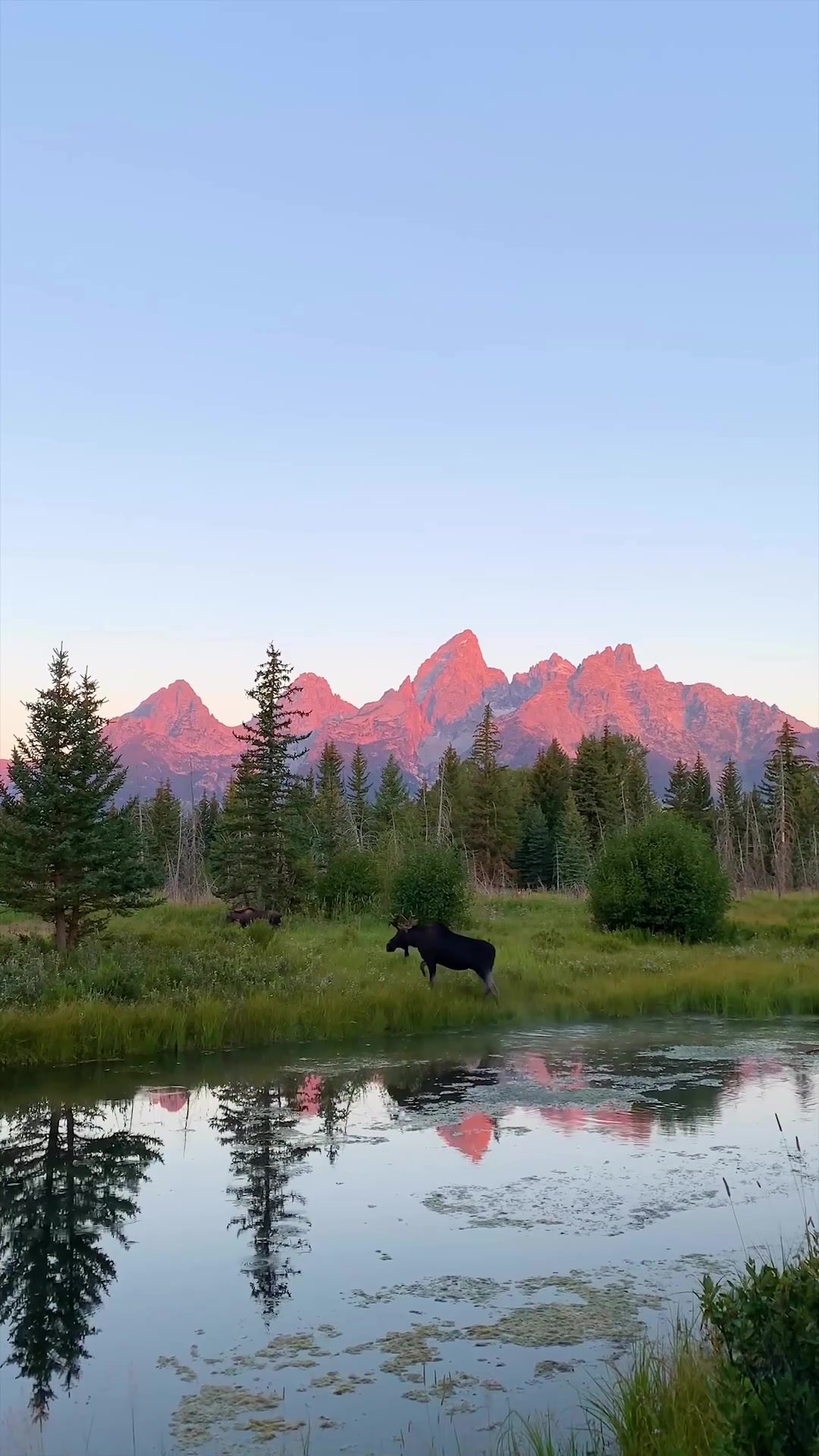
As the sun dips below the horizon, casting a warm glow over a tranquil pond. A moose, its reflection shimmering in the calm water, grazes near the water's edge. This is not a staged scene, but a genuine moment in a mountain landscape.
Moose in the Wild
The mountain landscape is home to moose. Known for their distinctive antlers and large size, which are prominently featured in the video. Moose are the largest member of the deer family. These animals have adapted to the harsh, cold environments of the north. Typically seen near bodies of water, they are herbivores, favoring aquatic plants and leaves. Their significant value in ecosystems makes them an iconic symbol of wilderness. Moose are a formidable force in nature. The animal is a solitary creature, with its social interactions typically limited to mating seasons.
Trekking Through the Moorlands
I can't quote a moose population report from the video, but there's a larger trend – wildlife watching is a significant driver of tourism. In 2018 France alone had over half a million wildlife tourists, contributing to a substantial portion of the regional economic growth. However, it is the United States that leads the way in this respect, with over 71 million wildlife watchers. The wildlife-watching industry in the UK generated over $800 billion in revenue. Alaska is renowned for its diverse wildlife. The United States is committed to protecting wildlife for future generations, conserving large tracts of land for wildlife and spending billions of dollars on wildlife conservation.
Water's Edge
The landscape features a serene pond, surrounded by lush greenery, and a backdrop of mountains. The pond is a critical source of water for wildlife in the area. The ponds and wetlands in mountain landscapes play a crucial role in supporting local flora and fauna. The pond also serves as a breeding ground for various species of birds and fish. The water serves as a source of hydration for the animals, and it also provides a means for migration and navigation for species such as the American Moorland and Eastham species. Moose are often seen near these bodies of water, as they are their primary source of food. Unlike the moose, the moose are herbivores, and their diet consists mainly of aquatic plants and leaves.
Lush Greenery
The lush greenery surrounding the pond provides a habitat for a variety of plant and animal species. Some of the plant species found in the area include the ancient Tight Roots and Lush Mosses, as well as various species of shrubs and bushes. The lush greenery also provides a habitat for various bird species, including the American Moorland and the Common Thorny Bracken. The greenery also serves as a source of food and shelter for other animals, including moose.
Calming Mountains
The mountains act as a backdrop for the serene landscape. The mountains are also a source of inspiration for hikers. Many species of fauna, such as the American Moorland and the Common Thorny Bracken, can be found in the mountains, providing a vital habitat for wildlife. The mountains are also a source of inspiration for many, as they offer a sense of tranquility and peace.
Get Close to Nature
To experience this scene, you need to put in some effort. Most moose tend to live in remote areas, so it can be challenging to see them in the wild. Unless you can fly, most moose-watching experiences will require a boat and a wilderness plane.
- National Parks: Visit a national park where moose are prevalent. The national park has various wildlife species, including moose.
- Stay Quiet and Still: Moose are easily spooked animals, and you might not have a second chance if you scare them off.
- Listen for Moose: Before you see them, you can often hear them. Moose make a variety of sounds, including grunts, bellows, and cow noises.
Watch the Reel
Questions readers ask
What are the specific types of aquatic plants that moose typically feed on in these mountain landscapes?
The article mentions that moose favor aquatic plants and leaves, but it doesn't specify the exact types. Common aquatic plants in such environments can include water lilies, pondweed, and various types of algae. Moose are known to be quite adaptable and will consume a variety of plants available in their habitat.
How do moose contribute to the ecosystems of these mountain landscapes?
Moose play a significant role in their ecosystems by maintaining the balance of plant life. As herbivores, they help control the growth of vegetation, which can prevent overgrowth and promote biodiversity. Their grazing habits also create openings in the landscape, allowing sunlight to reach the forest floor and fostering the growth of new plants and shrubs. Additionally, their presence is an indicator of a healthy ecosystem, attracting other wildlife and contributing to the overall biodiversity of the area.
Are there any specific conservation efforts in place to protect moose and their habitats in the United States and Alaska?
The article highlights that the United States is committed to protecting wildlife, including moose. This includes conserving large tracts of land and spending billions of dollars on wildlife conservation. In Alaska, specific conservation efforts might include habitat protection, wildlife management programs, and regulations to control hunting and poaching. These efforts are aimed at ensuring that moose populations remain healthy and sustainable for future generations.
What role do the ponds and wetlands play in supporting the local flora and fauna in these mountain landscapes?
Ponds and wetlands are vital for the survival of various species in mountain landscapes. They serve as breeding grounds for birds and fish, and they provide a source of water for animals like moose. The water bodies also support a variety of plant life, which in turn supports the local fauna. Additionally, these wetlands act as natural filters, improving water quality and supporting the overall health of the ecosystem.
How do moose interact with other animals in these ecosystems, especially during non-mating seasons?
Moose are generally solitary creatures, and their social interactions are limited primarily to mating seasons. During other times, they tend to avoid other animals, including other moose. However, their presence can indirectly influence other species. For example, their grazing habits can create spaces for other herbivores, and their movement through the landscape can affect the distribution of other animals. Despite their size, moose are not typically aggressive unless provoked, so interactions with other species are usually minimal and peaceful.
Related deep dives
Similar reads based on topic and creator.



Recent articles
Fresh deep dives from the latest Reels we unpacked.




Comments
Be the first to comment.