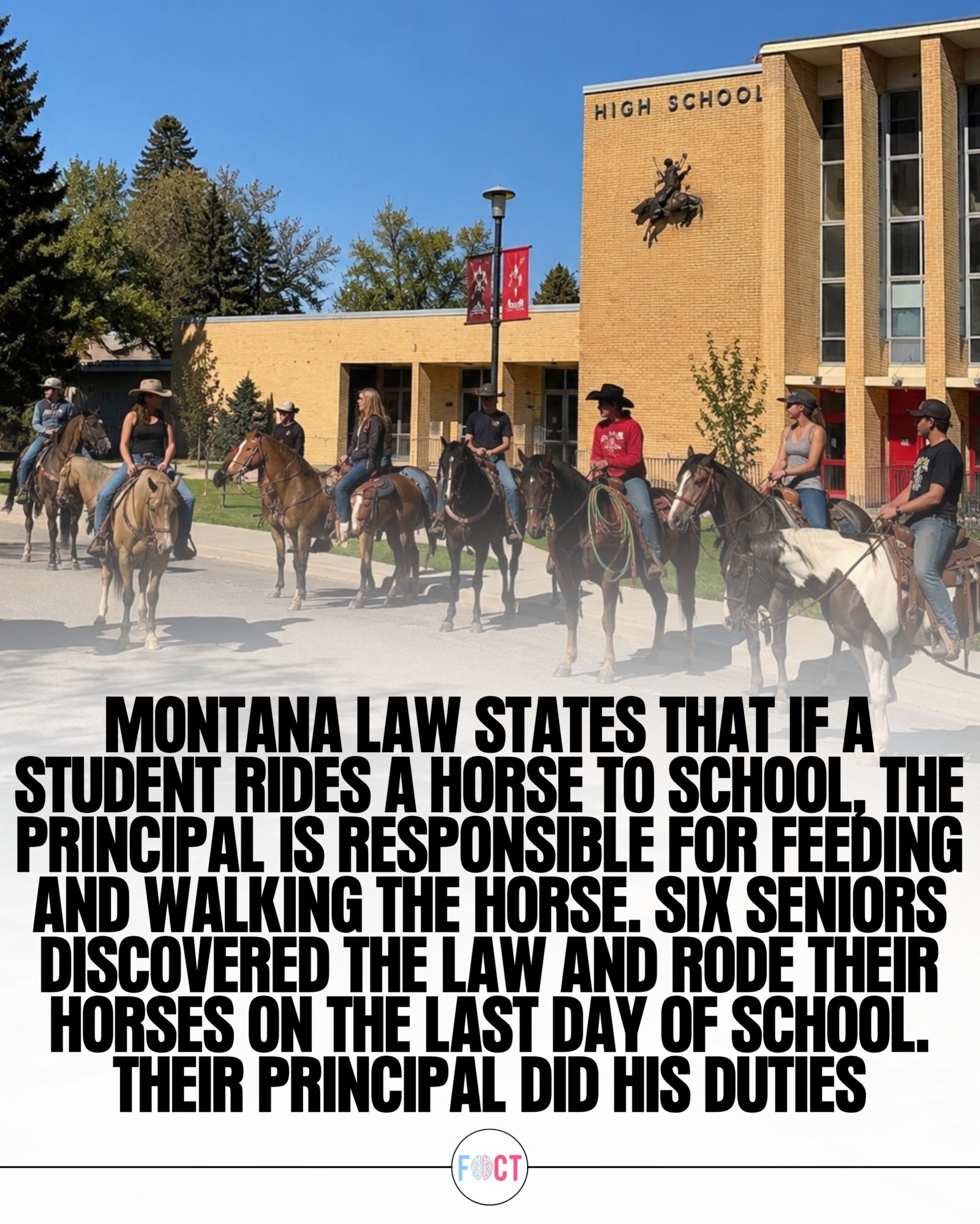
School Horseback Riding: The Unique Montana Tradition
Montana has a distinctive and somewhat unusual tradition that intersects with its agricultural heritage and educational system. If a student chooses to ride a horse to school, the school principal is legally obligated to feed and tend to the horse throughout the day. This law, which has been in place for some time, has led to intriguing scenarios, particularly when students decide to exploit it for a good laugh.
Why This Matters
The law requiring principals to care for students' horses is a quirky reminder of Montana's rural lifestyle and the unique challenges faced by educators in the state. Understanding this law can provide insight into the interplay between tradition and practicality in Montana's education system. The law is a blend of historical context and modern education, offering a glimpse into how educational establishments adapt to unique local regulations.
The Origins and Practicality of the Law
The origins of this law are rooted in Montana's rich equestrian culture. Back in the day, horseback riding was a common mode of transportation, especially in rural areas. To ensure that both the students and their horses were properly cared for, the law was enacted to place the responsibility of feeding and walking the horse on the school principal. This ensured that the horses were well-tended and that no student's education was disrupted due to horse care.
Ensuring Nutritional Needs
One of the primary responsibilities outlined in the law is feeding and providing water to the horses. This ensures that the student's horse is well-fed and hydrated, which is crucial for maintaining the animal's health. The law takes into account the nutritional needs of these animals, recognizing that horses require regular meals to stay healthy and energetic.
Maintenance and Exercise
In addition to feeding, the law also requires the principal to walk the horse. This serves a dual purpose: it provides the horse with necessary exercise and ensures that the animal is not left idle for extended periods. Walking helps horses maintain their physical condition and mental well-being, as horses are social creatures and benefit from interaction and movement.
A Day in the Life of a Principal
The practical implications of this law became apparent in May 2022, when six seniors at Conrad High School in northern Montana decided to ride their horses to school on the last day of classes. This prank, while entertaining, led to a rather unconventional day for the school principal, Raymond DeBruycker. These students were not only following the law but also making their mark on the school's history with a memorable prank.
The Principal's Duties
For Mr. DeBruycker, the day was anything but routine. The law clearly states that he was responsible for the care of the horses, which meant he had to spend a significant portion of his day ensuring the horses were well-fed, hydrated, and exercised. This unconventional responsibility added an element of humor to the school day, showcasing the practical challenges faced by educators in small communities.
Student Engagement
The prank also highlighted the importance of student engagement and the creative ways in which students can interact with their educational environment. The seniors' decision to ride their horses to school showed a deep understanding of the local law and a willingness to engage with it in a playful manner. Their actions emphasized the importance of community involvement and the unique traditions that shape educational experiences.
Practical Tips: Navigating the Law
For students considering this unique option, here are a few practical tips to ensure a smooth and enjoyable experience:
Preparation is Key
Ensure your horse is well-groomed and prepared for the ride to school. This includes checking the saddle, bridle, and any other necessary equipment to ensure a safe and comfortable journey for both you and your horse.
Communicate with School Authorities
Inform the school principal about your plans and ensure they are prepared to fulfill their legal obligations. This can help avoid any confusion or miscommunication on the day of the ride.
Respect School Rules
While the law allows you to ride your horse to school, it is essential to respect other school rules and regulations. Ensure that your horse's presence does not disrupt classes or other students' activities.
Care for Your Horse
While the principal will be responsible for feeding and walking your horse, it is still your responsibility to ensure the horse is well-cared for. This includes providing comfortable stabling and ensuring the horse's overall well-being.
Important Takeaways
The unique Montana law regarding students riding horses to school highlights several important aspects of education and community life in the state. It underscores the practical implications of traditional laws in modern education, the importance of community involvement, and the creative ways in which students can engage with their educational environment. The anecdote of the seniors at Conrad High School serves as a humorous reminder of the quirks and challenges faced by educators and students in small, rural communities.
Conclusion
The tradition of students riding horses to school in Montana is more than just a legal oddity; it is a testament to the state's rich equestrian culture and the unique challenges faced by its educators. Understanding this law provides valuable insights into the interplay between tradition and practicality in Montana's educational system. Whether through playful pranks or genuine necessity, this law ensures that students and their horses are well-cared for, reflecting the state's commitment to both education and its rural heritage.
Watch the Reel
Questions readers ask
Why does Montana have a law about principals caring for students' horses?
Montana's law is a reflection of the state's rural, equestrian culture. It allows students who live in remote areas to ride their horses to school, while ensuring the animals' welfare during the day. This law is a unique adaptation of the Montana education system to local traditions.
Who is responsible for taking care of the horses once they arrive at school?
The responsibility falls on the school principal, or a designated staff member. Principals must tend to the horses' basic needs, including feeding and providing water, during the school day to ensure their well-being.
Can students in all Montana schools ride their horses to school?
The law applies to students in public schools, but not all schools may be equipped to handle horses. It's important for students to check with their specific school district to confirm if this option is available and how it is managed.
What are the benefits of this law for Montana students?
For students in remote, rural areas, this law allows them to maintain their equestrian lifestyle while pursuing their studies, transporting to and from school via horseback. It also fosters a sense of community and connection to the state's rural heritage.
How does this law impact school principals and staff?
The law adds to the principals’ responsibilities, requiring them to allocate time and resources to care for the horses. However, it also allows Montana to maintain its unique traditions, ensuring that the state’s rural lifestyle is accommodated within the education system.
What happens if a principal is unable to care for the horses?
If a principal is unable to care for the horses, they may designate a staff member to do so. Alternatively, the school could arrange for a local stable or volunteer to assist, ensuring the welfare of the animals and the continuity of the school day.
Can other states learn from this unique Montana law?
While Montana's law is unique to its rural, equestrian culture, other states with similar landscapes and traditions could consider adapting similar policies. It highlights the importance of accommodating local customs and providing flexibility in school policies.
Related deep dives
Similar reads based on topic and creator.


Recent articles
Fresh deep dives from the latest Reels we unpacked.




Comments
Be the first to comment.