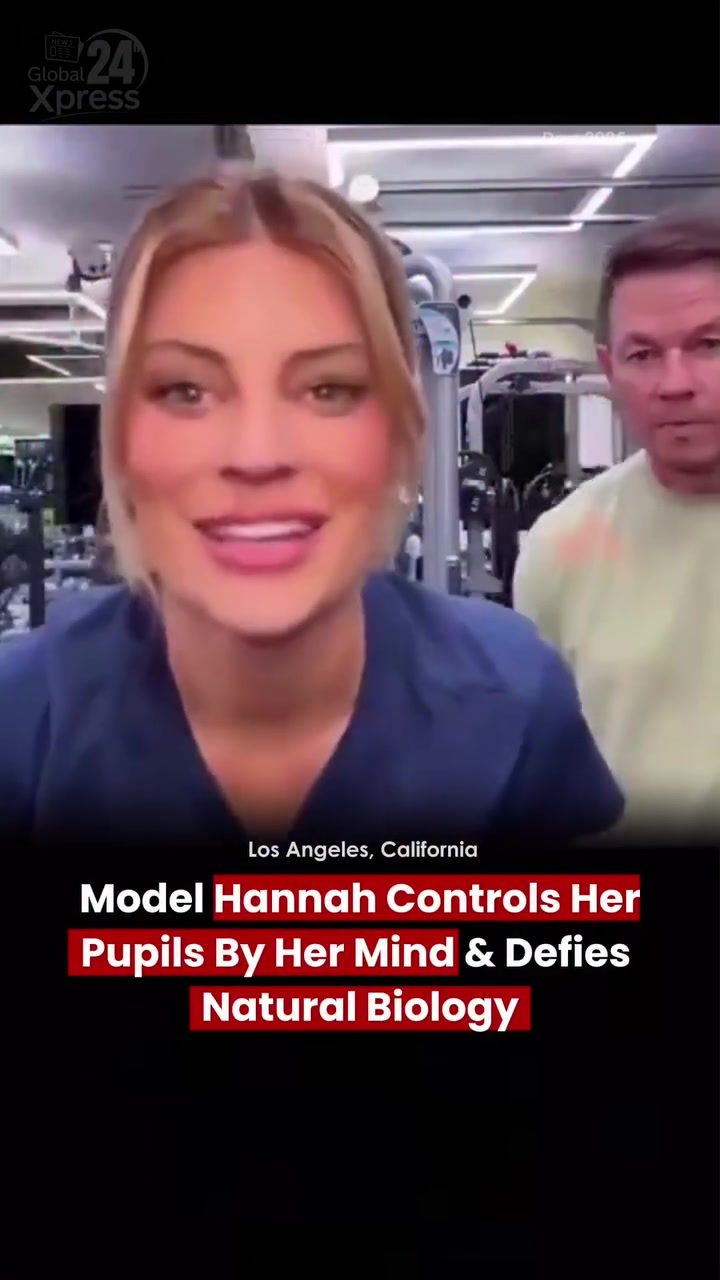
Voluntary Pupillary Control: The Fascinating Ability to Command Your Pupils
Model Hannah, from Los Angeles, California, has captured global attention by demonstrating a rare and extraordinary ability: the conscious control of her pupils using only her mind. This intriguing skill, known as voluntary pupillary control, allows her to rapidly dilate and constrict her pupils without any changes in lighting. The phenomenon has left viewers astonished, questioning the boundaries of what is naturally possible.
Context / Why this Matters
Voluntary pupillary control is a rarity in the world of human abilities. Most people's pupils respond involuntarily to changes in light, emotional states, and cognitive processes. However, a small number of individuals, like Hannah, have developed the skill to consciously influence their pupil size through intense focus and specific muscle control. This ability challenges our understanding of human physiology and opens up discussions about the potential of voluntary control over other bodily functions.
The Mechanism Behind Voluntary Pupillary Control
Understanding how voluntary pupillary control works requires a basic grasp of the pupil's role and function. The pupil is the opening in the center of the iris, which controls the amount of light entering the eye. In most people, the pupil size is regulated by the autonomic nervous system, which operates independently of conscious control. The autonomic nervous system includes the sympathetic and parasympathetic divisions, which work together to maintain homeostasis in the body.
Voluntary control over the pupil size involves overriding the autonomic nervous system's control over the pupil. This requires an individual to develop a heightened level of self-awareness and muscle control, focusing intensely on the muscles that control the pupil. By training these muscles, individuals like Hannah can dilate and constrict their pupils on command.
Practical Tips: Developing Voluntary Pupillary Control
While voluntary pupillary control is rare and challenging to develop, some experts believe it is possible for anyone with dedication and the right training. However, it is important to note that attempting to develop this skill should be approached with caution, as improper training could potentially harm the eyes. Here are some general tips for those interested in exploring this ability:
-
Mindfulness and Relaxation: Begin by practicing mindfulness and relaxation techniques. Meditation and deep breathing exercises can help develop the mental focus required to control the muscles of the eye.
-
Eye Exercises: Simple eye exercises can help improve muscle control and coordination. Try blinking rapidly for a few seconds and then pausing, repeating this several times a day. This can help train the muscles involved in pupil dilation and constriction.
-
Light Control: Practice in a controlled lighting environment. Start by sitting in a dimly lit room and focus on relaxing your eyes. Gradually increase the intensity of the light while maintaining your focus. This can help develop your awareness of the pupil's response to light.
-
Consistent Practice: Like any skill, developing voluntary pupillary control requires consistent practice. Set aside dedicated time each day to focus on your eye muscles and practice the techniques outlined above.
Important Takeaways
-
Rarity and Uniqueness: Voluntary pupillary control is an extremely rare ability, with only a small number of people worldwide possessing the skill. This makes it a fascinating subject of study for scientists and enthusiasts alike.
-
Scientific Fascinating: The ability to consciously control the pupil size challenges our understanding of the autonomic nervous system and the boundaries of human control over bodily functions.
-
Potential Applications: While voluntary pupillary control is primarily a novelty, some experts believe it could have applications in areas such as biofeedback training, where individuals learn to control their physiological responses to improve health and performance.
-
Caution and Safety: Attempting to develop voluntary pupillary control should be approached with caution. It is essential to avoid straining the eyes and to consult a healthcare provider before beginning any new training regimen.
Conclusion
Voluntary pupillary control is a fascinating and rare ability that challenges our understanding of human physiology. Model Hannah's demonstration of this skill has sparked global interest and raised questions about the potential of voluntary control over other bodily functions. While the ability is extremely uncommon, it is a testament to the incredible potential of the human mind and body. Whether for scientific curiosity or personal exploration, the pursuit of voluntary pupillary control opens up a world of possibilities for those willing to delve into the depths of their own capabilities.
Watch the Reel
Questions readers ask
Who is Hannah and why is she gaining attention?
Hannah is a model based in Los Angeles who has gained global attention for her ability to control her pupils voluntarily using her mind. This rare skill has captivated audiences and sparked conversations online.
What is voluntary pupillary control?
Voluntary pupillary control is the ability to consciously dilate and constrict one's pupils without any changes in lighting or emotional states. Most people's pupils respond involuntarily, but individuals like Hannah have developed this rare control.
How does Hannah's ability challenge our understanding of human capabilities?
Hannah's ability to control her pupils voluntarily raises intriguing questions about the potential for conscious control over other bodily functions. It challenges the conventional understanding of what is naturally possible in human physiology.
Is this pupil control ability common or rare?
Voluntary pupillary control is extremely rare. Most individuals' pupils respond involuntarily to external stimuli such as light. There are only a few known cases of people who can control their pupils voluntarily, like Hannah.
Can others learn to control their pupils like Hannah?
As of now, there is no widely recognized method to learn voluntary pupillary control. It appears to be a unique ability for some individuals, and more research is needed to understand the underlying mechanisms.
Related deep dives
Similar reads based on topic and creator.

Recent articles
Fresh deep dives from the latest Reels we unpacked.




Comments
Be the first to comment.