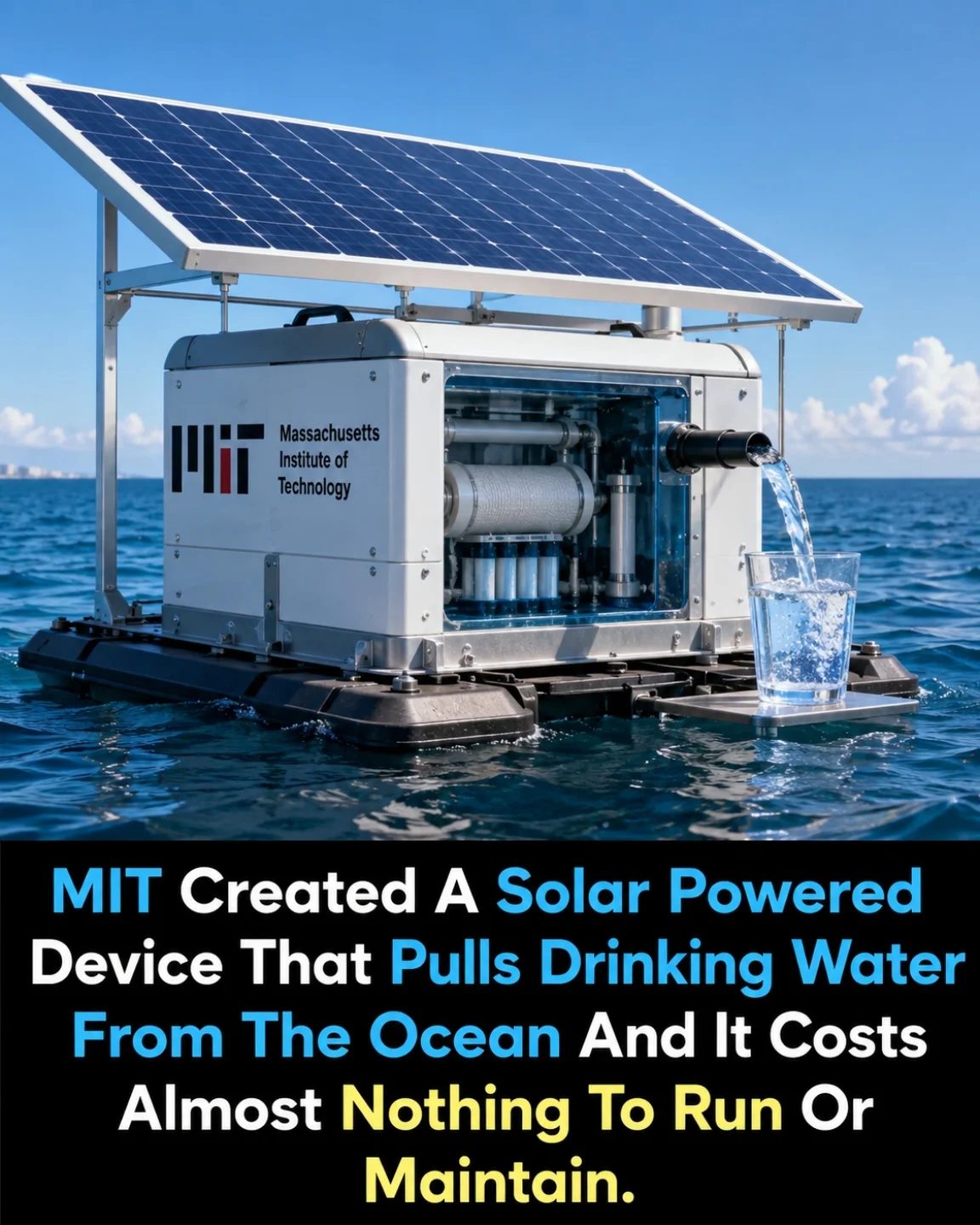
Solar-Powered Water Purification: A Revolutionary Device From MIT
Imagine a world where clean drinking water can be harvested directly from the ocean at virtually no cost. This is not a distant dream but a reality that the Massachusetts Institute of Technology (MIT) has brought closer with its innovative solar-powered water purification device. This groundbreaking technology could revolutionize access to clean water in coastal regions around the globe.
Context / Why This Matters
Access to clean water is a fundamental human need, yet millions of people worldwide still lack this basic resource. Traditional desalination methods, which convert seawater into freshwater, are often expensive and energy-intensive. However, MIT's new device offers a cost-effective and sustainable solution. By harnessing the power of the sun, this technology can produce clean drinking water directly from the ocean, making it an ideal solution for areas where freshwater is scarce.
Main Discussion
How It Works
The solar-powered water purification device operates on a simple yet ingenious principle. It consists of a floating platform equipped with solar panels that power a desalination system. The device extracts seawater, which is then purified through a process that removes salt and other impurities. The purified water is then collected and made available for drinking.
Solar Energy: The Power Behind the Device
The device's reliance on solar energy is one of its most significant advantages. Solar power is renewable, abundant, and free, making it an ideal energy source for this application. By using solar panels, the device can operate continuously, day and night, ensuring a steady supply of clean water. This is particularly beneficial in remote or off-grid locations where access to electricity is limited.
Cost-Effectiveness
One of the most impressive aspects of this technology is its cost-effectiveness. Traditional desalination plants require significant capital investment and ongoing operational costs. In contrast, MIT's device is designed to be inexpensive to run and maintain. The use of solar power eliminates the need for expensive electricity, while the device's simple design reduces maintenance requirements. This makes it a viable option for communities that may not have the financial resources to invest in traditional desalination methods.
Environmental Benefits
Beyond its practical advantages, the solar-powered water purification device offers several environmental benefits. By reducing the need for energy-intensive desalination processes, it helps to lower greenhouse gas emissions. Additionally, the device's use of renewable energy sources aligns with global efforts to transition to more sustainable practices. This technology could play a crucial role in addressing both water scarcity and climate change.
Potential Applications
The potential applications of this technology are vast. In coastal regions where freshwater is scarce, the device could provide a reliable source of clean water for local communities. It could also be used in emergency situations, such as natural disasters, where access to clean water is critical. Furthermore, the device's design makes it suitable for use in remote or off-grid locations, where traditional water treatment methods may not be feasible.
Practical Tips
For those interested in implementing this technology, there are a few practical considerations to keep in mind. First, it's important to assess the local water quality and determine the best location for the device. Coastal areas with abundant sunlight and access to seawater are ideal. Additionally, regular maintenance and monitoring of the device are essential to ensure its continued operation and efficiency.
Installation and Maintenance
Installation of the device should be carried out by trained professionals to ensure that it is set up correctly and operates safely. Regular maintenance, including cleaning the solar panels and checking the filtration system, is necessary to keep the device running smoothly. While the maintenance requirements are minimal, it's important to follow a scheduled maintenance plan to avoid any potential issues.
Community Engagement
Engaging the local community is also crucial for the successful implementation of this technology. Educating residents about the benefits of the device and involving them in the decision-making process can help ensure that the technology is accepted and utilized effectively. Community participation can also help to identify any potential challenges and address them proactively.
Important Takeaways
The solar-powered water purification device developed by MIT represents a significant advancement in the field of environmental technology. Its ability to produce clean drinking water from the ocean at a low cost makes it a viable solution for communities facing water scarcity. By harnessing the power of the sun, this device offers a sustainable and cost-effective alternative to traditional desalination methods.
Conclusion
As the global demand for clean water continues to rise, innovative solutions like MIT's solar-powered water purification device will play a crucial role in ensuring access to this vital resource. By combining cutting-edge technology with renewable energy sources, this device offers a practical and sustainable solution to one of the world's most pressing challenges. The future of clean water is bright, and technologies like this are leading the way.
Watch the Reel
Questions readers ask
How does MIT's solar-powered water purifier convert ocean water into drinking water?
MIT's device uses solar energy to power a process that removes salt and impurities from seawater. It employs a combination of solar panels, membranes, and thermal processes to efficiently produce clean drinking water directly from the ocean.
What makes MIT's solar-powered water purification system cost-effective?
The system is cost-effective because it relies on abundant solar energy, reducing the need for expensive electricity. Additionally, the device is designed to be durable and low-maintenance, making it a practical option for long-term use in remote areas.
Can this technology be used in remote coastal communities?
Yes, MIT's solar-powered water purifier is specifically designed for remote coastal communities. Its floating design allows it to operate directly in the ocean, providing a sustainable solution for areas where traditional water infrastructure is not feasible.
How does the solar-powered water device address water scarcity?
By converting seawater into drinking water using solar energy, the device offers a renewable and easily accessible source of clean water. This can significantly reduce water scarcity in coastal regions, benefiting communities that rely on limited freshwater resources.
What are the main components of MIT's solar purification system?
The system primarily consists of solar panels, a desalination unit, and a dispensing mechanism. The solar panels generate the energy needed to power the desalination process, which involves removing salt and impurities from the seawater. The clean water is then dispensed for drinking.
Is the solar-powered ocean water extractor suitable for large-scale use?
While the current design is optimized for small to medium-sized communities, the technology has the potential to be scaled up. Ongoing research and development aim to enhance the device's capacity and efficiency for broader applications.
How does the floating solar water purifier benefit the environment?
By using solar energy, the device reduces reliance on fossil fuels, lowering greenhouse gas emissions. Additionally, its design minimizes environmental impact, making it a sustainable solution for clean water production in coastal areas.
Related deep dives
Similar reads based on topic and creator.



Recent articles
Fresh deep dives from the latest Reels we unpacked.




Comments
Be the first to comment.