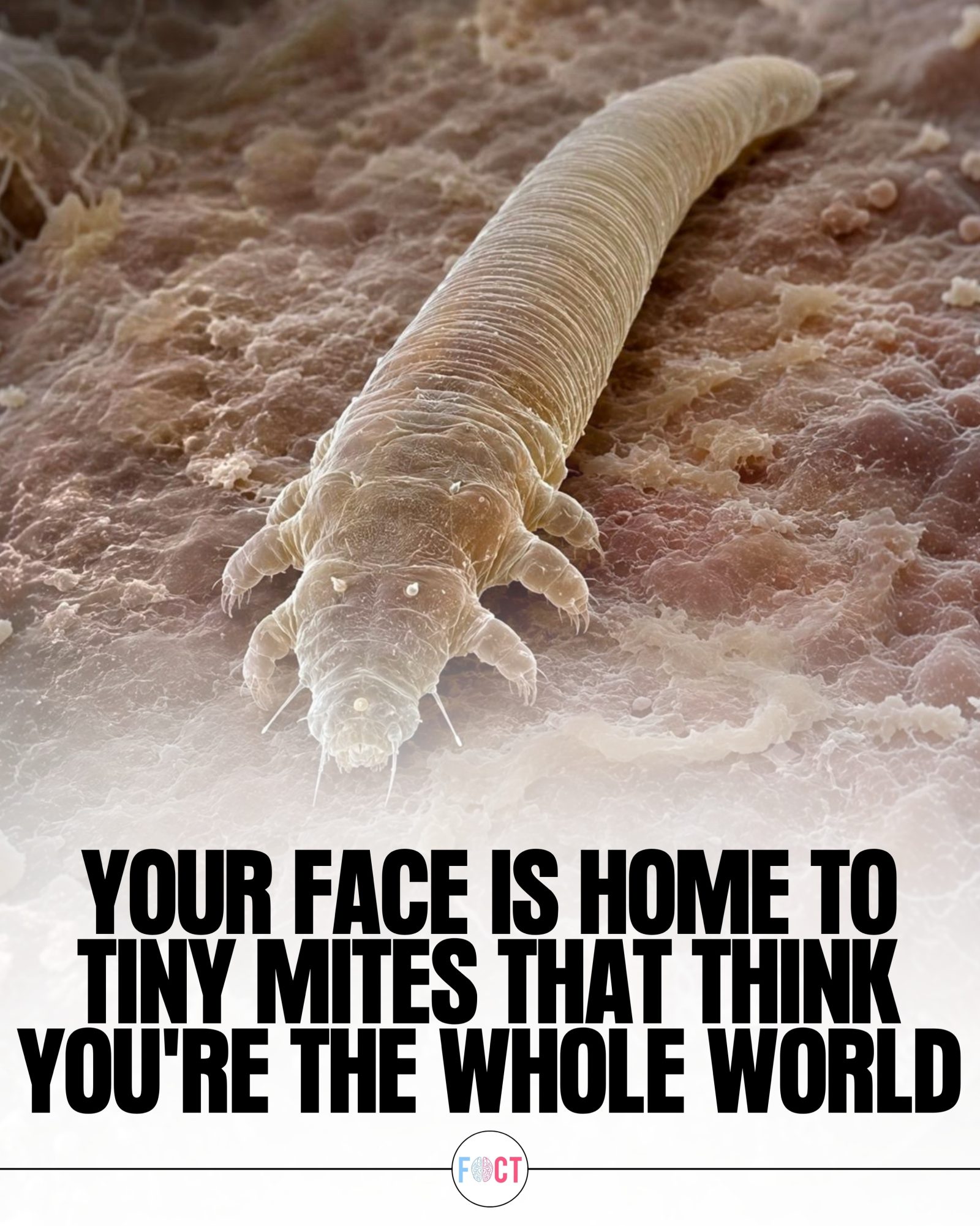
Microscopic Mites: The Unseen Inhabitants of Your Face
Demodex mites are microscopic creatures, so small that they are nearly undetectable to the naked eye. These tiny creatures inhabit the pores and hair follicles of human skin, making your face their home. They are particularly abundant around the nose, forehead, cheeks, eyelashes, and eyebrows.
Why This Matters
While the idea of having mites on your face might be unsettling, it's important to understand that these mites are generally harmless. They feed on oils and dead skin cells, which are naturally present on the skin. Their presence is a normal part of human biology. The strange relationship between humans and Demodex mites is fascinating, especially when considering that from their perspective, your face is their entire world.
Understanding Demodex Mites
What Are Demodex Mites?
Demodex mites are arachnids, closely related to spiders and ticks. There are two primary species that reside on human skin: Demodex folliculorum and Demodex brevis. These mites are so small that they can only be seen under a microscope. They are naturally present on the skin of most adults and can be found in various regions, but they are most commonly found on the face.
Life Cycle and Behavior
The life cycle of Demodex mites is entirely dependent on the human host. They spend their entire lives on the skin, moving between hair follicles and pores. The mites feed on sebum, which is the oil produced by the sebaceous glands in the skin, and dead skin cells. This sebum is essential for their survival, making the face an ideal habitat. The mites go through several stages of development, from eggs to larvae, nymphs, and finally adults. Females can lay up to 25 eggs at a time, further contributing to their population on the skin.
Where They Live
Demodex mites are most commonly found in areas where there are plenty of hair follicles and sebaceous glands, such as the nose, forehead, cheeks, eyelashes, and eyebrows. These areas provide an ideal environment for the mites to thrive. The mites burrow into the hair follicles and pores, making them nearly invisible to the naked eye. They are often found in clusters, particularly in areas where the skin is oily.
Practical Tips
Maintaining Skin Health
While Demodex mites are generally harmless, maintaining good skin hygiene can help keep their population in check. Regularly washing your face with a gentle cleanser can help remove excess oil and dead skin cells, which are the primary food sources for these mites. Using products that contain salicylic acid or benzoyl peroxide can also help control their population, as these ingredients can kill the mites and prevent them from multiplying.
When to Seek Medical Attention
In most cases, the presence of Demodex mites does not require medical attention. However, if you experience excessive itching, redness, or inflammation, it may be a sign of a mite infestation or an allergic reaction. In such cases, it is best to consult a dermatologist who can provide appropriate treatment. They can prescribe medications that can help control the mite population and alleviate symptoms.
Important Takeaways
Demodex mites are a natural part of human biology, and their presence on the skin is generally harmless. Understanding their behavior and life cycle can help you better manage their population and maintain good skin health. While they are too small to be seen with the naked eye, they are a fascinating example of the complex relationship between humans and microscopic organisms.
Maintaining good skin hygiene, including regular cleansing and the use of appropriate skincare products, can help keep the mite population in check. If you experience any symptoms that may be related to a mite infestation, it is best to seek medical attention to ensure proper treatment and alleviate any discomfort.
Conclusion
Demodex mites are an intriguing aspect of human skin biology. They create a unique ecological niche for themselves on the face, feeding on oils and dead skin cells. While their presence may be unsettling, understanding their behavior and habits can help manage their population and maintain overall skin health.
Watch the Reel
Questions readers ask
What are Demodex mites and where are they commonly found?
Demodex mites are microscopic arachnids that live on human skin. They are commonly found in the pores and hair follicles, particularly on the face, especially around the nose, forehead, cheeks, eyelashes, and eyebrows.
What do Demodex mites feed on?
Demodex mites primarily feed on oils and dead skin cells that are naturally present on the skin. They do not cause any harm to humans, as they are part of the normal skin ecosystem.
How can I see Demodex mites on my face?
Demodex mites are nearly undetectable to the naked eye due to their microscopic size. Specialized tools, such as a microscope, are needed to observe these tiny creatures.
Are Demodex mites a sign of poor hygiene?
No, Demodex mites are a normal part of human biology and their presence does not indicate poor hygiene. They are found on the skin of nearly every adult human.
What is the life cycle of Demodex mites like?
Demodex mites live out their entire life cycle in human pores and hair follicles. They mate and reproduce within these environments, making your face their entire world.
Can Demodex mites cause any health issues?
Demodex mites are generally harmless and do not cause health issues. However, in rare cases, they may be associated with certain skin conditions, such as rosacea or blepharitis, but this is not common and more research is needed.
Related deep dives
Similar reads based on topic and creator.


Recent articles
Fresh deep dives from the latest Reels we unpacked.




Comments
Be the first to comment.