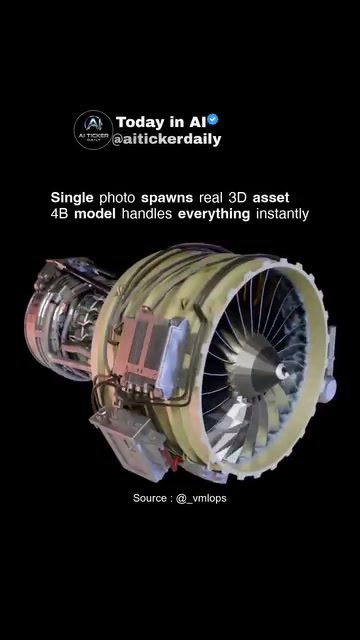
AI 3D Asset Generation from a Single Photo
AI-powered 3D asset generation is revolutionizing the way digital models are created. This technology allows for the instant transformation of a single 2D photo into a fully textured 3D model, complete with essential material properties. At the heart of this innovation is a 4B-parameter model, showcasing the potential of compact, high-performance AI pipelines.
The AI pipeline, known as TRELLIS.2, is designed by Microsoft and operates with remarkable efficiency. This process takes a 2D photo as input and outputs a detailed 3D model with all necessary textures and material properties in just a few seconds. This includes elements like roughness, metallic, and opacity, which are critical for creating realistic 3D assets.
Context / Why This Matters
The ability to generate high-quality 3D models from a single photo has significant implications for various industries. From gaming and animation to architecture and design, the demand for efficient and accurate 3D modeling tools is ever-growing. Traditional methods of 3D modeling are time-consuming and require specialized skills, making them less accessible for many professionals. AI-driven solutions like TRELLIS.2 democratize the creation process, allowing even beginners to produce professional-grade 3D assets quickly and easily.
Main Discussion
The Technology Behind AI 3D Asset Generation
The core technology behind AI 3D asset generation is a sophisticated AI model with approximately 4 billion parameters. This model is trained to recognize and interpret the content of a photo, converting it into a 3D representation. The process involves several key steps:
- Image Analysis: The AI model analyzes the input photo to identify shapes, textures, and other visual elements.
- 3D Reconstruction: The model reconstructs the 3D geometry of the object based on the analyzed data.
- Texturing: The model applies textures to the 3D geometry, creating a realistic and detailed surface.
- Material Properties: Essential material properties, including roughness, metallic, and opacity, are bundled with the 3D model to enhance its realism.
Versatility and Applications
One of the standout features of this technology is its versatility. The AI model can handle a wide range of objects, from intricate mechanical parts like a jet engine and a robotic arm to organic forms like a plant in a pot. This versatility makes it suitable for various applications, including:
- Game Development: Quickly create game assets such as characters, environments, and items.
- Architecture and Design: Generate 3D models of buildings, interiors, and other architectural elements.
- Animation and Visual Effects: Produce realistic 3D models for use in animations and visual effects.
- E-commerce and Marketing: Create 3D product models for online catalogs and marketing materials.
Real-Time Processing
The speed at which this AI model operates is another significant advantage. The process is claimed to be instant, allowing users to generate 3D models in just a few seconds. This rapid turnaround time is crucial for industries that require quick iterations and real-time feedback, such as game development and virtual reality experiences.
Practical Tips
To maximize the benefits of AI 3D asset generation, consider the following tips:
Choosing the Right Input Photo
The quality of the 3D output is directly dependent on the input photo. Here are some tips for selecting the right photo:
- High Resolution: Use high-resolution photos to ensure that the details are captured accurately.
- Clear Shapes and Textures: Choose photos with clear shapes and distinct textures for better 3D reconstruction.
- Consistent Lighting: Photos with consistent lighting help in generating more accurate textures and material properties.
- Multiple Angles: For complex objects, consider using multiple photos from different angles to provide more data for the AI model.
Post-Processing and Refining
While AI 3D models are highly accurate, they may still require some post-processing and refining to meet specific needs. Use 3D modeling software to:
- Adjust Geometry: Fine-tune the 3D geometry to correct any anomalies or enhance specific features.
- Enhance Textures: Add or modify textures to achieve the desired visual appearance.
- Refine Material Properties: Adjust material properties like roughness, metallic, and opacity to better match the real-world characteristics of the object.
Important Takeaways
- Efficiency: AI 3D asset generation allows for the quick creation of 3D models from a single photo, saving time and effort.
- Versatility: The technology can handle a wide range of objects, making it suitable for various industries and applications.
- Realism: The inclusion of textures and material properties enhances the realism of the 3D models.
- Accessibility: This technology makes 3D modeling more accessible to professionals and beginners alike.
Conclusion
AI 3D asset generation is a game-changer in the world of digital modeling. With the ability to create detailed, textured 3D models from a single photo in a matter of seconds, this technology offers a level of efficiency and versatility that traditional methods cannot match. Whether you're a game developer, architect, animator, or e-commerce professional, the potential to leverage AI for 3D asset generation is immense. As this technology continues to evolve, we can expect even more innovative applications and improvements, making it an exciting area to watch.
Watch the Reel
Questions readers ask
What is TRELLIS.2 and how does it work?
TRELLIS.2 is an AI-powered tool developed by Microsoft that transforms a single 2D photo into a detailed, textured 3D model. It uses a 4B-parameter model within a streamlined AI pipeline to generate 3D assets with essential material properties like roughness, metallic, and opacity, all within a few seconds.
What are the practical applications of TRELLIS.2?
TRELLIS.2 has a wide range of applications, including gaming, animation, and architecture. It allows users to create 3D models from photos for use in video games, animated films, and architectural design, making 3D asset creation more accessible and efficient.
How does TRELLIS.2 handle texturing in 3D models?
TRELLIS.2 automatically generates texturing for 3D models, including essential material properties. It ensures that the 3D models produced are not only accurate in shape but also realistic in appearance, with detailed textures that enhance their visual quality.
Can TRELLIS.2 be used by beginners in 3D modeling?
Yes, TRELLIS.2 is designed to be accessible to all users, regardless of their experience with 3D modeling. Its ability to generate 3D assets from a single photo in seconds makes it a powerful tool for beginners and professionals alike.
What makes TRELLIS.2 different from traditional 3D modeling methods?
Unlike traditional 3D modeling methods that often require manual input and considerable time, TRELLIS.2 leverages AI to create 3D models instantly from a single photo. This significantly speeds up the 3D asset creation process and reduces the need for extensive manual labor.
What is the significance of the 4B-parameter model in TRELLIS.2?
The 4B-parameter model is central to TRELLIS.2's efficiency and performance. It allows the tool to process complex visual data quickly, ensuring that the 3D models generated are both accurate and detailed, with all necessary textures and material properties.
How does TRELLIS.2 support the fields of gaming and animation?
TRELLIS.2 supports gaming and animation by providing a quick and efficient way to create textured 3D models from photos. This is particularly beneficial for game developers and animators who need a large number of 3D assets, reducing production time and increasing creativity.
Related deep dives
Similar reads based on topic and creator.




Recent articles
Fresh deep dives from the latest Reels we unpacked.




Comments
Be the first to comment.