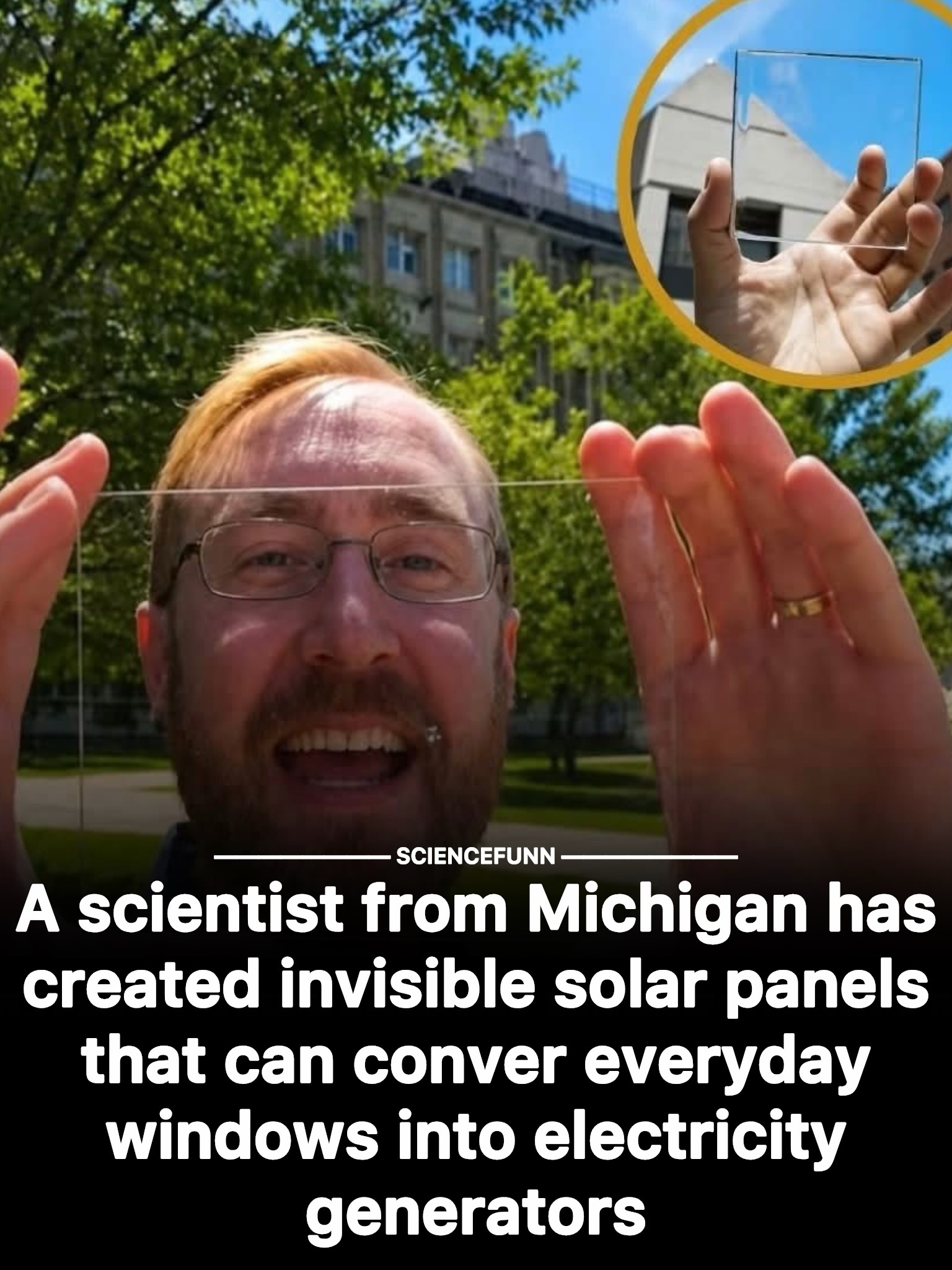
One glass pane at a time, a Michigan scientist has begun transforming windows into power plants. The inventor’s creation are invisible solar panels. “Everyday windows into electricity generators,” they promise.
Windows Wired to Work
Invisible solar panels are an innovative leap in solar power technology. Unlike traditional solar panels that sit on rooftops, these are thin, clear, and can covert windows into energy sources. The panels work just like conventional ones, absorbing light and converting it to electricity. The big difference is the lack of a visible footprint, meaning they can be integrated into the glass panes without needing extra space or aesthetics. They are made for buildings and homes that could never afford the real estate for typical solar panels. The discovery originated in a Detroit lab, where Richard Lunt led a team (although note, this is not the individual featured in the media) in developing these transparent solar cells. The panels absorb ultraviolet and infrared light, which are parts of the light spectrum that are invisible to the human eye, and convert it into electricity. These panels still allow visible light to pass through, ensuring that the windows don’t lose their functionality. What makes these panels distinctive is their ability to adapt to existing infrastructure, generating electricity from surfaces that are already in widespread use. You don’t need to install visible panels as you might for a traditional solar farm.
From Lab to Landscape
Invisible solar panels are part of a broader push to integrate renewable energy into urban and suburban life. Traditional solar farms thrive in rural, sunny areas, but that doesn’t work for the world’s highest concentration of citizens — those living in urban and suburban centers. Cities need more energy solutions, not less. Some buildings already have a power generation capacity. Around 50% of a building's surface area is taken up by windows. Until now, they have been mere glass. Homes, offices, and stores naturally install windows because they provide natural light and aesthetic appeal, but this innovation also harnesses that real estate to generate power in a way that traditional solar panels cannot.
Windowpanes as Power Plants
The Science
Transparency is achieved by tuning the energy levels of the particles within the solar cells, a task that requires precision and deep understanding of quantum mechanics. The solar cells work by converting ultraviolet and infrared light into electrical energy, which is then collected by electrodes. The panels are designed to be applied to existing windows or built into new ones. They are thin, flexible, and lightweight, and can be cut to fit any window size. The design allows them to be installed without altering the appearance of the windows.
Engineering Steps
The process involves creating a film of photovoltaic materials, which are then applied to glass to convert sunlight into electricity. To ensure the film is invisible, the engineers focus on particular wavelengths. This exacting approach focuses the power absorption on the infrared and ultraviolet spectrums.
Performance
Initial tests have shown these panels generate up to 50 watts per square meter, making them less efficient than traditional solar panels. But researchers believe the efficiency can be improved in time. The panels tend to generate more electricity during the early and late hours of the day, when the sun's rays are at an angle, allowing more surface area to absorb light. Unlike traditional solar panels, which are most effective when the sun is directly overhead, the best time to harvest solar energy isn't noon—it's at a diagonal.
The Long View
Invisible solar panels have the potential to revolutionize how we source energy in urban areas. They can be applied to a wide variety of buildings, including homes, offices, and even skyscrapers. The panels could significantly reduce electricity costs and greenhouse gas emissions. This creates a new dimension to net-zero targets.
Getting Started
Interested in this innovative solution?
- Cost Analysis: Currently, the technology is still in the research phase, and cost estimates are unclear. The cost of these panels are likely to be more expensive than traditional solar panels, so companies looking to invest in this should do so with a mindset of research and development, rather than immediate ROI.
- Legitimacy: Do your own research for sources before investing. The owners of Sciencefunn make no promises of their own. Expect a higher level of skepticism from third-party review sites.
- Planning: Invisible solar panels are still in their early stages. Research universities and labs working on this technology.
- Custom Applications: If you’re interested in applying this technology to a specific project, or testing materials from independent labs, you have to get the right chemistries to make it work. This process involves precise tuning of the photovoltaic materials, which requires specialized equipment and expertise.
Where the Window Meets the Future
There are plenty of challenges to overcome. Questions linger about the long-term durability and reliability of invisible solar panels. They may last a few years, or a few decades. And while they are a promising development, the cost of installation and maintenance is still unclear. Those interested in this innovation will need to watch for the next wave of research. But if these panels can be produced at a scale that maintains price advantages, they could become a game changer for sustainable energy. Anyone who wants to invest or innovate in this area should be prepared for a bit of a wait with plenty of opportunities to learn from each research phase. Every building will be wired to work in a new way.
Watch the Reel
Questions readers ask
How do the invisible solar panels generate electricity differently from traditional solar panels?
Invisible solar panels generate electricity by absorbing ultraviolet and infrared light, which are invisible to the human eye, while traditional solar panels absorb visible light. This allows the invisible panels to be integrated into windows without compromising their transparency or functionality. They still convert light into electrical energy, but their design allows them to be applied to a broader range of surfaces, including windows.
What makes these invisible solar panels a game-changer for urban and suburban areas?
These panels are a game-changer because they can be integrated into existing infrastructure, such as windows, which are abundant in urban and suburban areas. Traditional solar panels require large, open spaces that are often unavailable in cities. By turning windows into power generators, these panels can help urban and suburban areas become more energy-independent and reduce their reliance on fossil fuels.
Can these panels be installed on any type of window, or are there specific requirements?
The invisible solar panels are designed to be applied to existing windows or built into new ones. They are thin, flexible, and lightweight, which means they can be cut to fit any window size. However, the installation process involves creating a film of photovoltaic materials and applying it to the glass, so it might require professional installation for the best results.
What are the potential limitations of invisible solar panels compared to traditional solar panels?
One potential limitation is that invisible solar panels might not generate as much electricity as traditional solar panels because they only absorb ultraviolet and infrared light. Traditional solar panels absorb a broader spectrum of light, including visible light. However, the ability to integrate these panels into existing infrastructure, such as windows, makes up for this limitation and could still make a significant impact on energy generation in urban and suburban areas.
How does the efficiency of these invisible solar panels compare to traditional solar panels?
The article does not provide specific efficiency ratings for the invisible solar panels, but initial tests have shown promising results. While they might not reach the same efficiency levels as traditional solar panels, their unique ability to be integrated into windows and other surfaces makes them a valuable addition to the renewable energy landscape. The efficiency of these panels is likely to improve as the technology continues to develop.
Are there any plans to make these invisible solar panels available to the public, and if so, when?
The article does not provide specific details about the availability of these invisible solar panels to the public or a timeline for their release. However, it mentions that the technology is part of a broader push to integrate renewable energy into urban and suburban life, suggesting that there may be plans to make these panels widely available in the future.
What kind of maintenance do these invisible solar panels require, and how long do they last?
The article does not provide specific information about the maintenance requirements or lifespan of these invisible solar panels. However, given that they are designed to be integrated into windows, it is likely that they would require minimal maintenance and have a long lifespan, similar to traditional solar panels. As the technology is still in development, more information on these aspects may become available as the panels are further tested and refined.
Related deep dives
Similar reads based on topic and creator.



Recent articles
Fresh deep dives from the latest Reels we unpacked.



Comments
Be the first to comment.