Miami's Striking Metamorphosis
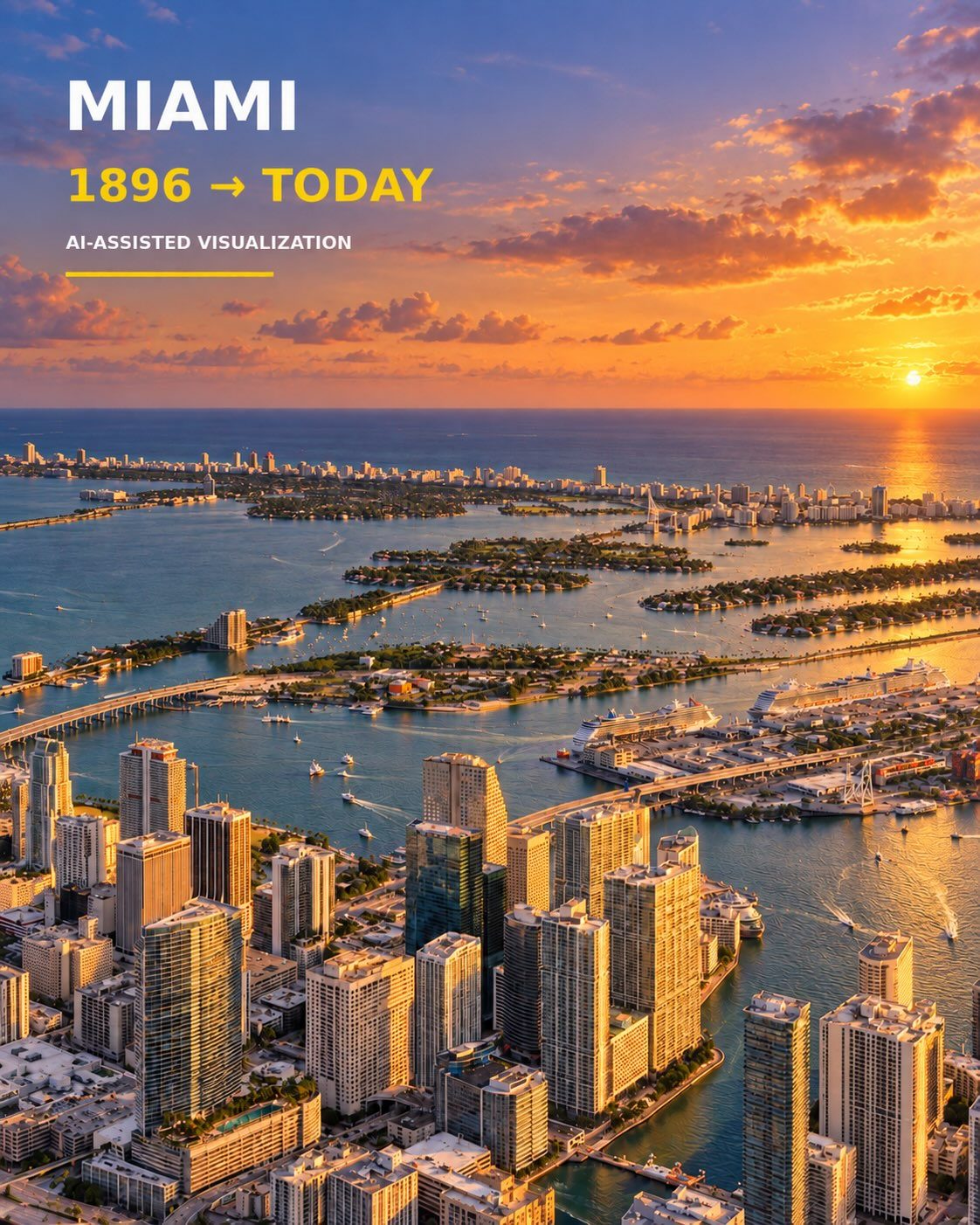
The Magic City is a metaphor no more. The voyage from 1896 to the present day, depicted in a recent video, reveals a Miami that has outgrown its nickname — and its geography. The transformation isn't just about growth. It's about the city's dramatic physical evolution. What started as a sparsely populated waterfront development in the late 19th century has now become an urban metropolis. Notice how the city's structures have evolved from wooden shacks to modern skyscrapers. No longer a mere seaside settlement, Miami's modern infrastructure, high-rises, and transportation networks signal more than just urbanization. They mark a cultural shift. The city has expanded and diversified, with growth concentrated along the coast and inland areas. The urban development didn't just increase the city's size. It changed its identity. What was once a rural area is now a densely populated urban landscape.
Reconstruction via AI
Rather than adapting historical images or relying on artistic interpretations, AI tools have emerged as an alternative for visualizing the past. AI possesses the ability to reconstruct historical events based on a myriad of parameters, including available maps and documentation. The results of this process can be seen in the frame that showcases Miami in the 1920s, featuring buildings under construction, vintage cars, and a bustling waterfront. This visualization doesn't merely show the past. It gives viewers a glimpse of specific historical moments in Miami, like seeing a vintage car rolling down a street or witnessing a construction site bustling with activity. These images don't just tell a story, they reenact it. The scenes not only showcase the city's growth but also transport viewers to a different era.
The Construction of History
While modern Miami is a bustling urban center, the city's growth is not just about vertical expansion. It's also about the evolution of its infrastructure, from the early 20th century to the present. Comparing the 1978 visualization to the current one reveals more than just architectural evolution. The cityscape has not only grown taller, but also more organized and complex. The transformation also highlights a transition in Miami's urban planning. The clear differences in the city's layout and infrastructure between 1978 and today emphasize a shift in urban planning. The city's development in this era is also characterized by the rise of high-rise buildings, widened streets, and increased infrastructure, including the construction of highways and bridges. This evolution is not just about growth, but also about managing it. The transformation shows not just new buildings but new systems.
The Realities of Urban Growth
Viewing Miami's transformation through this lens reveals that urban growth isn't just vertical. It's multifaceted, involving not just more buildings, but also more complexity. The evolution of Miami's urban landscape and skyline is a testament to the city's resilience and growth. While the transformations from 1896 to 1920, 1978, and today are striking, the most noticeable changes are the addition of high-rise buildings and infrastructure. However, the evolution also reveals underlying human factors. This transformation isn't solely due to technological advancements or innovative architectural designs. But also due to the resilience and determination of the city's inhabitants.
Watch the Reel
Related deep dives
Similar reads based on topic and creator.



Recent articles
Fresh deep dives from the latest Reels we unpacked.



Comments
Be the first to comment.