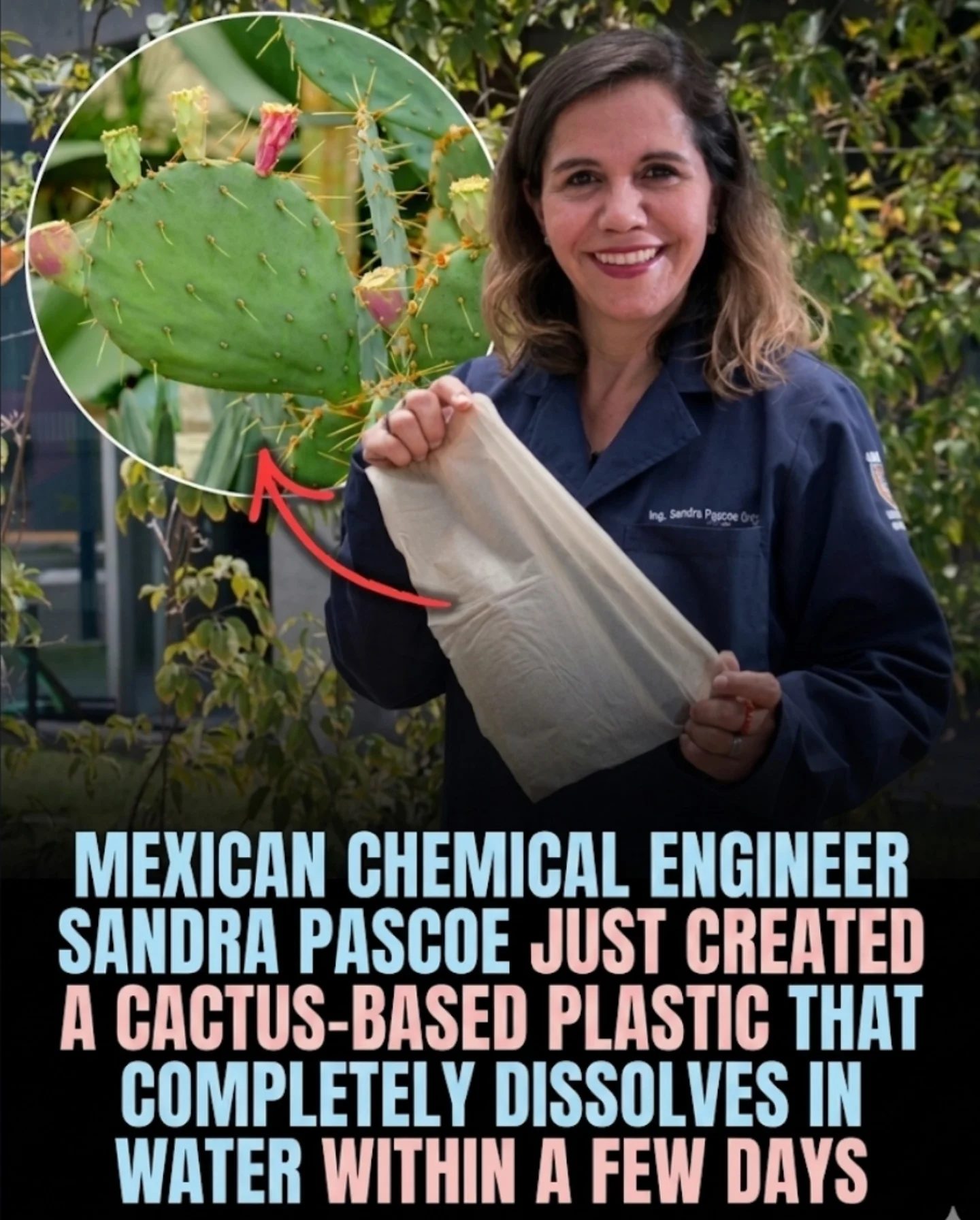
Cactus-Based Plastic: A Green Alternative to Conventional Plastics
The development of cactus-based plastic represents a groundbreaking advancement in sustainable materials science. Led by Sandra Pascoe Ortiz, a chemical engineering researcher at the University of the Valle de Atemajac in Mexico, this innovation offers a non-toxic, biodegradable alternative to traditional petroleum-based plastics.
Why This Matters
Plastic pollution is a global crisis, with millions of tons of waste ending up in landfills and oceans annually. Traditional plastics are derived from fossil fuels and take centuries to decompose, posing significant environmental threats. In contrast, cactus-based plastic provides a sustainable solution by using a renewable resource and biodegrading within days, reducing both pollution and waste.
Main Discussion
The Nopal Cactus: A Sustainable Resource
The nopal cactus, scientifically known as Opuntia ficus-indica, is a key component in the production of this innovative plastic. This plant species is particularly suited for sustainable practices due to its resilience and ability to thrive in arid conditions with minimal water. The nopal cactus is abundant in Mexico and other arid regions, making it an accessible and renewable resource for plastic production.
The Production Process
The creation of cactus-based plastic involves extracting juice from the nopal cactus and blending it with natural additives like glycerin and proteins. This mixture is then synthesized into a biodegradable polymer. The resulting material is not only carbon-neutral but also remarkably soluble, capable of decomposing completely in soil within a month or dissolving in water in just a few days.
Environmental Benefits
Cactus-based plastic offers several environmental benefits:
- Carbon-Neutral: The production process does not contribute to carbon emissions, making it a carbon-neutral solution.
- Renewable Resource: The nopal cactus is a fast-growing, renewable plant, ensuring a sustainable supply of raw material.
- Biodegradability: Unlike traditional plastics, cactus-based plastic can fully decompose in soil or dissolve in water, reducing waste and environmental pollution.
- Water Efficiency: The nopal cactus thrives in arid conditions, requiring minimal water for cultivation, which is beneficial for water conservation.
Current Applications and Future Potential
Currently, cactus-based plastic is optimized for dry-goods packaging and disposable items. Its water solubility makes it ideal for applications where quick disposal and minimal environmental impact are crucial. However, the technology holds potential for broader applications, including medical supplies and other disposable products. Future research and development could expand its use to more diverse industries, further reducing reliance on traditional synthetic materials.
Practical Tips
For those interested in incorporating sustainable practices, here are a few practical tips:
- Support Innovative Products: Look for products made from biodegradable and renewable materials.
- Reduce, Reuse, Recycle: Minimize the use of single-use plastics by opting for reusable items and recycling whenever possible.
- Stay Informed: Keep up-to-date with the latest advancements in sustainable materials and support companies that prioritize eco-friendly solutions.
- Engage with Local Initiatives: Participate in local community programs aimed at reducing plastic waste and promoting a circular economy.
Important Takeaways
Cactus-based plastic, developed by Sandra Pascoe Ortiz, showcases a sustainable and innovative approach to addressing plastic pollution. By utilizing a renewable resource and creating a biodegradable material, this technology offers a promising solution to the environmental challenges posed by traditional plastics. The development of cactus-based plastic not only supports a circular economy but also highlights the potential for bio-based engineering to replace traditional synthetics with environmentally regenerative alternatives.
Conclusion
The creation of cactus-based plastic represents a significant step forward in sustainable materials science. By leveraging the nopal cactus as a renewable resource, this innovative material offers a carbon-neutral, biodegradable alternative to conventional plastics. The technology holds immense potential for reducing plastic waste and supporting a more sustainable future.
Watch the Reel
Questions readers ask
What makes cactus plastic a more eco-friendly alternative to traditional plastics?
Cactus plastic is eco-friendly because it is biodegradable and decomposes rapidly, unlike traditional plastics that take centuries to break down. It's made from a renewable resource, the cactus, which reduces environmental impact and helps tackle the global plastic pollution crisis.
Who is Sandra Pascoe Ortiz and what is her role in developing cactus plastic?
Sandra Pascoe Ortiz is a Mexican engineer and chemical engineering researcher at the University of the Valle de Atemajac. She is the driving force behind the innovation of cactus-based plastic, a sustainable substitute for conventional petroleum-based plastics.
How quickly does cactus-based plastic decompose compared to regular plastic?
Cactus-based plastic can decompose in soil in as little as a month, making it a significant advancement in sustainable materials. In contrast, traditional plastics can take hundreds of years to decompose, contributing to long-term environmental pollution.
What are the environmental benefits of using cactus-based plastic for packaging?
Using cactus-based plastic for packaging reduces reliance on fossil fuels and minimizes plastic waste. It also helps mitigate the environmental hazards posed by traditional plastics, such as ocean pollution and landfill accumulation, making it a valuable solution for green packaging.
Can cactus-based plastic be used for all types of packaging?
While cactus-based plastic shows great promise, its current applications are being explored and developed. It is designed to be an alternative for packaging materials and can potentially replace petroleum-based plastics in various forms of packaging.
What is the significance of using a renewable resource like cactus for plastic production?
Using a renewable resource like cactus for plastic production means that the material can be continually replenished, unlike fossil fuels which are finite. This sustainability is crucial for developing long-term solutions to plastic waste and reducing environmental degradation.
How does the development of cactus-based plastic contribute to tackling the global plastic pollution crisis?
The development of cactus-based plastic contributes to tackling the global plastic pollution crisis by providing a biodegradable and non-toxic alternative to traditional plastics. Its rapid decomposition reduces the amount of waste that ends up in landfills and oceans, addressing the environmental threats posed by conventional plastics.
Recent articles
Fresh deep dives from the latest Reels we unpacked.




Comments
Be the first to comment.