Native Bostonians
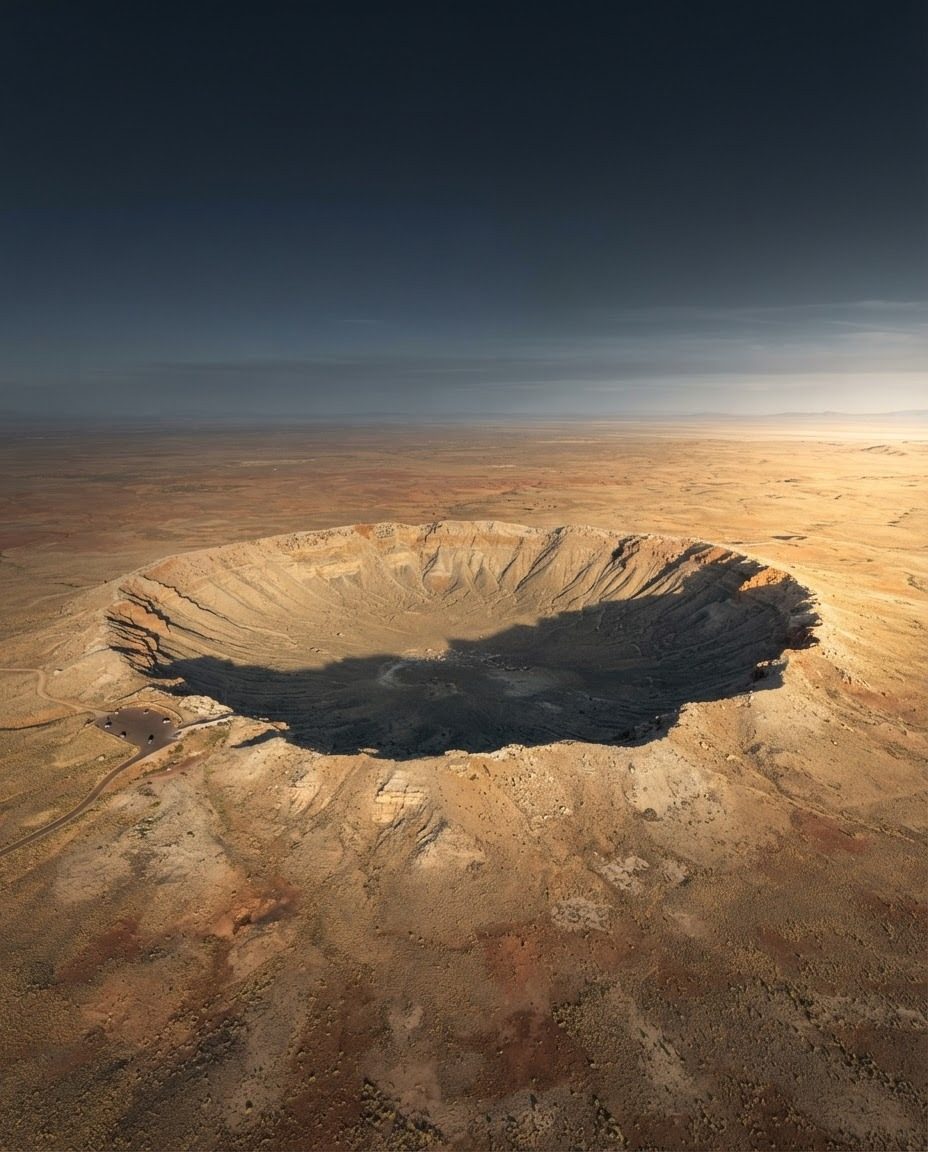
The Barringer Meteor Crater, in Northeastern Arizona, is a geological wonder. The devastation created 50,000 years ago was an arrival, a messenger from space. Without this kind of geological sculpting, the Earth would be a different planet. It's a crater, 1.2 kilometers in diameter and 180 meters in depth. The odds of witnessing a similar event are low, and baring humans from harm may become increasingly important. One of the contributing factors to the preservation of the crater is the fact that it is located in a remote and arid region. Hence, the crater remains relatively untouched by wind and rain. Future meteorite impacts will likely be witnessed rather than revisited after the eventual. In 1903, Daniel Barringer, a mining engineer, claimed that the crater was created by a massive meteorite. Later, it was concluded that the meteorite that hit the earth to form the crater would have been approximately 50 meters in diameter, weigh an estimated 300,000 metric tonnes, and traveled at an approximate speed of 11 kilometers per second. Barringer's hypothesis was that the crater was formed by an iron core, which he believed was buried beneath the crater. He spent years searching for the iron, but his efforts were in vain.
Mining the Iron core
The meteorite that struck the desert landscape was likely composed of iron and nickel. Barringer and his partners initially believed that a large iron mass lay buried beneath the crater. So dig they did. But they would ultimately only find small iron chunks. The efforts Barringer put into this hunt cost him over $600,000 in total, a staggering loss. Consequently, Barringer’s theories were eventually dismissed by the scientific community. Despite the scientific community largely rejecting his initial claims, Barringer's persistence in investigating the crater led to its subsequent study by geologists and astronomers. The crater is now recognized as one of the best-preserved impact craters on Earth, offering valuable insights into the dynamics of meteorite impacts and the formation of the solar system. Daniel Barringer’s name will always be attached to the crater. The crater's significance transcends geological curiosity.
A natural laboratory
Today, the Meteor Crater is not just a geological tourist attraction. Given its pristine state, it serves as a natural laboratory for scientists. Asteriod apocalypse is not a future everyone wants. But the more we protect and learn from places like these allows us to simulate and study meteorite strikes. The crater’s lack of erosion and water flow makes it an ideal site for research. It provides a clear and unobstructed view of the mechanics of impact events and their geological consequences. This allows scientists better understand the formation of the Solar System and the composition of meteorites. Hopefully, this will better prepare us for the next one again.
Watch the Reel
Related deep dives
Similar reads based on topic and creator.
Recent articles
Fresh deep dives from the latest Reels we unpacked.

Comments
Be the first to comment.