AI Layoffs and the Future of Jobs
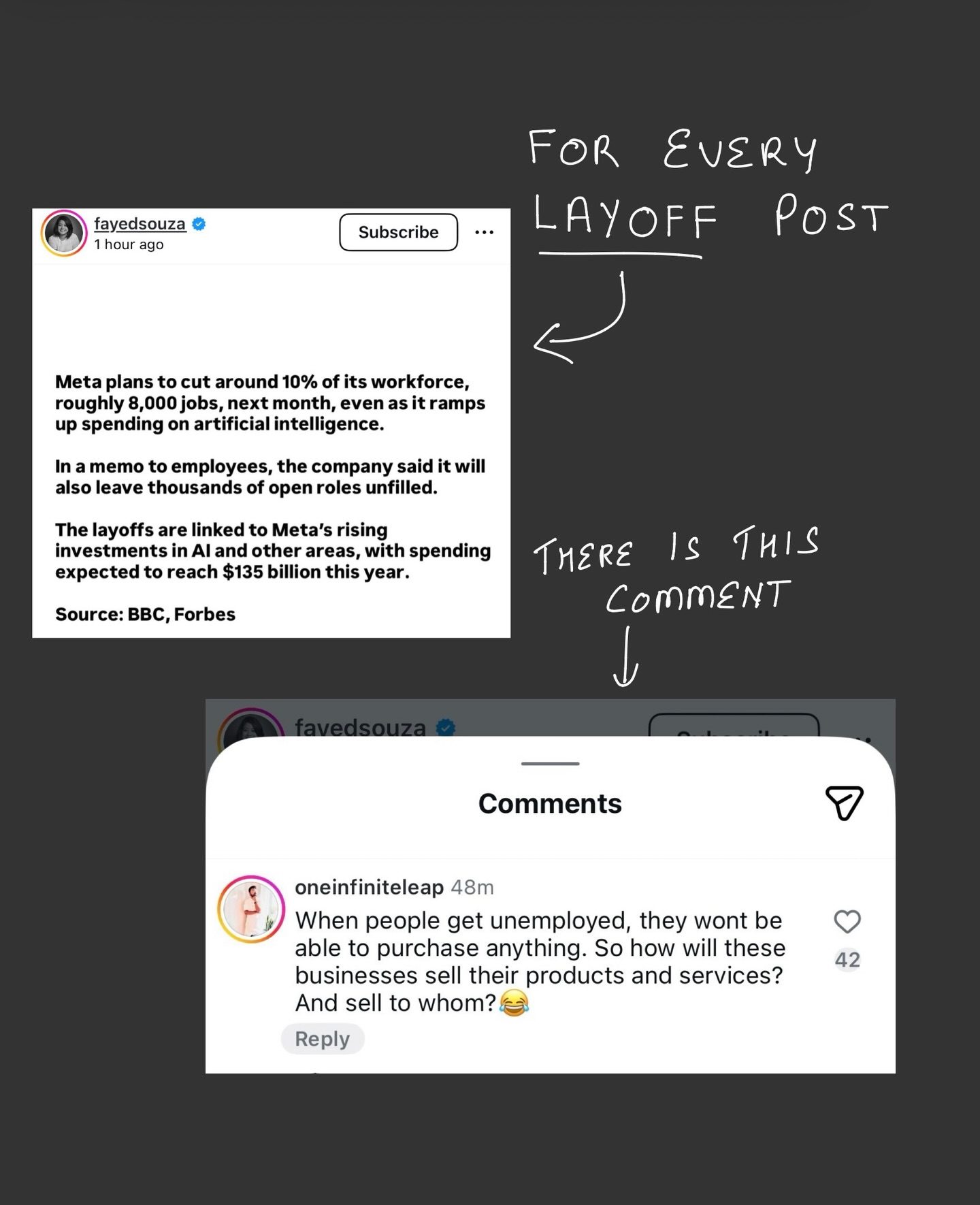
The recent wave of artificial intelligence (AI) layoffs, particularly at major tech companies like Meta, has sparked a critical conversation about the future of employment. With Meta planning to cut around 10% of its workforce, roughly 8,000 jobs, while ramping up AI investments, the implications are far-reaching. This shift is part of a broader trend where technological advancements are reshaping the job market, echoing historical career transitions from factory workers to office workers, and more recently, to coders and creators.
Why This Matters
The layoffs at Meta are not isolated incidents. They reflect a broader trend where companies are investing heavily in AI, which leads to significant workforce reductions. The impact of these layoffs is profound, affecting not only the employees but also the broader economy. When people lose their jobs, their purchasing power decreases, which in turn affects businesses and the economy at large. The question then arises: if AI takes over more jobs, who will have the money to buy and consume products and services?
Understanding the Shift
Historically, career paths have evolved significantly. Factory workers, once the backbone of industrial economies, have given way to office workers in the information age. More recently, the rise of the digital era has seen a shift towards coders and creators. This evolution highlights that new jobs often emerge in sectors that did not exist before, making it challenging to predict future employment trends. However, the current wave of AI-driven layoffs raises critical questions about job displacement and the future of work.
The Rise of AI and Job Displacement
Meta’s plans to cut jobs while increasing AI spending underscore the dual nature of technological progress. On one hand, AI has the potential to create new, higher-skilled jobs. On the other hand, it also leads to significant job displacement, particularly for mid-career professionals. The pain of mid-career displacement is brutal, as it often requires individuals to retrain and adapt to new roles, sometimes in entirely different industries.
The Economic Impact
The economic implications of widespread job displacement due to AI are complex. While AI can increase efficiency and productivity, it also reduces the number of jobs available. This paradox creates a scenario where economic growth might not translate into higher employment rates. Businesses need consumers to sustain their operations, and a significant reduction in employment can lead to a decrease in consumer spending. This, in turn, affects the overall economic health of nations, leading to a complex interplay between technological advancement and economic stability.
Practical Tips for Navigating Job Displacement
For those facing job displacement due to AI, several practical steps can help mitigate the impact:
1. Upskilling and Reskilling
Continuous learning is essential in the age of AI. Individuals should focus on acquiring new skills that are in demand. This could involve learning programming languages, data analysis, or digital marketing. Many online platforms offer courses that can help individuals adapt to new job requirements.
2. Networking
Building a strong professional network can provide support and opportunities during job transitions. Attending industry conferences, joining professional associations, and leveraging social media platforms like LinkedIn can help individuals stay connected and informed about new job opportunities.
3. Entrepreneurship
For those with an entrepreneurial spirit, starting a business can be a viable option. Many successful entrepreneurs have pivoted their careers in response to technological changes, leveraging new opportunities created by AI and other innovations.
4. Adaptability
Adaptability is a key skill in the modern job market. Individuals should be open to exploring new roles and industries, even if they are outside their comfort zones. This adaptability can help individuals stay relevant and competitive in an ever-changing job market.
Important Takeaways
- Job displacement due to AI is a real and pressing issue, affecting both individuals and the economy.
- The transition from one career path to another can be challenging but historically leads to new job creation.
- Individuals need to be proactive in acquiring new skills, building networks, and staying adaptable to thrive in the AI-driven job market.
- Companies should consider the long-term impact of AI investments on their workforce and the broader economy and look for ways to support transitional workers.
Conclusion
AI layoffs, while challenging, are part of a broader evolution in the job market. Understanding this shift and preparing for it can help individuals and businesses alike navigate the changes more effectively. While the short-term outlook may be painful, the long-term story remains optimistic. By focusing on upskilling, networking, entrepreneurship, and adaptability, individuals can position themselves for success in the evolving job market. Stay informed by subscribing to informative newsletters, such as 'Ground Truth', which offers marketing advice tailored for readers rather than algorithms.
Watch the Reel
Questions readers ask
What does the recent layoff at Meta signify about AI's role in the job market?
The layoffs at Meta, where the company plans to cut around 10% of its workforce, indicate a significant shift towards AI integration. This trend suggests that companies are increasingly relying on AI to streamline operations, leading to a reduction in human workforce requirements.
How do the current AI layoffs compare to historical career transitions?
The current AI layoffs mirror historical career shifts, such as the transition from factory workers to office workers, and more recently, to coders and creators. These shifts highlight how technological advancements reshape job market demands and workforce composition.
What are the potential long-term effects of AI on consumer spending and economic stability?
The increased integration of AI could lead to reduced consumer spending due to job losses, which may in turn affect economic stability. However, AI could also create new economic opportunities and enhance productivity, leading to a more efficient and competitive economy.
How do AI job displacements affect mid-career workers, and what steps can they take to adapt?
Mid-career workers are particularly affected by AI job displacement, as they may find their skills obsolete in a rapidly changing job market. To adapt, they can explore upskilling or reskilling programs, pivoting to industries less impacted by AI, or leveraging their experience to take on more strategic roles within their organizations.
What are the implications of Meta's focus on AI for marketing jobs?
Meta's focus on AI is likely to automate many routine marketing tasks, such as data analysis and targeted advertising. This shift may lead to job losses in traditional marketing roles but could also create new opportunities in AI-driven marketing strategies, such as data analytics and AI content creation.
What advice can be given to those experiencing AI job displacement?
Those experiencing AI job displacement should focus on acquiring new, relevant skills and exploring emerging job roles. Networking, consulting career advisors, and considering career pivots to AI-driven industries or roles can also be beneficial during this transition.
Related deep dives
Similar reads based on topic and creator.




Recent articles
Fresh deep dives from the latest Reels we unpacked.




Comments
Be the first to comment.