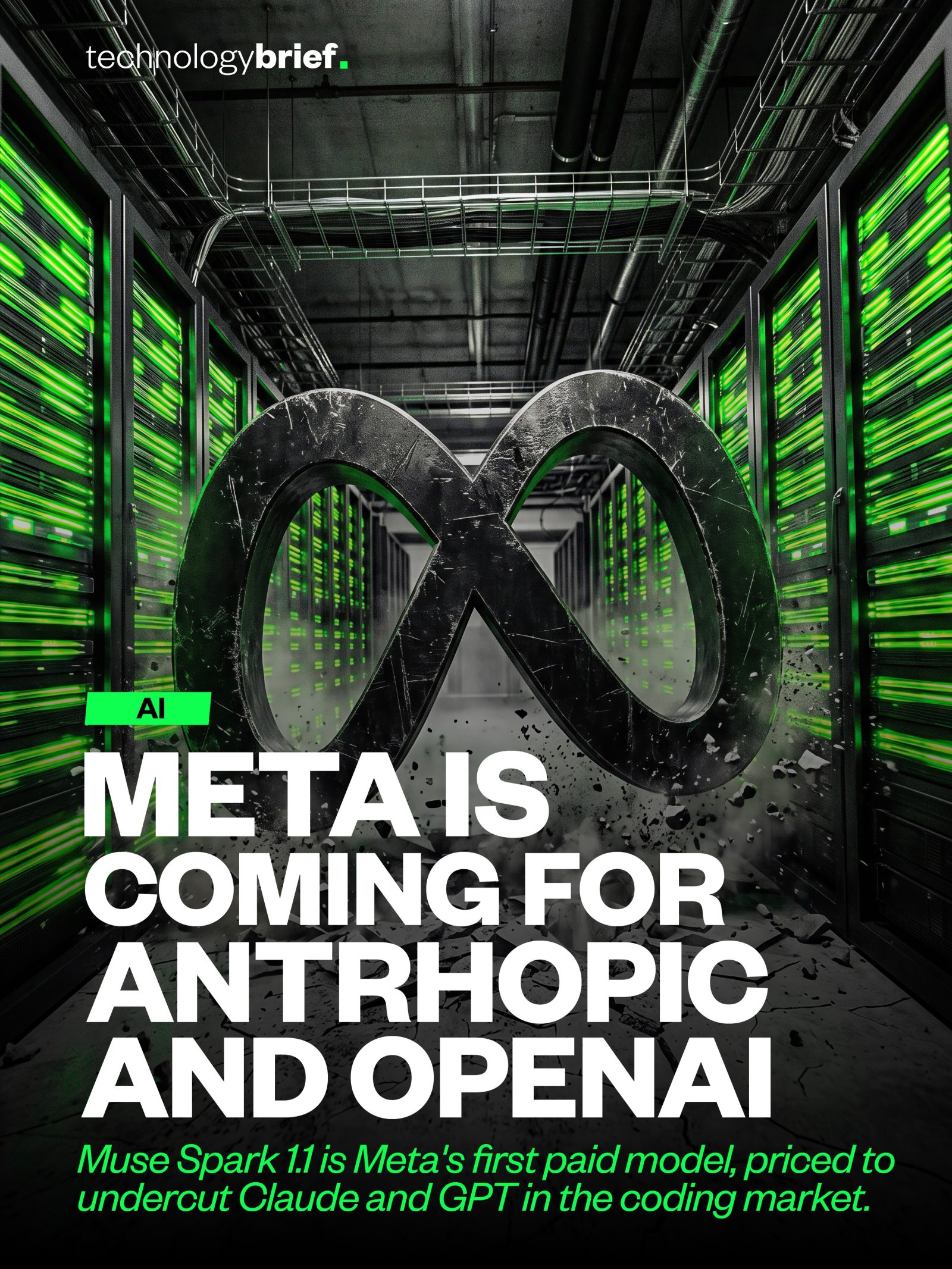
The Rise of Muse Spark 1.1: Meta's New AI Model in the Coding Market
Context / Why this matters
Meta's entry into the AI coding market with Muse Spark 1.1 marks a significant shift in the competitive landscape. As companies like OpenAI, Anthropic, and others have already established a strong presence, Meta aims to carve out its niche with a model that not only suggests the next line of code but also plans tasks, uses external tools, and handles more complex coding jobs.
The key to Muse Spark 1.1's appeal is its aggressive pricing strategy. Meta is positioning its model to undercut competitors like Claude and GPT, making it an attractive option for companies looking to integrate AI coding agents across their entire teams, not just in isolated projects.
Main discussion
Meta's Shift to Paid Models
Meta has traditionally built its AI reputation on open-source models. However, with the introduction of Muse Spark 1.1, Meta is making a full reversal of strategy. This model is the first to require paid access, available through the Meta Model API. This shift signals a new era for Meta, focusing on monetizing its AI capabilities and competing directly with paid models from other major players.
Competitive Pricing and Performance
Meta claims that Muse Spark 1.1 outperforms Google's Gemini in coding tasks. However, it still trails behind Anthropic's Mythos 5 and OpenAI's GPT-5.6 on key coding benchmarks. Despite this, Meta’s pricing strategy is described as "very aggressive and attractive," which could be a decisive factor for companies evaluating AI coding solutions. The cost-effectiveness of Muse Spark 1.1 could make it a compelling choice for organizations looking to scale their AI coding efforts.
Beyond Autocomplete: The Next Generation of Coding Agents
The AI coding landscape has evolved beyond simple autocomplete suggestions. Companies are now focused on building coding agents that can take on more complex tasks. These agents are designed to plan tasks, integrate external tools, and handle longer, more complicated coding jobs, such as fixing bugs or moving parts of a large codebase.
Muse Spark 1.1 is equipped with these advanced capabilities, making it a versatile tool for developers. Its ability to plan tasks and use external tools sets it apart from traditional coding assistants, offering a more comprehensive solution for software development teams.
The Role of AI in Modern Software Development
AI coding agents are transforming the way software is developed. By taking on more of the workload, these agents reduce the need for constant human input. This shift allows developers to focus on higher-level tasks, such as architectural design and strategic planning, while AI handles the more mundane and repetitive aspects of coding.
Pricing and Market Positioning
Meta's pricing strategy for Muse Spark 1.1 is a critical component of its market positioning. By undercutting the prices of models like Claude and GPT, Meta aims to attract a broader range of customers, from small startups to large enterprises. The affordable pricing makes it a viable option for companies looking to scale their AI coding efforts without breaking the bank.
Practical tips
Evaluating AI Coding Models
When evaluating AI coding models, consider the following factors:
- Task Complexity: Ensure the model can handle the complexity of your coding tasks, from simple autocomplete to more complex tasks like bug fixing and codebase management.
- Integration Capabilities: Look for models that can integrate with your existing tools and workflows. This ensures a seamless transition and maximizes the model’s utility.
- Cost-Effectiveness: Evaluate the pricing structure to ensure it aligns with your budget and provides good value for money. Consider the potential savings from reduced human input and increased efficiency.
Implementing AI Coding Agents
To successfully implement AI coding agents in your development workflow, follow these steps:
- Assess Your Needs: Determine the specific tasks and projects where an AI coding agent would be most beneficial.
- Training and Integration: Ensure your team is trained to work with the new tool and that it is properly integrated into your development environment.
- Monitor Performance: Regularly monitor the performance of the AI coding agent to ensure it meets your expectations and delivers the desired results.
Important takeaways
- Meta's Muse Spark 1.1 is designed to do more than just suggest the next line of code. It can plan tasks, use external tools, and handle complex coding jobs.
- The model is competitively priced, making it an attractive option for companies of all sizes.
- AI coding agents are transforming software development by reducing the need for constant human input and allowing developers to focus on higher-level tasks.
- Meta's shift to paid models marks a significant change in its AI strategy, focusing on monetizing its capabilities in the coding market.
Conclusion
The introduction of Muse Spark 1.1 by Meta signals a new chapter in the AI coding race. With its advanced capabilities and competitive pricing, Muse Spark 1.1 has the potential to challenge established players like OpenAI and Anthropic. As companies continue to integrate AI into their development workflows, models like Muse Spark 1.1 will play a crucial role in shaping the future of software development.
Watch the Reel
Questions readers ask
What sets Muse Spark 1.1 apart from other AI coding models?
Muse Spark 1.1 differentiates itself by not only suggesting the next line of code but also planning tasks, using external tools, and managing more complex coding jobs. This comprehensive approach makes it a strong competitor in the AI coding market.
How does Meta's pricing strategy for Muse Spark 1.1 compare to its competitors?
Meta has adopted an aggressive pricing strategy, aiming to undercut competitors like OpenAI and Anthropic. This makes Muse Spark 1.1 an appealing choice for companies looking to integrate AI across their entire teams without breaking the bank.
Can Muse Spark 1.1 handle complex coding tasks?
Yes, Muse Spark 1.1 is designed to manage complex coding jobs. Its ability to plan tasks and use external tools enhances its capability to handle intricate coding projects, making it a versatile tool for developers.
What advantages does Muse Spark 1.1 offer for team integration?
Muse Spark 1.1 provides a significant cost advantage due to its pricing strategy. This, combined with its comprehensive capabilities, makes it easier for companies to integrate AI coding across entire teams, fostering a more efficient and productive development environment.
How does Muse Spark 1.1 compare to models like Claude and GPT?
Muse Spark 1.1 aims to position itself as a more economical alternative to models like Claude and GPT while offering a broader range of features, such as task planning and complex job management, making it a competitive option for businesses.
What kind of tasks can Muse Spark 1.1 plan and manage?
Muse Spark 1.1 can plan and manage a variety of tasks, from simple coding suggestions to more complex projects that require the use of external tools. This multifaceted capability makes it a valuable asset for development teams.
Related deep dives
Similar reads based on topic and creator.

Recent articles
Fresh deep dives from the latest Reels we unpacked.




Comments
Be the first to comment.