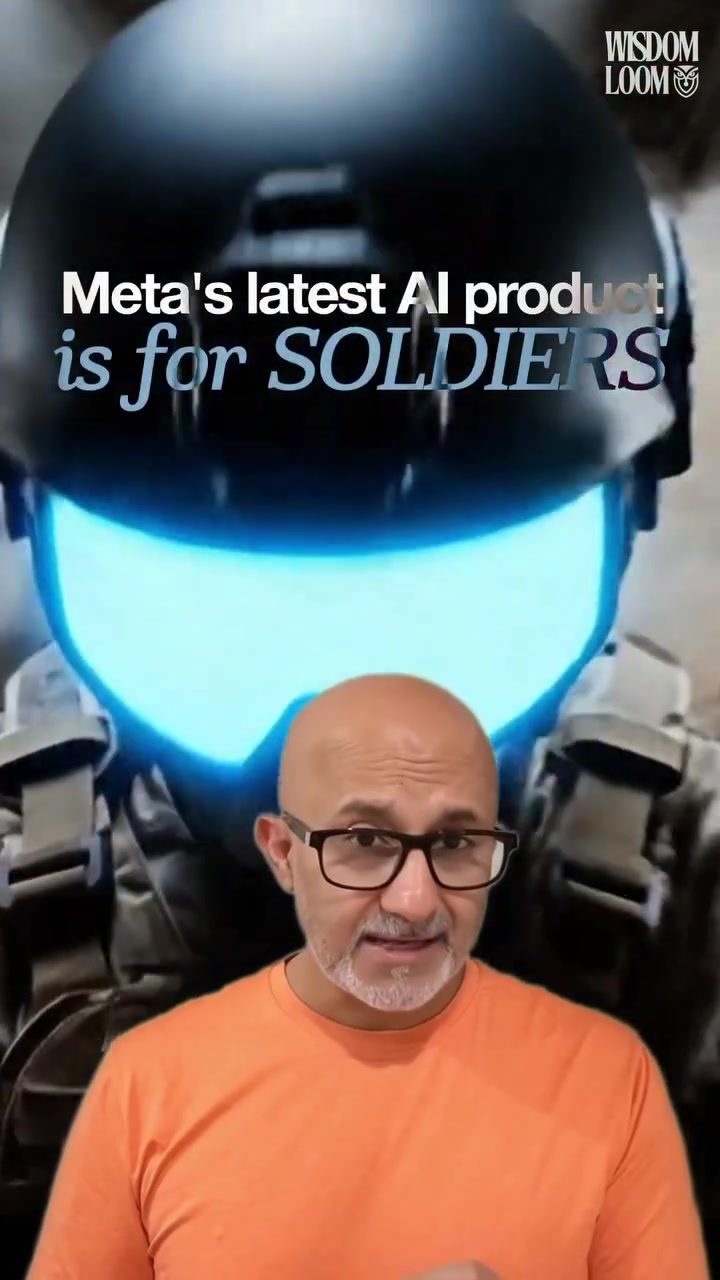
AI-Powered Battlefield Helmets: The Future of Military Technology
Why This Matters
Meta's partnership with Anduril to develop AI-powered battlefield helmets marks a significant shift in how military technology is evolving. This collaboration highlights the growing trend of consumer technology, particularly augmented reality (AR) and artificial intelligence (AI), transitioning into defense applications. The implications of this technology are vast, potentially revolutionizing how soldiers receive and process critical information on the battlefield.
The Evolution of AR Technology in the Military
The Metaverse and AR Technology
The metaverse, a concept once thought to be the future of digital interaction, has been widely debated. Critics have argued that the metaverse failed to live up to its hype, but this perspective overlooks the potential of AR technology in other sectors. The same AR technology that was supposed to power the metaverse is now being repurposed for military applications, demonstrating how innovation can find new and unexpected markets.
Meta’s Acqusition of Oculus
In 2014, Meta (then known as Facebook) acquired Oculus, a company known for its VR headsets. The acquisition was led by Palmer Luckey, a young founder who later left the company. Many believed this marked the end of Luckey's influence in the tech world. However, Luckey went on to build Anduril, a cutting-edge defense company. This unexpected turn of events set the stage for a new partnership between Meta and Anduril, this time focusing on military applications.
The New AI-Powered Battlefield Helmet
Key Features and Capabilities
The new AI-powered battlefield helmet combines several advanced technologies to enhance soldiers' situational awareness and decision-making capabilities. Key features include:
- Augmented Reality (AR): The helmet's AR capabilities allow soldiers to see critical information directly in their visor, eliminating the need to look down at a screen.
- Artificial Intelligence (AI): The AI filters thousands of data points in real-time, showing only the most relevant information to the soldier.
- Drone Integration: The helmet can integrate drone feeds, providing real-time aerial reconnaissance.
- Thermal Imaging and Night Vision: These features enhance visibility in low-light and nighttime conditions.
- Real-Time Battlefield Intelligence: The helmet provides up-to-the-minute information about the battlefield, including enemy movements and potential threats.
Design and Standards
The helmet, labeled as 'AI-INTEGRATED (MK. IV 'ARES'), meets military standards (MIL-STD-810), ensuring it can withstand the rigors of battlefield conditions. The design is specifically tailored for military use, incorporating the latest in AI and AR technology to provide soldiers with a significant advantage.
Practical Tips for Implementing AI-Powered Helmets
Training and Adaptation
Soldiers will need extensive training to fully utilize the capabilities of these advanced helmets. This includes understanding how to interpret the data displayed in the visor, integrating drone feeds, and using thermal imaging and night vision effectively. Proper training will be crucial to ensure that soldiers can leverage these technologies to their fullest potential.
Maintenance and Upgrades
Regular maintenance and software updates will be essential to keep the helmets functioning optimally. This includes ensuring that the AI algorithms are up-to-date and that the hardware components are in good working order. Soldiers must also be trained in basic troubleshooting to address any issues that may arise in the field.
Integration with Existing Systems
The new helmets must be seamlessly integrated with existing military systems and communication networks. This includes ensuring that the helmet's data feeds are compatible with other battlefield technologies, such as command and control systems and reconnaissance drones.
Important Takeaways
The partnership between Meta and Anduril represents a significant leap forward in military technology. The AI-powered battlefield helmet combines AR, AI, and other advanced technologies to provide soldiers with unparalleled situational awareness and decision-making capabilities. This technology has the potential to revolutionize warfare, providing soldiers with the tools they need to stay one step ahead of the enemy.
Conclusion
The evolving landscape of military technology is exciting, with AI and AR at the forefront. The new AI-powered battlefield helmet developed by Meta and Anduril exemplifies how consumer technologies can be adapted for defense applications, potentially changing the face of warfare. As this technology continues to develop, it will be crucial for military leaders to stay informed about the latest advancements and to ensure that soldiers are fully trained and equipped to use these powerful tools.
Watch the Reel
Questions readers ask
How does augmented reality (AR) enhance situational awareness for soldiers?
Augmented reality in military helmets overlays critical information, such as enemy locations, onto the real world viewed by the soldier. This real-time data enhances situational awareness and allows for quicker, more informed decision-making on the battlefield.
What benefits do AI-powered helmets offer over traditional military gear?
AI-powered helmets can process vast amounts of data in real-time, providing soldiers with immediate insights and alerts. They can also adapt to changing circumstances, offering personalized information and reducing the cognitive load on soldiers.
What does this partnership between Meta and Anduril mean for the defense industry?
The partnership signals a significant shift in the defense industry. It demonstrates the practical application of commercial AR and AI technologies in military settings.
How does the integration of AR technology from the metaverse impact military operations?
AR technology developed for the metaverse can be adapted to provide soldiers with immersive, real-time visualizations of battlefield data. This integration can enhance communication, coordination, and overall operational effectiveness in military scenarios.
What are the potential challenges in developing AI-powered helmets for military use?
Potential challenges include ensuring the reliability and robustness of the technology in harsh battlefield conditions, addressing privacy and security concerns related to data processing, and integrating the new systems with existing military infrastructure.
How might AI-powered helmets change the way soldiers train and prepare for combat?
AI-powered helmets can create more realistic and dynamic training simulations, allowing soldiers to practice in virtual scenarios that closely mimic real-world combat. This can improve preparedness and effectiveness in actual combat situations.
What role does AI play in the helmets developed by Meta and Anduril?
AI in these helmets analyzes data from various sources, such as sensors and cameras, to provide actionable insights and alerts. It can recognize patterns, predict threats, and offer suggestions, thereby enhancing the soldier's ability to make informed decisions swiftly.
Related deep dives
Similar reads based on topic and creator.

Recent articles
Fresh deep dives from the latest Reels we unpacked.




Comments
Be the first to comment.