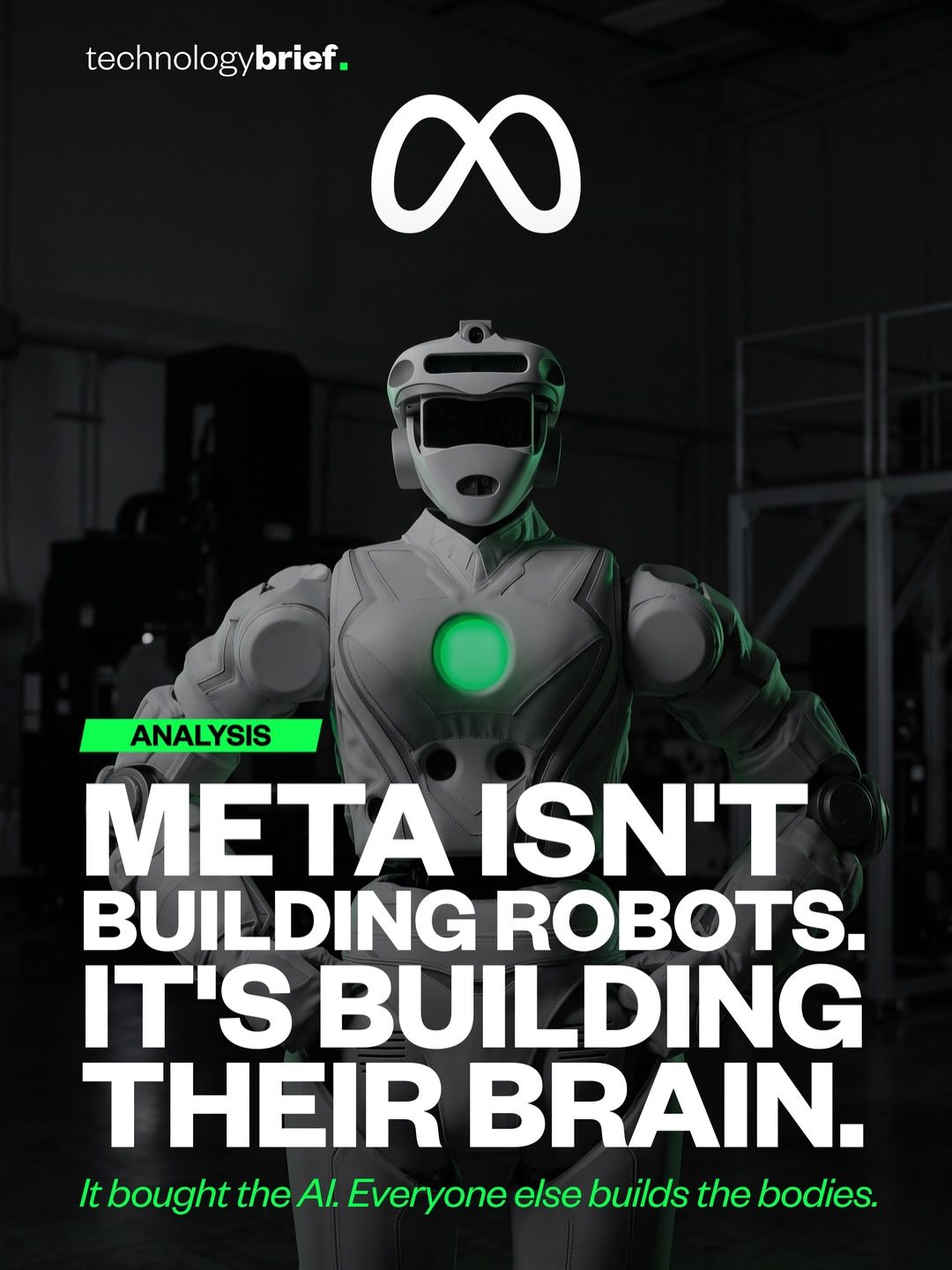
Meta's Bold Move into Robotics: Focusing on the AI 'Brain'
Robotics is a field ripe with potential, and Meta's recent acquisition of Assured Robot Intelligence (ARI) signals a significant shift in the tech giant's strategy. While Meta isn't building the robots, they're investing heavily in the software that powers them, positioning themselves as a key player in the future of robotics.
Why this matters
Meta's acquisition of ARI is a strategic move that highlights the company's focus on the software layer of robotics, which is often overlooked in favor of the more tangible hardware. By acquiring ARI, Meta is positioning itself to provide the AI 'brain' that will power the next generation of robots. This approach mirrors the success of Android in the mobile market, where Google's operating system became the standard for smartphones.
Meta's Approach to Robotics
The Acquisition of Assured Robot Intelligence
In May, Meta closed its acquisition of Assured Robot Intelligence, a startup that had been working on whole-body humanoid control. This software is essential for keeping a two-legged machine balanced, oriented, and capable of performing useful tasks. The co-founders of ARI, Xiaolong Wang and Lerrel Pinto, both have impressive backgrounds in robotics and AI, with Wang being a former Nvidia researcher and UC San Diego professor, and Pinto having previously built Fauna Robotics. Their expertise is now part of Meta's Superintelligence Labs, a move that underscores Meta's commitment to advancing AI in robotics.
The Software Layer: The Real Bottleneck
Meta's acquisition of ARI is a clear indication that the company views the software layer as the biggest challenge in robot development. As Meta's CTO Andrew Bosworth has stated, the body of a robot isn't the hard part. Developing the software that can control and coordinate complex movements is significantly more challenging. By focusing on the AI that powers robots, Meta is addressing what they see as the primary bottleneck in the development process.
The Licensable AI Platform
Meta's strategy in robotics is somewhat similar to the Android model for smartphones. Instead of building their own robots, Meta aims to develop a licensable AI platform that other manufacturers can adopt. This platform would allow other companies to focus on the physical construction of robots, while Meta provides the software that brings these robots to life. This approach not only leverages Meta's strengths in AI but also allows them to scale their impact across the robotics industry.
Practical Tips for Understanding Meta's Robotics Strategy
To better understand Meta's move into robotics, consider the following tips:
- Follow the Software: Keep an eye on advancements in AI and software development. This is where the future of robotics lies, and Meta's focus on the software layer is a clear indicator of this trend.
- Look Beyond the Hardware: While the physical body of a robot is important, the real innovation is happening in the software that controls it. This is why Meta's acquisition of ARI is such a significant move.
- Stay Updated on AI Developments: Meta's approach to robotics is heavily focused on AI. Staying updated on the latest developments in AI will give you a better understanding of where the future of robotics is headed.
Important Takeaways
Meta's acquisition of ARI highlights several key takeaways:
- Software is the Future: The software layer is increasingly important in robotics. This is where innovation will happen, and where companies like Meta are focusing their efforts.
- AI is Crucial: AI is the driving force behind modern robotics. Companies that can develop advanced AI systems will have a significant advantage in the future.
- Licensable Platforms: The model of providing a licensable AI platform could become the standard in the robotics industry, similar to how Android revolutionized the mobile industry.
Conclusion
Meta's acquisition of Assured Robot Intelligence is a significant move that underscores the company's focus on the software layer of robotics. By developing a licensable AI platform, Meta aims to provide the 'brain' that will power the next generation of robots. This strategic shift highlights the importance of AI and software in the future of robotics, and positions Meta as a key player in this evolving field. As the industry continues to grow, keeping an eye on advancements in AI and software development will be crucial for understanding the future of robotics.
Watch the Reel
Questions readers ask
What does Meta's acquisition of Assured Robot Intelligence (ARI) mean for the robotics industry?
Meta's acquisition of ARI signals a strategic shift towards developing advanced AI software for robotics. This move underscores Meta's focus on creating the 'brain' or AI infrastructure that will empower robots to operate more intelligently and efficiently in real-world scenarios.
Why is Meta focusing on the software side of robotics instead of hardware?
Meta's decision to concentrate on AI software aligns with its core expertise and the growing trend in robotics. By developing sophisticated AI software, Meta can influence the entire robotics industry, similar to how Google's Android operating system shaped the mobile market. This approach allows for broader impact and integration with various robotic hardware.
How will Meta's AI software impact the development of humanoid robots?
Meta's AI software is poised to significantly enhance humanoid robotics by providing advanced cognitive capabilities. This includes improved decision-making, sensor integration, and adaptive learning, enabling humanoid robots to interact more naturally and effectively with their environment and human users.
What are the potential applications of Meta's AI robotics innovations?
The AI innovations developed by Meta can be applied across a wide range of industries, including manufacturing, healthcare, and customer service. These advancements can lead to more efficient and autonomous robotic systems, improving productivity, safety, and user experience in various settings.
How does Meta's approach to robotics differ from traditional methods in the industry?
Unlike traditional methods that often focus on hardware development, Meta is prioritizing the AI software layer. This approach aims to create a versatile and powerful 'brain' for robots, enabling them to perform complex tasks and adapt to different environments more effectively. This software-centric strategy could revolutionize how robots are designed and deployed.
What is the significance of ARI in Meta's robotics strategy?
ARI's expertise in AI and robotics is crucial for Meta's strategy. By acquiring ARI, Meta gains a team of specialists who can develop cutting-edge AI algorithms and software solutions. This collaboration allows Meta to accelerate its AI robotics innovations, ensuring that their AI 'brain' is at the forefront of technological advancements in the robotics industry.
Related deep dives
Similar reads based on topic and creator.

Recent articles
Fresh deep dives from the latest Reels we unpacked.




Comments
Be the first to comment.