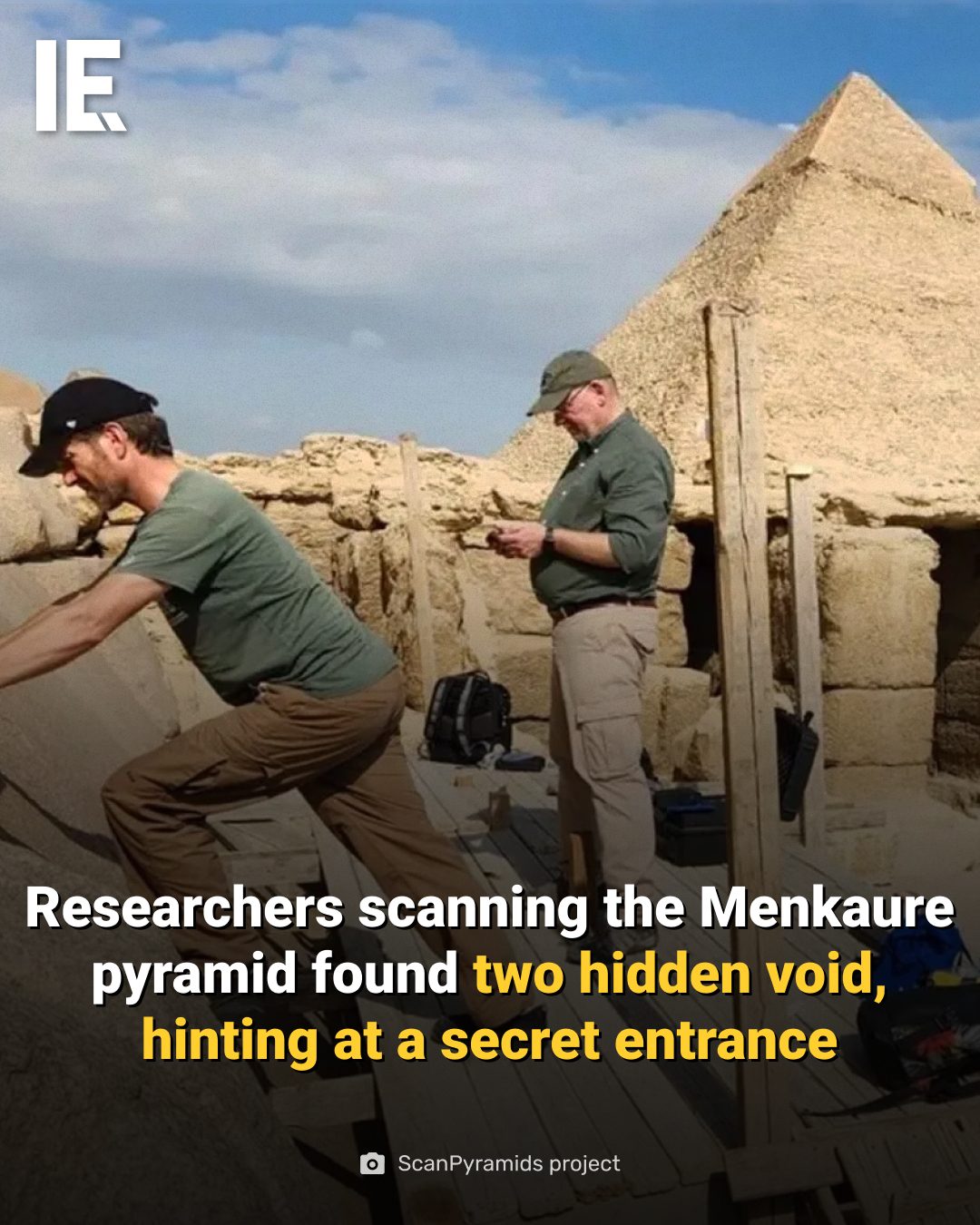
Archaeological Discovery at the Menkaure Pyramid
In the desert landscape of Egypt, researchers are making groundbreaking discoveries near the Menkaure pyramid. Using advanced scanning techniques, they have uncovered two hidden voids, potentially revealing a secret entrance. These findings are part of the broader ScanPyramids project, which aims to explore the internal structures of the pyramids in a non-invasive manner.
Why This Matters
The Menkaure pyramid, located in the Giza necropolis, has long been a subject of fascination and study for archaeologists. Recent advancements in scanning technology have allowed researchers to delve deeper into the mysteries of these ancient structures. The discovery of these voids, less than 1.5 meters deep and measuring roughly 1.5 by 1 meter and 0.9 by 0.7 meters, suggests the possibility of a previously unknown entrance. This could significantly alter our understanding of the pyramid's design and purpose. The entire investigation is conducted non-invasively, preserving the integrity of the historic site while uncovering new insights.
Main Discussion
The Technology Behind the Discovery
The researchers are employing a combination of ground-penetrating radar, ultrasound, and electrical resistivity tomography to scan the Menkaure pyramid. These technologies allow for a detailed analysis of the pyramid's internal structure without the need for physical excavation. Ground-penetrating radar uses radio waves to detect changes in the composition of the materials within the pyramid, while ultrasound can penetrate solid materials to detect cavities. Electrical resistivity tomography measures the electrical resistance of the ground to map out subsurface features.
The Unusually Polished Section
One of the key areas of interest is an unusually polished section of granite on the eastern face of the pyramid. This section has long intrigued researchers due to its smooth finish, which is reminiscent of the known entrance on the north side. The new discoveries are located behind this polished section, leading to speculation about a potential second entrance. The presence of these voids further supports the hypothesis that there may be more to explore within the pyramid.
The ScanPyramids Project
The ScanPyramids project, a collaboration between Cairo University and TU Munich, has been instrumental in advancing our understanding of the pyramids. The project employs cutting-edge technology to map out the internal structures of the pyramids in a non-invasive manner. This approach not only preserves the historic integrity of the sites but also allows researchers to explore areas that would otherwise be inaccessible.
Practical Tips
For those interested in following similar archaeological projects or understanding the technology involved, here are a few practical tips:
- Stay Updated with Latest Research: Follow reputable sources and organizations that focus on archaeology and historical discoveries. Websites like Interesting Engineering provide regular updates on exciting findings in the field.
- Learn About Non-Invasive Techniques: Familiarize yourself with non-invasive scanning techniques such as ground-penetrating radar, ultrasound, and electrical resistivity tomography. Understanding these technologies can provide a deeper appreciation for the methods used in modern archaeological research.
- Explore the History of the Pyramids: Delve into the rich history of the Giza pyramids, including the Menkaure pyramid. Understanding the context and existing knowledge about these structures can enhance your comprehension of recent discoveries.
- Engage with Archaeological Communities: Join online forums, attend lectures, and participate in workshops to engage with experts and enthusiasts in the field. This can provide valuable insights and opportunities for further learning.
Important Takeaways
Recent discoveries at the Menkaure pyramid highlight the potential for new insights into ancient Egyptian architecture. The use of advanced scanning technologies has allowed researchers to uncover hidden voids, which may indicate a previously unknown entrance. This non-invasive approach not only preserves the integrity of the historic site but also opens up new avenues for exploration. The ScanPyramids project serves as a model for how modern technology can be leveraged to deepen our understanding of ancient structures.
Conclusion
The recent findings at the Menkaure pyramid represent an exciting development in the field of archaeology. By employing advanced scanning techniques, researchers have uncovered hidden voids that suggest the presence of a secret entrance. This discovery underscores the importance of non-invasive methods in preserving historic sites while uncovering new information. As the ScanPyramids project continues, we can expect further revelations that will enrich our understanding of these ancient marvels.
Watch the Reel
Questions readers ask
What are the hidden voids discovered within the Menkaure Pyramid?
The hidden voids are two distinct spaces within the Menkaure Pyramid, each measuring approximately 1.5 by 1 meter and located less than 1.5 meters deep. These voids were detected using advanced scanning techniques and could potentially reveal a secret entrance to the pyramid.
How were the hidden voids in the Menkaure Pyramid detected?
The voids were detected using non-invasive scanning techniques as part of the ScanPyramids project. These methods include ground-penetrating radar, which can penetrate the stone to detect empty spaces, and other technologies like ultrasound scanning and electrical resistivity tomography.
What is the significance of the voids discovered in the Menkaure Pyramid?
The discovery of these voids is significant because they could provide new insights into the pyramid's design and purpose. If they are indeed a secret entrance, they might lead to undiscovered chambers or artifacts, enhancing our understanding of ancient Egyptian architecture and burial practices.
Who is leading the research on the Menkaure Pyramid?
The research on the Menkaure Pyramid is part of the broader ScanPyramids project, which is a collaborative effort involving researchers from Cairo University and other institutions. They are utilizing advanced scanning technologies to explore the internal structures of the pyramids.
What is the purpose of the ScanPyramids project?
The ScanPyramids project aims to explore the internal structures of the pyramids in a non-invasive manner. By using advanced scanning technologies, researchers can map out the internal layout of the pyramids and potentially uncover hidden chambers or entrances without causing any damage to the ancient structures.
What other techniques were used in addition to ground-penetrating radar?
In addition to ground-penetrating radar, the ScanPyramids project employs other non-invasive techniques such as ultrasound scanning and electrical resistivity tomography. These methods help to create a comprehensive map of the pyramid's internal structure, detecting anomalies and potential hidden spaces.
What is the Menkaure Pyramid, and where is it located?
The Menkaure Pyramid is one of the three main pyramids located in the Giza necropolis, near Cairo, Egypt. It was built as a tomb for the Fourth Dynasty pharaoh Menkaure and has been a subject of fascination and study for archaeologists due to its unique design and historical significance.
Related deep dives
Similar reads based on topic and creator.


Recent articles
Fresh deep dives from the latest Reels we unpacked.




Comments
Be the first to comment.