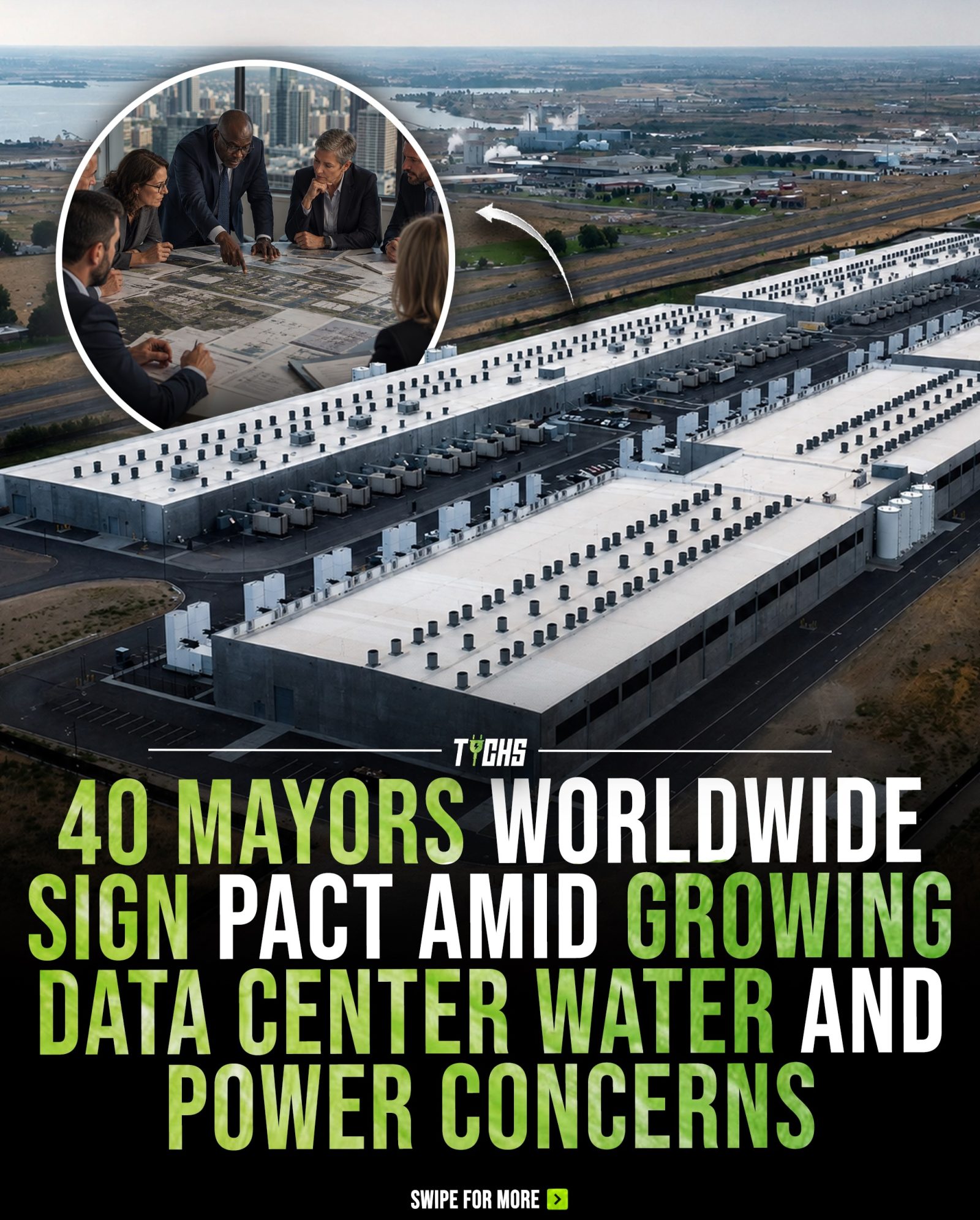
Data Centers and Sustainability: A Global Pact by 40 Mayors
As global AI infrastructure expands, a significant concern has emerged: the environmental impact of data centers. These facilities, critical for data storage and processing, consume vast amounts of power, water, and land. In response to these concerns, 40 mayors from five continents have signed a landmark pact. The agreement, initiated by C40 Cities, focuses on promoting sustainable data center operations and minimizing their environmental footprint.
Context / Why This Matters
With AI demand on the rise, the number of data centers worldwide is set to increase significantly. Currently, around 1,700 data centers operate across C40 cities alone. As these facilities grow, so do their environmental impacts. The pact signed by 40 mayors aims to address these challenges head-on, pushing for cleaner, more efficient, and more community-friendly data centers.
The Environmental Impact of Data Centers
Data centers require vast amounts of electricity to power their operations and cooling systems. They also consume significant quantities of water for cooling and rely on large plots of land for their infrastructure. As the number of data centers grows, so does their demand for these resources. This raises concerns about environmental sustainability and the potential strain on local communities.
The Role of AI in Data Center Growth
Artificial Intelligence (AI) is a major driver of data center growth. As AI applications become more sophisticated, they require more data processing and storage. This, in turn, increases the demand for data centers, exacerbating their environmental impact.
The Global Pact for Sustainable Data Centers
The pact signed by 40 mayors from around the world is a significant step toward mitigating the environmental impact of data centers. The agreement outlines several key goals:
Clean Energy Transition
One of the pact's core objectives is to transition data centers to clean energy sources. This includes not just the power used to run data center operations but also the energy used for cooling systems.
Water Conservation
Water is a critical resource for data centers, primarily for their cooling systems. The pact aims to reduce water consumption by promoting more efficient cooling technologies and practices. This could include the use of air-cooling systems, improved water recycling, and other innovative solutions.
Emission Reduction
Data centers contribute to greenhouse gas emissions, both directly (through their energy use) and indirectly (through the energy production process). The pact calls for measures to lower these emissions, including the use of renewable energy sources and more energy-efficient technologies.
Community Benefits
The pact also emphasizes the importance of providing tangible benefits to local communities. This could include job creation, investment in local infrastructure, and other positive impacts on the community.
Practical Tips for Sustainable Data Center Operations
Data centers can adopt several practical strategies to achieve the goals set out in the pact. Here are a few key areas to focus on:
Energy Efficiency
Improving energy efficiency can significantly reduce the environmental impact of data centers. This can be achieved through various measures, such as:
- Optimizing Server Utilization: Ensuring that servers are fully utilized and minimizing the number of idle servers.
- Improving Power Supply Efficiency: Using more efficient power supply units and ensuring that power distribution is optimized.
- Adopting Energy-Efficient Cooling: Using advanced cooling technologies, such as liquid cooling or free air cooling, can significantly reduce energy consumption.
Renewable Energy
Transitioning to renewable energy sources is a critical step in reducing the carbon footprint of data centers. This can be achieved through:
- On-Site Renewable Energy Generation: Installing solar panels or wind turbines on-site to generate renewable energy.
- Renewable Energy Purchasing: Buying renewable energy certificates (RECs) or power purchase agreements (PPAs) to offset the energy used by the data center.
Water Conservation
Water is a critical resource for data centers, primarily for their cooling systems. Reducing water consumption can be achieved through:
- Air Cooling: Using air cooling instead of water-based cooling systems.
- Water Recycling: Implementing water recycling systems to reduce the amount of fresh water needed.
Sustainable Site Selection
Choosing a sustainable site for a new data center can help minimize its environmental impact. This includes:
- Location Considerations: Selecting a location with access to renewable energy sources, such as wind or solar power.
- Environmental Impact Assessment: Conducting a thorough environmental impact assessment to identify and mitigate potential environmental risks.
Important Takeaways
The pact signed by 40 mayors from around the world is a significant step toward promoting sustainable data center operations. Key takeaways include:
- Global Commitment: The involvement of mayors from five continents underscores the global nature of the data center sustainability challenge and the need for international cooperation.
- Clear Goals: The pact sets out clear, measurable goals for reducing the environmental impact of data centers, including a transition to clean energy, water conservation, and emission reduction.
- Community Engagement: The pact emphasizes the importance of providing tangible benefits to local communities, ensuring that the transition to sustainable data centers is a win-win for all parties.
The success of this pact will depend on the collective efforts of local governments, data center operators, and technology companies. By working together, these stakeholders can help balance technological progress with environmental and community priorities.
Conclusion
The global pact signed by 40 mayors is a significant milestone in the quest for sustainable data center operations. As AI demand continues to surge, the pact's goals—including a transition to clean energy, water conservation, and emission reduction—will become increasingly important. By adopting sustainable practices and working together, data center operators can help mitigate the environmental impact of these critical facilities, ensuring a more sustainable future for all.
Watch the Reel
Questions readers ask
What is the primary goal of the pact signed by the 40 mayors?
The primary goal is to promote sustainable operations of data centers and reduce their environmental footprint. This includes minimizing the energy and water consumption, and land use of these facilities as AI infrastructure expands.
Why are data centers a concern for mayors worldwide?
Data centers are resource-intensive, consuming large amounts of power, water, and land. As AI demand grows, so does the number of data centers, leading to increased environmental impacts that mayors aim to mitigate.
What is the significance of the C40 Cities initiative in this context?
C40 Cities played a key role in initiating the pact. This initiative involves 40 mayors from around the world, focusing on reducing the environmental impact of data centers in their cities.
How many data centers are currently operating in C40 cities?
As of now, around 1,700 data centers are operating across C40 cities. This number is expected to rise as global AI infrastructure expands, increasing the demand for data centers.
What are some of the environmental impacts of data centers?
Data centers have significant environmental impacts, including high energy consumption, substantial water use for cooling, and extensive land use. These factors contribute to their carbon footprint and overall environmental impact.
What steps can cities take to make data centers more sustainable?
Cities can encourage the use of renewable energy sources for powering data centers, improve energy efficiency, implement advanced cooling techniques and water recycling, and promote sustainable urban planning.
Related deep dives
Similar reads based on topic and creator.




Recent articles
Fresh deep dives from the latest Reels we unpacked.




Comments
Be the first to comment.