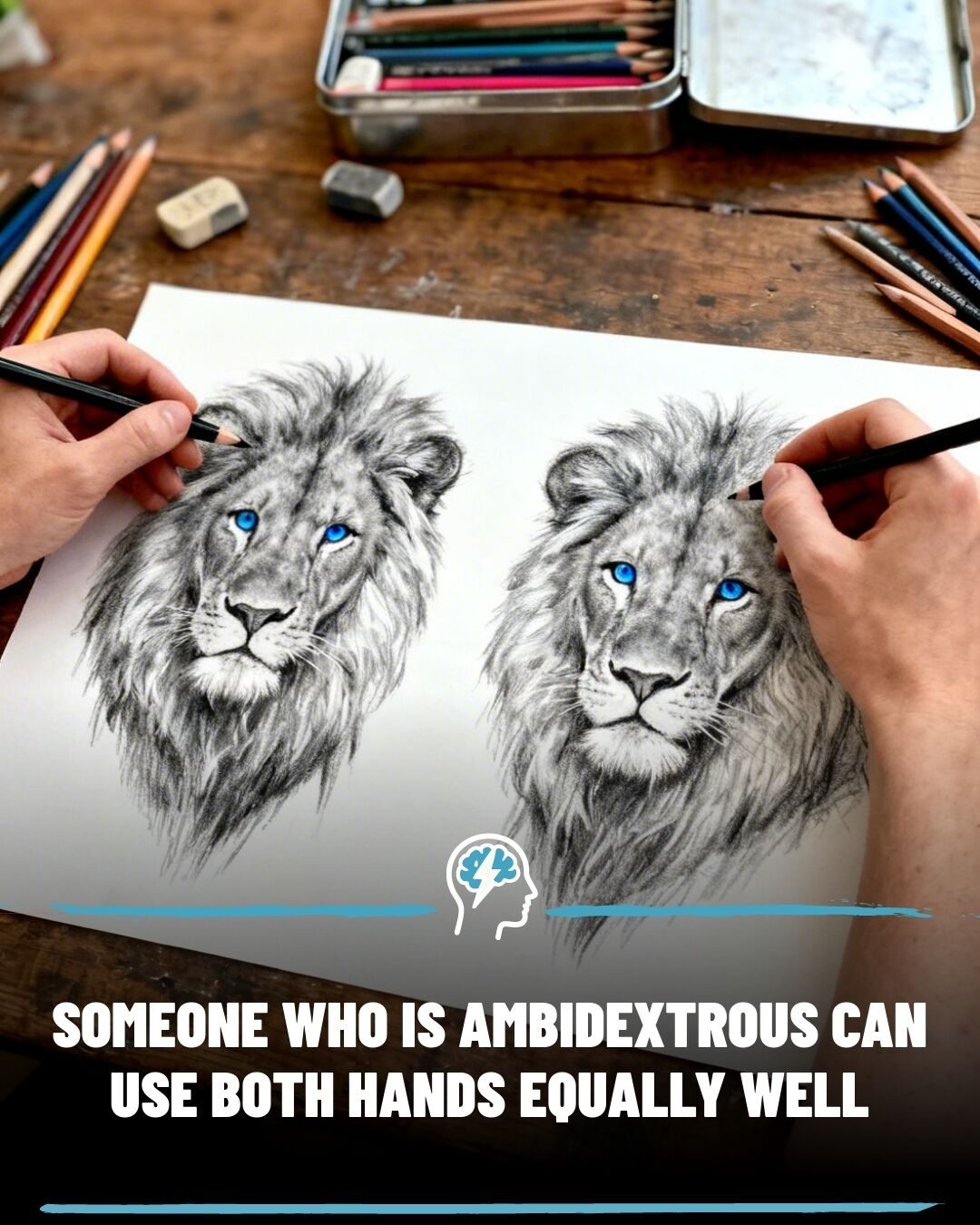
Ambidextrous drawing showcases a remarkable skill, demonstrating that using both hands equally is not just a matter of dexterity, but also a fascinating reflection of brain organization and function. While many people are either strongly right-handed or left-handed, there is a small yet intriguing group of individuals who can perform tasks with equal skill using either hand. This unique ability is known as true ambidexterity.
Context / Why this matters
Understanding ambidexterity and handedness provides valuable insights into how the brain controls movement and processes information. The majority of humans show a clear preference for one hand over the other, with about 85 to 90% favoring the right hand, and 10 to 15% preferring the left. This leaves a tiny percentage of people who can genuinely use both hands with equal proficiency. In rare instances, they can even perform detailed tasks, such as drawing, simultaneously with both hands, as seen with colored pencils.
Understanding Handedness
The Spectrum of Handedness
Handedness exists on a spectrum. At one end are those who are strongly right-handed or left-handed, while at the other end are those who demonstrate ambidexterity. Mixed-handedness, where an individual may prefer one hand for certain tasks and the other for different tasks, also exists. This variation in handedness represents natural diversity in human development.
The Role of Brain Organization
Hand preference is closely tied to brain organization. In most right-handed individuals, the left hemisphere of the brain controls the dominant right hand. Similarly, in left-handed individuals, the right hemisphere controls the dominant left hand. Researchers suggest that ambidextrous people may have a more balanced distribution of motor control across both hemispheres. This more even distribution allows them to use both hands with equal skill.
Ambidexterity in the Brain
While the exact mechanism behind ambidexterity has not been definitively proven, current theories point to a more balanced brain organization. Neuroimaging studies indicate that ambidextrous individuals may have stronger connections between the two hemispheres, enabling them to coordinate movements more evenly. This balanced control might be the result of genetic factors, early childhood development, or even environmental influences.
Ambidexterity in Practice
Real-world Applications
Ambidexterous individuals might excel in activities that require the use of both hands. For example, ambidextrous artists, such as those drawing with colored pencils, can create intricate and detailed works simultaneously with both hands. Similarly, musicians, athletes, and surgeons may benefit from being able to use both hands equally well.
Everyday Tasks
While ambidextrous drawing is a captivating demonstration of skill, the practical applications extend to everyday tasks. Being able to write, cut with scissors, or use tools with either hand can enhance versatility and efficiency. For instance, being ambidextrous could be advantageous in professions that require frequent tool use, such as construction or craftsmanship.
Practical Tips for Developing Ambidexterity
Start Early
Ambidexterity can be cultivated from a young age. Encouraging children to use both hands for tasks can help develop motor skills in both hemispheres. Simple exercises, such as drawing, writing, or playing with building blocks, can promote balanced hand usage.
Regular Practice
Regular practice is essential for developing ambidexterity. Engaging in activities that require the use of both hands, such as playing musical instruments, writing, or sports, can enhance coordination and skill. Setting aside dedicated practice time can help improve dexterity over time.
Challenge Yourself
To become truly ambidextrous, challenging yourself to use your non-dominant hand for everyday activities is crucial. For example, try brushing your teeth, eating, or opening doors with your non-dominant hand. This constant practice will help build muscle memory and improve coordination.
Important Takeaways
Ambidexterity represents a unique adaptation of the brain and body, allowing individuals to perform tasks with equal skill using either hand. This ability is relatively rare, with only a small percentage of the population demonstrating true ambidexterity. Research suggests that brain organization, specifically the distribution of motor control across the hemispheres, plays a key role in this skill.
A Balance of Advantages
Being ambidextrous offers practical advantages, enhancing versatility and efficiency in various tasks. From artistic endeavors, such as drawing with colored pencils, to everyday activities, ambidextrous individuals can approach tasks with a unique skill set.
Natural Variation
Handedness, including ambidexterity, is a natural variation in human development. It is important to recognize that being ambidextrous is neither better nor worse than having a dominant hand. Each individual's brain has its own unique way of coordinating movement and processing information.
Conclusion
Ambidexterity is a fascinating and rare ability that offers valuable insights into brain function and motor control. From the practical advantages it provides to the intriguing aspects of brain organization, ambidexterity showcases the remarkable adaptability of the human body and mind. Whether you are strongly right-handed, left-handed, or ambidextrous, understanding your handedness can deepen your appreciation for the complex and diverse ways the brain organizes movement and information.
Watch the Reel
Questions readers ask
What is ambidextrous drawing and why is it significant?
Ambidextrous drawing is the ability to draw or write with equal skill using both hands. It is significant because it offers insights into how the brain organizes and controls motor functions, challenging the typical dominance of one hand over the other.
How does ambidextrous drawing relate to brain hemispheres?
Ambidextrous drawing suggests that the brain can distribute motor control evenly across both hemispheres. This is in contrast to the usual left or right-handed dominance, providing a unique perspective on brain organization and function.
Can anyone learn to draw ambidextrously, or is it an innate ability?
While some people may have a natural inclination towards ambidexterity, it is possible for anyone to improve their skills in using both hands through dedicated handedness training. This involves specific exercises and techniques to build dexterity and control in the non-dominant hand.
What are some effective techniques for ambidextrous hand training?
Effective techniques for ambidextrous hand training include practicing simple tasks like writing or drawing with the non-dominant hand, engaging in mirror exercises where both hands perform the same task simultaneously, and incorporating fine motor skill exercises to enhance coordination.
How can drawing with both hands help improve overall motor function?
Drawing with both hands can help improve overall motor function by enhancing hand-eye coordination, fine motor skills, and promoting better brain hemispheric communication. This can lead to improved dexterity and control in both hands, as well as enhanced cognitive flexibility.
Is it necessary to be truly ambidextrous to benefit from ambidextrous drawing techniques?
No, it is not necessary to achieve true ambidexterity to benefit from these techniques. Even practicing handedness switching and using the non-dominant hand for simple tasks can offer advantages in terms of improved motor skills, increased creativity, and a deeper understanding of brain function.
What are some common challenges faced when learning to draw with both hands?
Common challenges include initial discomfort and lack of coordination in the non-dominant hand, as well as the mental effort required to switch between hands. However, with consistent practice and dedication, these challenges can be overcome, leading to improved ambidextrous skills.
Related deep dives
Similar reads based on topic and creator.



Recent articles
Fresh deep dives from the latest Reels we unpacked.




Comments
Be the first to comment.