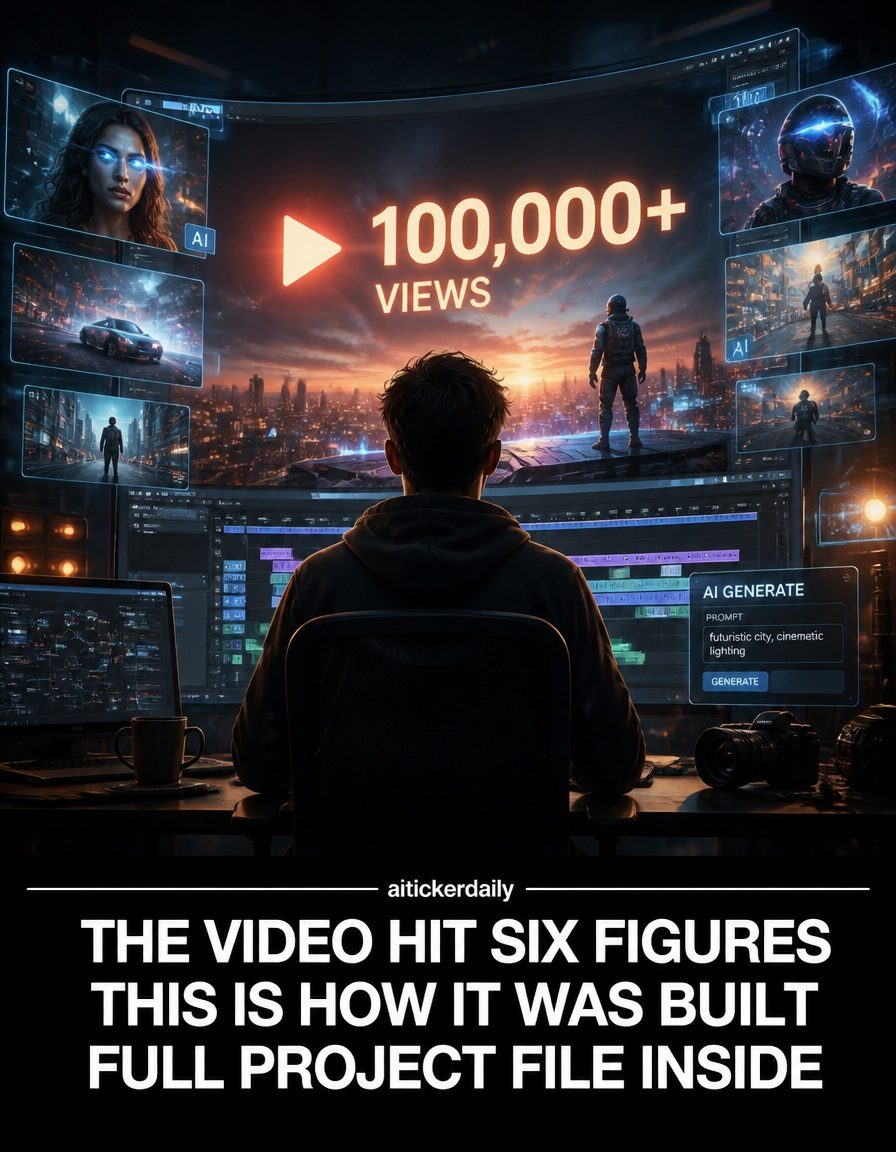
AI Video Generation Workflow
Creating a viral video often involves a meticulous process, especially when leveraging the power of AI software. Here, we'll explore how a creator utilized AI-generated visuals and After Effects for post-production to create a successful video viewed over 100,000 times. The entire project, including the Adobe After Effects project file (.aep) and the specific prompts used, was shared to give other video creators an inside look.
Context: Why This Matters
Before diving into the specifics, it's important to recognize why understanding this workflow is beneficial. The integration of AI in video creation is revolutionizing digital content creation. By grasping the fundamentals of AI-generated visuals and how to refine them with post-production tools, creators can produce high-quality content more efficiently.
Main Discussion
The Workflow
The journey begins with AI software. The creator started by generating visuals for a futuristic cityscape. This initial step involves crafting a prompt that accurately describes the desired scene. For instance, the term "futuristic city" would be combined with other descriptors like "cinematic lighting" to achieve the intended visual style.
Generating the right visuals is only half the battle. The next step involves refining these AI-generated frames using After Effects. This is where the video gains its finishing touches, such as movement, transitions, and any additional visual effects that enhance the overall quality of the video.
Understanding Prompts
Prompts are the cornerstone of AI video generation. They act as instructions for the AI, guiding it on what to create. A well-crafted prompt is detailed and specific. For example, the prompt "A futuristic city with cinematic lighting" is more effective than a vague description. The precision in these prompts is what allows the AI to generate realistic and appealing visuals.
The Importance of Post-Production
AI-generated visuals can sometimes appear too perfect or lack a certain personal touch. After Effects comes into play here, allowing creators to fine-tune every element. This software is widely used in the industry for its versatility and power. It can add realistic motion, transitions, and special effects, making the video production more dynamic. Plus, this post-production step ensures that the generated visuals align with the desired aesthetic and narrative.
The Benefits of Sharing the Process
Sharing the complete .aep project file and the prompts offers a valuable resource for other creators. It provides a blueprint that others can build upon, showing them the intricacies of both AI video generation and post-production. This transparency can inspire new creators, helping them understand the process and potentially replicate or innovate upon this successful workflow.
Practical Tips
Crafting Effective Prompts
To maximize the potential of AI-generated visuals, focus on creating detailed and accurate prompts. Use specific descriptors and avoid vague terms. The more precise the prompt, the closer the AI's output will be to your vision.
Mastering After Effects
Having a strong grasp of After Effects can significantly elevate AI-generated visuals. Familiarize yourself with its various tools and techniques, such as keyframing, motion graphics, and special effects. This will allow you to refine your AI-generated visuals to perfection.
Experimentation and Iteration
Creating a successful video often involves experimenting with different prompts and post-production techniques. Don't be afraid to iterate on your work. Sometimes, the best results come from trying multiple approaches and refining them based on feedback.
Important Takeaways
-
AI Integration: AI software has become an essential tool for generating high-quality visuals. Understanding how to use it effectively can greatly enhance your video production process.
-
Role of Prompts: Crafting effective prompts is crucial for generating the desired visuals. The more specific and detailed the prompt, the better the outcome.
-
Post-Production Excellence: After Effects is a powerful tool for refining AI-generated visuals. Mastering it can make a significant difference in the final product.
-
Community Sharing: Sharing your workflow, including project files and prompts, can benefit the community. It provides a valuable resource for others to learn and innovate.
Conclusion
The process of creating a successful video using AI-generated visuals and After Effects post-production is a multifaceted journey. It involves crafting detailed prompts, generating visuals with AI, and refining them with post-production. By sharing the entire workflow, including the .aep project file and the prompts used, creators can inspire and educate others in the digital content creation community. Whether you're a seasoned video editor or just starting out, understanding this workflow can help you create more compelling content.
Watch the Reel
Questions readers ask
What are the key benefits of using AI in video creation?
AI in video creation offers several advantages, such as accelerated production times, consistent quality, and the ability to generate unique, futuristic effects. AI can also handle repetitive tasks, allowing creators to focus on more creative aspects of the project. Additionally, AI tools can help generate a vast amount of content, increasing the chances of creating something viral.
How can After Effects complement AI-generated visuals in post-production?
After Effects is crucial for refining AI-generated visuals. It allows for precise control over motion graphics, color grading, and compositing, which can significantly enhance the visual appeal of AI-generated content. Creators can use After Effects to seamlessly integrate AI visuals with live footage, add custom effects, and ensure a polished, professional finish.
What is the significance of sharing the AI project file and prompts?
Sharing the AI project file (specifically the .aep file for After Effects) and the prompts used to generate visuals provides transparency and practical insights. It allows other creators to understand the technical aspects, replicate successful techniques, and learn from real-world examples. This sharing fosters a collaborative community where creators can build upon each other's work.
What strategies can help increase the chances of creating a viral video?
To boost the chances of viral success, focus on unique, high-quality content that resonates with your audience. Use trending topics and AI-generated visuals to create eye-catching effects. Engage with your audience through interactive elements and consistent posting. Additionally, optimize your video for search and shareability on various platforms to maximize reach.
Why is understanding the AI video workflow important for creators?
Understanding the AI video workflow is essential for streamlining the creative process and achieving professional results. It involves learning how to effectively use AI tools for generating visuals and then integrating those visuals into a cohesive project using post-production software like After Effects. Mastering this workflow can lead to quicker production times and higher-quality content, increasing the likelihood of creating a viral hit.
Related deep dives
Similar reads based on topic and creator.


Recent articles
Fresh deep dives from the latest Reels we unpacked.




Comments
Be the first to comment.