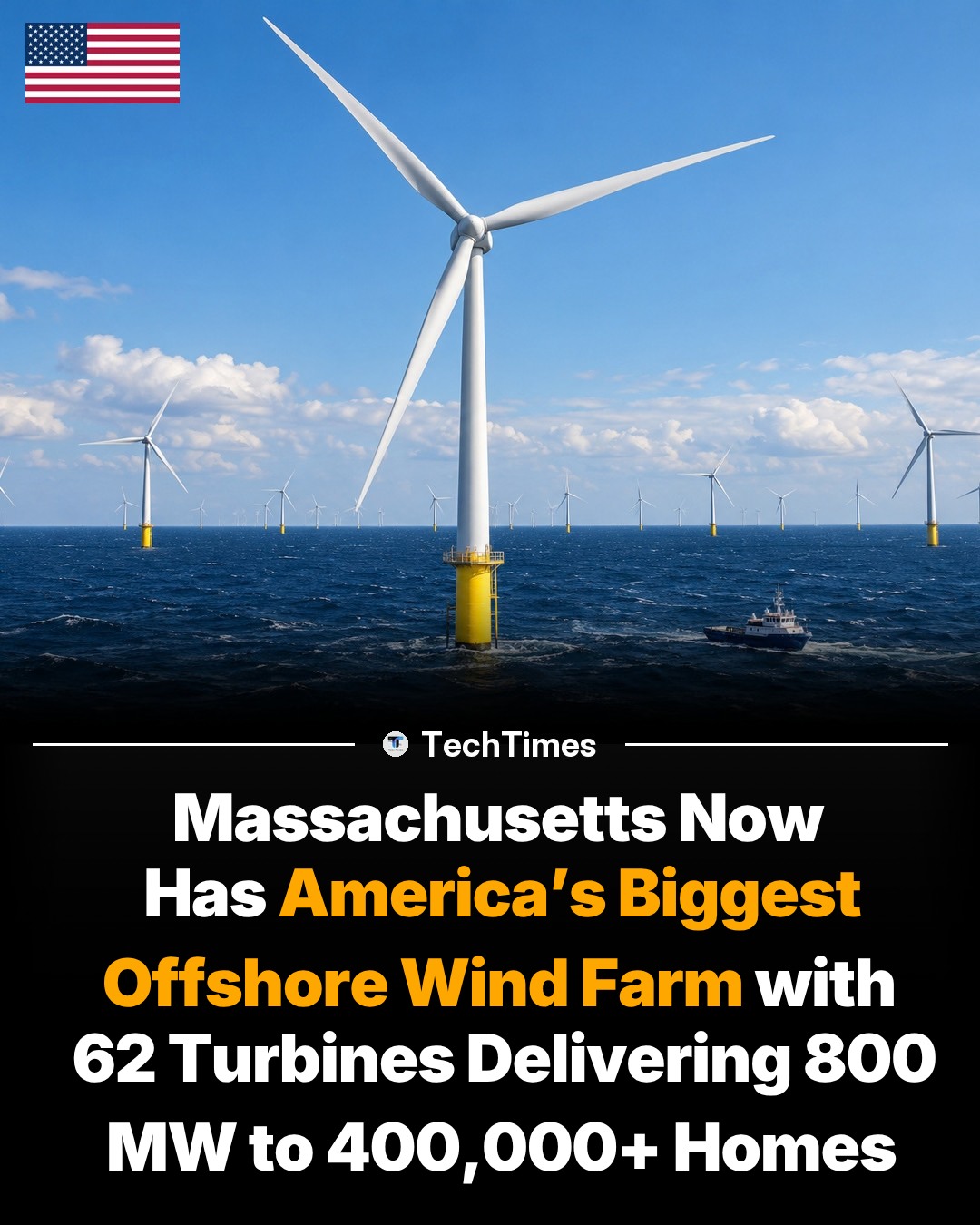
America’s New Energy Powerhouse
Massachusetts is now home to America's largest offshore wind farm. It boasts 62 massive turbines stretched across the ocean. These aren't just steel sculptures or power plants — each one can churn out 800 megawatts of power. Enough to keep over 400,000 homes lit up to power the entire state. Above them, the sky stretches out clear and blue. it's an example to both the world and the world of how far renewable energy has truly come.
The wind farm is the ocean's new frontier
This isn't just a row of turbines off the coast. The wind farm is a symbol of progress in renewable energy. It's an entire ecosystem of energy generation creating enough juice for the major part of a major state. Each turbine is a marvel of modern engineering, designed to harness the wind's power from the Atlantic. The turbines convert wind into usable energy, which is transported back to shore. The sheer scale and potential of this project highlights its implications far beyond Massachusetts.
Innovative engineering
The offshore wind farm spills across the ocean. It's impressive to look at. Each of the 62 turbines stretches tall and taught towards the sky, standing roughly 853 feet tall from blade tip to base. Each turbine is bolted to the seabed, designed to withstand the rough and weather. Every one of the turbines contains hundreds of parts, including blades, gearboxes, generators, and the tower itself. Each turbine is at least 2 k° or 7° counter clockwise from the last, creating an orderly spread. The wind at sea is more robust than it is on land. It is also more substantive. Wind turbines at sea can generate more power than their onshore counterparts. This is due to the reduced turbulence and increased wind speeds at sea. This allows the turbines to operate more efficiently. The wind farms are built far from shore, in deep waters, to minimize visual and environmental impact. The turbines are anchored using a monopile foundation, which is driven deep into the seabed. They are connected to the grid via submerged cables.
Community Impact
This isn't just a renewable energy initiative; this is a real-life boost to the economy. Local companies, fishermen, and communities have found ways to benefit. There are independent contracts on the books worth $30 each to fish around the turbines. Locals have been educated in wind turbine maintenance. In total, they are now expected to generate 3 gigawatts of renewable energy by 2030. The wind farm boils down to 30,000 jobs across the state, generating major local revenue. Local companies are using them as assets in their brand. They are a major factor in building the future with a renewable energy guarantee.
The Highest Point
The wind farm stands above the sky and focuses the world's interests. That 62-turbine stretch out there is worth looking at from the top. They sit at the highest height of any other structures in the world. The highest point in the farm is the tip of an active turbine rotor, waiting for a good gust. This puts the blades more than 850 feet in the sky. That makes the wind farm the tallest renewable energy structure in the US. The turbine's height and placement add up to a project that generates enough juice to power the entire state. When you throw it all into one place, all the 62 turbines generate 800 megawatts, and can produce enough power to light up a city more than 3 times the size of Boston. The power is often used to power "off-grid" communities where there are no existing power lines. They are also the best way to meet the demand of the growing population and to ensure the supply during peak hours.
The Biggest Wind Farm
Massachusetts now has the biggest wind farm. Each turbine could produce enough energy to power 6,500 homes. If the wind farm is running well, you could easily count the number of homes it provides. It's enough to power the average-sized city. It can serve a city the size of Boston or any other cities in the state, any time they need it. Even when the wind is blowing slowly, the turbines can still generate enough power to keep the city running.
The Ocean’s New Frontier
Watch the Reel
Questions readers ask
How exactly do the turbines convert wind into usable energy?
The turbines use the wind's kinetic energy to rotate their blades. This rotation drives a generator, which converts the mechanical energy into electrical energy. The electricity is then transmitted back to shore via underwater cables to power homes and businesses.
Why does Massachusetts have the largest offshore wind farm in the US?
Massachusetts has emerged as a leader in offshore wind energy due to its strong commitment to renewable energy goals. The state's location along the Atlantic Coast provides access to consistent and strong winds, making it an ideal location for large-scale offshore wind farms.
How does the wind farm benefit the local economy beyond just energy production?
The wind farm creates thousands of jobs in construction, maintenance, and related industries. It also generates significant local revenue through contracts with local businesses, including fishing industries and educational initiatives that train locals for wind turbine maintenance.
How does the wind farm's design help it withstand harsh ocean conditions?
Each turbine is anchored to the seabed using a monopile foundation, which is driven deep into the ground for stability. The turbines are also designed with advanced materials and engineering to withstand high winds, waves, and saltwater corrosion, ensuring they can operate efficiently in the harsh ocean environment.
What makes the wind farm's turbines more efficient than onshore turbines?
The wind at sea is generally stronger and more consistent than on land, with less turbulence. This allows offshore turbines to generate more power and operate more efficiently. Additionally, the turbines are built in deep waters far from shore, minimizing visual and environmental impacts.
What is the significance of the turbines being placed at a 2 k° or 7° angle from each other?
The specific angular placement of the turbines helps to optimize the use of wind resources and minimize interference between turbines. This layout ensures that each turbine can capture the wind efficiently without being affected by the turbulence created by neighboring turbines, enhancing overall energy production.
How does the wind farm contribute to Massachusetts' goal of generating 3 gigawatts of renewable energy by 2030?
The wind farm is a significant step towards Massachusetts' renewable energy goals. By generating 800 megawatts of power, it contributes substantially to the state's target. Additionally, the wind farm's success is expected to pave the way for further offshore wind projects, helping the state reach its 3-gigawatt goal by 2030.
Related deep dives
Similar reads based on topic and creator.



Recent articles
Fresh deep dives from the latest Reels we unpacked.




Comments
Be the first to comment.