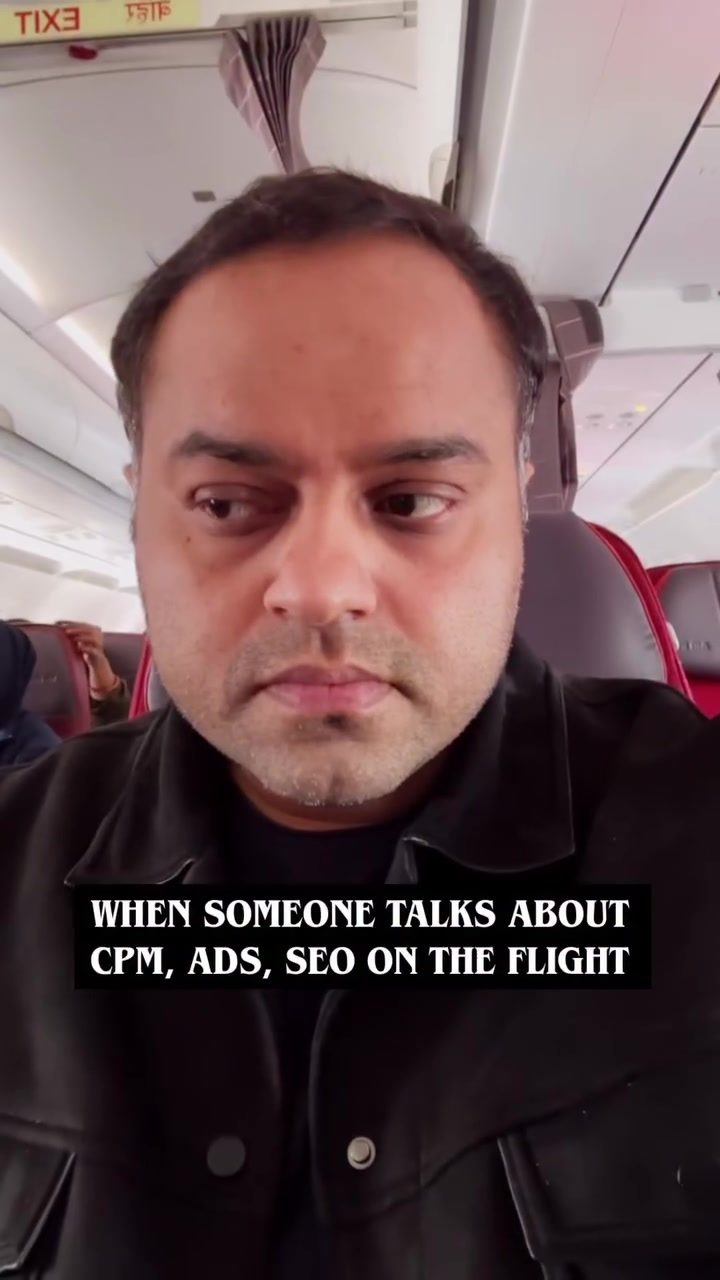
The Annoyance of Marketing Jargon
Marketing jargon can often feel like an impenetrable language, especially when it dominates conversations in unexpected places, like an airplane flight. The overwhelm and annoyance that this kind of talk can elicit are very real, and it's a relatable experience for many.
Why this Matters
Marketing professionals often use specialized terms and acronyms to discuss strategies, tactics, and metrics. Terms like CPM (Cost Per Mile), which refers to the cost of displaying an ad to 1,000 viewers, and SEO (Search Engine Optimization), which pertains to efforts to improve a website's ranking on search engines, are crucial in the industry. Nonetheless, these terms can be confusing and off-putting to those who are not familiar with the field. Understanding how to navigate these conversations can make social and professional interactions more enjoyable and productive.
Main Discussion
The Prevalence of Marketing Talk
Marketing discussions are everywhere, from casual conversations to professional meetings. Terms like CPM and SEO are commonly thrown around, and many people who are unfamiliar with these concepts find themselves at a loss. This can be particularly frustrating in settings where one might expect a break from work-related topics, such as during a flight.
The Reaction: Annoyance and Overwhelm
The reaction to marketing jargon can range from mild annoyance to complete overwhelm. It's easy to feel bombarded by terms you don't understand, especially when you're in a situation where you'd rather be relaxing. The man in the video captures this feeling perfectly. His exaggerated reactions—gesturing with his hands and covering his face—highlight the extent to which these conversations can be unsettling.
The Impact on Casual Conversations
Marketing jargon can infiltrate casual conversations, turning what could be a relaxing flight into a bewildering experience. This is especially true for those who are not in the marketing field. When someone starts discussing CPM rates or the latest SEO techniques, it can be difficult to follow along, leading to feelings of frustration and exclusion.
Practical Tips
How to Decode Marketing Jargon
To better navigate these conversations, it can be helpful to familiarize yourself with some of the most commonly used marketing terms. For example:
-
CPM (Cost Per Mille): This refers to the cost of displaying an ad to 1,000 viewers. It's a standard metric used to measure the cost-effectiveness of online advertising.
-
SEO (Search Engine Optimization): This involves optimizing a website to improve its ranking in search engine results, increasing the likelihood that users will find and visit the site.
-
Ads: Short for advertisements, these are promotional messages designed to attract attention and generate interest in a product or service.
Engaging in Conversations
If you find yourself in a conversation about marketing and feel overwhelmed, it's perfectly okay to ask for clarification. Most people appreciate it when someone shows genuine interest in understanding their work. You can also divert the conversation to a more general topic if the marketing talk is becoming too much.
Creating a Balance
While marketing discussions can be informative, it's essential to balance them with lighter topics, especially in casual settings. If you are the one initiating these conversations, be mindful of your audience and their comfort level. Not everyone will be as invested in the intricacies of marketing as you are.
Important Takeaways
Marketing jargon is a ubiquitous part of modern communication, but it doesn't have to be intimidating. By understanding some of the key terms and being open to learning, you can navigate these conversations more effectively. It's also important to recognize when these discussions might be overwhelming and to actively seek a balance between professional and casual talk.
Conclusion
Marketing jargon is part of our daily lives, whether we like it or not. While it can be overwhelming and annoying, especially in unexpected settings like a flight, understanding a few key concepts can make these interactions more manageable. By being open to learning and actively seeking balance, you can turn a potentially frustrating experience into an opportunity for growth and better communication.
Watch the Reel
Questions readers ask
Why do marketing professionals use so much jargon even in casual settings, like on an airplane?
Marketing professionals frequently use specialized jargon because it allows them to communicate complex ideas efficiently with their peers. However, this can be overwhelming and annoying to those who are not familiar with the industry terms, especially when these conversations occur in public spaces like on an airplane.
What are some common marketing acronyms that passengers might hear on a plane?
Passengers might encounter acronyms such as CPM (Cost Per Mile), SEO (Search Engine Optimization), CPC (Cost Per Click), and KPIs (Key Performance Indicators). These terms are crucial for marketing discussions but can be confusing to those outside the industry.
How can understanding some basic marketing terms improve a passenger's experience?
Understanding some basic marketing terms can help passengers engage more comfortably in conversations and feel less excluded. While it won’t change the conversations entirely, it can reduce the feeling of being overwhelmed and make the experience more enjoyable. It’s important to note, however, that passengers are not expected to learn these terms—it is the responsibility of marketing professionals to communicate more inclusively.
Why is marketing language often used in aviation settings?
Aviation is a highly competitive industry, and marketing plays a significant role in attracting customers and improving brand reputation. As a result, marketing professionals may discuss strategies and campaigns even when traveling on planes. However, when conversations are dominated by jargon, it can be off-putting to those who are simply trying to relax or enjoy their flight.
What steps can marketing professionals take to make in-flight conversations more accessible to passengers?
Marketing professionals can take steps to make their conversations more accessible by using plain language when possible, especially in public spaces. If technical terms are necessary, a brief explanation can go a long way in making the conversation more inclusive. Passengers might appreciate the effort, even if they don’t actively participate in the discussion.
How does the use of marketing jargon affect passenger perception of the industry?
The frequent use of jargon can make marketing professionals seem exclusive and elitist, which can deter passengers from engaging with or understanding the industry. It can also create a barrier between marketing professionals and the general public, making it more difficult to communicate effectively. Passengers might feel that marketing professionals don't care about making their work accessible, which could lead to a negative perception of the industry.
Are there any benefits to learning some marketing jargon for passengers?
While it’s not necessary for passengers to learn marketing jargon, having a basic understanding of some terms can help in certain situations, such as when traveling for business or networking. However, the primary benefit for passengers is simply to feel more comfortable and less overwhelmed in situations where they might encounter these terms. This can also enhance their travel experience, making it less stressful and more enjoyable.
Related deep dives
Similar reads based on topic and creator.




Recent articles
Fresh deep dives from the latest Reels we unpacked.




Comments
Be the first to comment.