The New Marketing Growth Stack
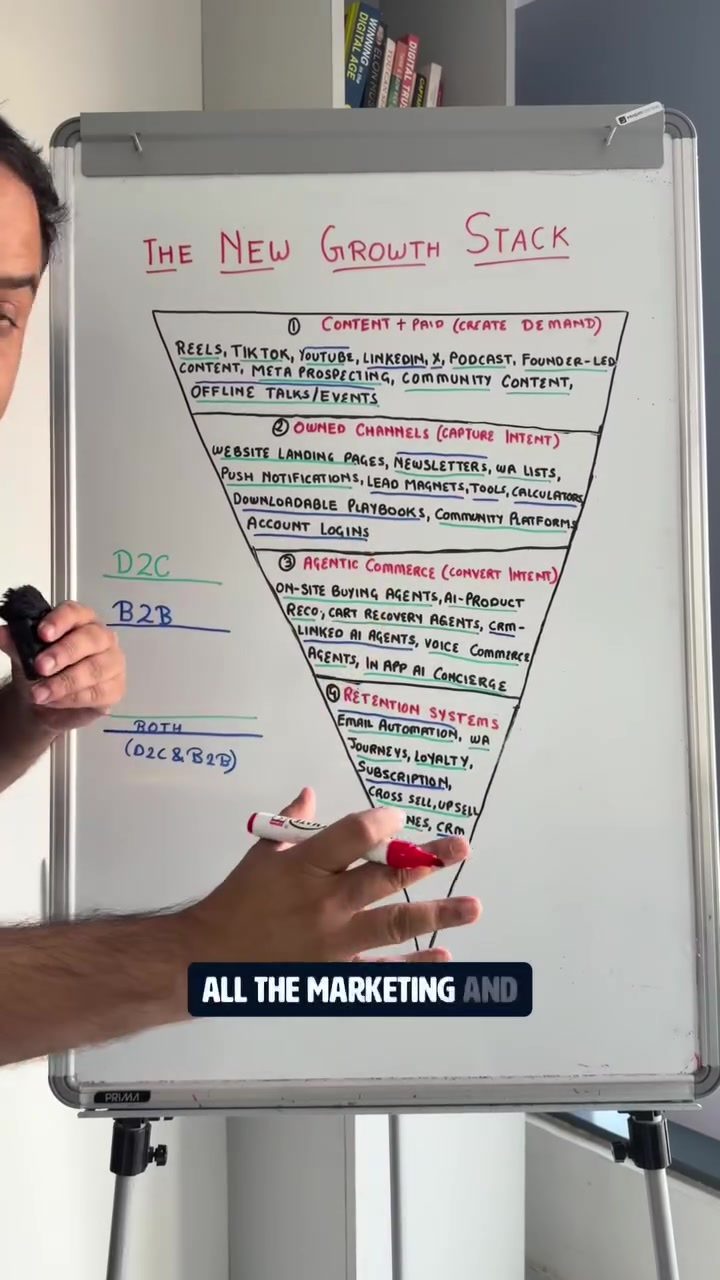
The marketing landscape is evolving rapidly, and brands are increasingly adopting a new growth stack to stay competitive. This stack consists of four key components: content plus paid, owned channels, agentic commerce, and retention systems. Each of these components plays a crucial role in creating demand, capturing intent, converting that intent into sales, and fostering long-term customer loyalty.
Why This Matters
Understanding and implementing this new growth stack is essential for businesses aiming to thrive in the current and future marketing environment. The stack is designed to address the evolving needs of both direct-to-consumer (D2C) and business-to-business (B2B) markets, offering tailored strategies for each segment.
Content Plus Paid
The first component of the growth stack is content plus paid marketing. This stage focuses on creating demand through a combination of organic and paid content. Brands are moving away from the romantic notion of generating sales directly from these channels. Instead, the focus is on using content to build brand awareness and drive potential customers to owned channels, where the real conversion happens.
Owned Channels
The second component is the owned channels, which are crucial for capturing intent. These channels include websites, newsletters, and messaging platforms like WhatsApp. Lead magnets, such as free guides or exclusive content, are becoming increasingly important for capturing first-party data. This data is invaluable for understanding customer behavior and preferences, allowing for more personalized marketing strategies.
Agentic Commerce
Agentic commerce is a new and rapidly growing layer in the marketing stack. In 2025, shopping worth $75 billion occurred through agentic commerce in the US alone, and this number is expected to surge to $500 billion by 2030. Agentic commerce involves using AI-driven agents to assist customers in their purchasing decisions. These agents can take various forms, including on-site buying agents, CRM-length AI agents, voice commerce agents, and platforms like ChatGPT.
For instance, users are increasingly turning to AI platforms to seek product recommendations. Instead of searching for specific items like blue jeans on Google, they are asking ChatGPT for style suggestions. If your product is listed on these platforms, it has a higher chance of being recommended to potential customers. This shift underscores the importance of agentic commerce in the modern marketing landscape.
Retention Systems
The final component of the growth stack is retention systems, which focus on compounding growth over time. Channels like email automation, loyalty programs, subscription services, cross-selling, upselling, and CRM workflows are essential for maintaining customer relationships and encouraging repeat purchases. These systems help brands build long-term customer loyalty and drive sustained revenue growth.
Practical Tips
Focus on Content Creation
Invest in high-quality content that resonates with your target audience. Use a mix of organic and paid content to build brand awareness and drive traffic to your owned channels. Remember, the goal is to capture intent, not to make direct sales from these channels.
Leverage Owned Channels
Maximize the use of owned channels to capture first-party data. Implement lead magnets to entice visitors to share their information, allowing you to build a more personalized marketing strategy. Utilize newsletters, WhatsApp lists, and notifications to keep your audience engaged and informed.
Embrace Agentic Commerce
Integrate AI-driven agents into your marketing strategy. Ensure your products are listed on platforms like ChatGPT and other AI-driven recommendation engines. Consider using on-site buying agents, voice commerce agents, and other forms of agentic workflows to enhance the customer experience.
Implement Retention Systems
Develop robust retention systems to foster long-term customer loyalty. Use email automation, loyalty programs, and CRM workflows to keep customers engaged and encourage repeat purchases. Personalize your retention strategies based on the data you capture from your owned channels.
Important Takeaways
The new marketing growth stack is a comprehensive approach that addresses the evolving needs of both D2C and B2B markets. By focusing on content plus paid, owned channels, agentic commerce, and retention systems, businesses can create a robust marketing strategy that drives sustained growth. The key is to leverage each component effectively, ensuring a seamless customer journey from awareness to loyalty.
Conclusion
The marketing landscape is constantly evolving, and brands that adapt to these changes are more likely to succeed. The new growth stack provides a structured approach to navigating this complex environment, offering tailored strategies for both D2C and B2B markets. By focusing on content creation, owned channels, agentic commerce, and retention systems, businesses can build a strong marketing foundation that drives long-term growth and customer loyalty.
Watch the Reel
Questions readers ask
What are the key components of the marketing growth stack for 2026?
The marketing growth stack for 2026 consists of four main components: content plus paid marketing, owned channels, agentic commerce, and retention systems. Each of these components works together to drive demand, capture customer intent, and convert sales effectively.
How does the marketing growth stack for 2026 cater to both D2C and B2B markets?
The stack is designed to be versatile, offering tailored strategies for both D2C and B2B markets. This includes specific approaches for content creation, paid marketing, and customer retention that address the unique needs and behaviors of each market segment.
What role does content plus paid marketing play in the 2026 growth stack?
Content plus paid marketing is a critical component of the 2026 growth stack because it focuses on creating valuable content and leveraging paid channels to amplify its reach. This approach helps in generating demand and capturing the intent of potential customers, driving them towards conversion.
How does agentic commerce fit into the 2026 marketing strategy?
Agentic commerce is a key part of the 2026 marketing strategy as it focuses on enabling customer interactions and transactions through intelligent agents. This technology helps in providing personalized experiences, streamlining the buying process, and fostering long-term customer loyalty.
What are retention systems and why are they important in the 2026 marketing growth stack?
Retention systems are designed to keep customers engaged and loyal after their initial purchase. They include strategies like loyalty programs, personalized communication, and customer support. These systems are crucial for maintaining long-term customer relationships and encouraging repeat business.
What trends should marketers be aware of in the 2026 marketing landscape?
Marketers should be prepared for trends such as the increasing use of AI and machine learning in marketing strategies, the rise of agentic commerce, and the growing importance of personalized customer experiences. Staying updated with these trends will help in adapting to the evolving marketing landscape effectively.
How can businesses ensure long-term customer loyalty with the 2026 marketing growth stack?
Businesses can ensure long-term customer loyalty by integrating robust retention systems into their marketing strategies. These systems focus on continuous engagement, personalized interactions, and exceptional customer support, all of which contribute to building strong, lasting relationships with customers.
Related deep dives
Similar reads based on topic and creator.




Recent articles
Fresh deep dives from the latest Reels we unpacked.




Comments
Be the first to comment.