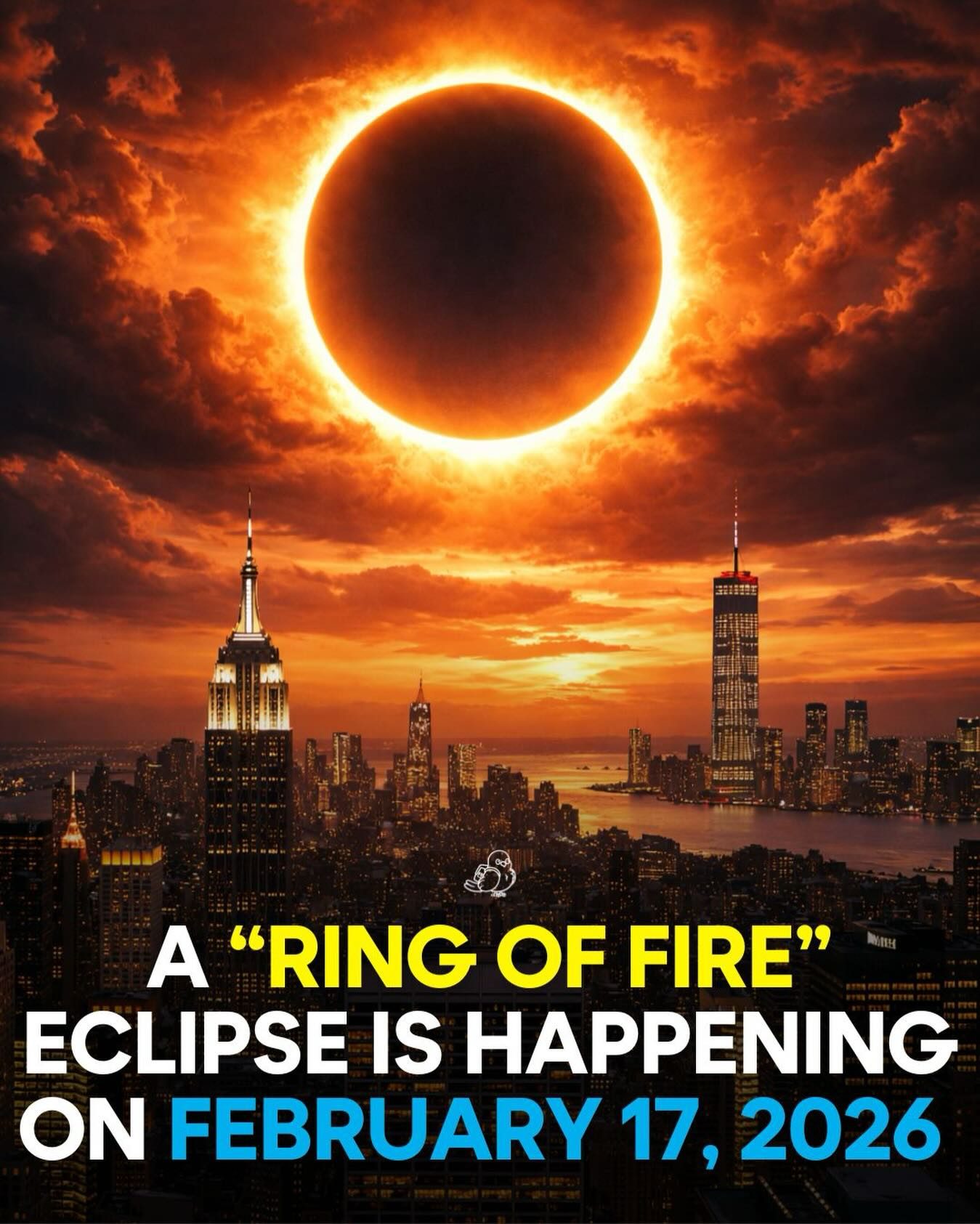
A rare celestial event, the "Ring of Fire" solar eclipse, is set to captivate skywatchers on February 17, 2026. This annular eclipse occurs when the Moon passes directly in front of the Sun but doesn't completely cover it, leaving a luminous ring of sunlight around the Moon's silhouette. The phenomenon is one of the most visually stunning events in astronomy, and it's coming in just a few years. Here's what you need to know.
Context / Why this matters
The upcoming "Ring of Fire" eclipse is notable for several reasons. Firstly, its rarity makes it a highly anticipated event among astronomy enthusiasts. Secondly, the dramatic appearance of a glowing ring around the Moon offers a unique and awe-inspiring sight. Lastly, this event provides a valuable opportunity for both amateur and professional astronomers to study the Sun and its corona, the outer layer of the Sun's atmosphere.
Main discussion
Understanding the Annular Eclipse
An annular eclipse occurs when the Moon is at its farthest point from Earth, making it appear smaller than the Sun. As a result, the Moon doesn't fully cover the Sun, leaving a bright ring of sunlight visible. This is in contrast to a total solar eclipse, where the Moon completely obscures the Sun, revealing the Sun's corona and creating a period of darkness.
The Path of the Eclipse
The path of the annular eclipse on February 17, 2026, will traverse specific regions, offering a unique opportunity for viewers in those areas to witness this spectacular event. While the exact path details are not yet finalized, major cities like New York may fall within the path of annularity, providing a breathtaking view of the "Ring of Fire" against a cityscape.
The Significance of the "Ring of Fire"
The "Ring of Fire" effect is not just visually striking; it also holds scientific importance. During an annular eclipse, the Sun's corona, the outermost part of the Sun's atmosphere, becomes visible. This allows scientists to study the corona in greater detail, helping to uncover more about the Sun's behavior and its impact on Earth.
Practical tips
Safety First
Viewing a solar eclipse requires special precautions to protect your eyes. Never look directly at the Sun without proper eclipse glasses, as the intense sunlight can cause permanent eye damage. Eclipse glasses are designed to filter out harmful rays, allowing safe viewing of the Sun.
Equipment for Viewing
To fully enjoy the "Ring of Fire" eclipse, consider investing in a pair of certified eclipse glasses. These are specially designed to filter out harmful UV and infrared radiation, making it safe to look at the Sun. Binoculars or telescopes with solar filters can also enhance your viewing experience by providing a magnified view of the eclipse.
Planning Your Viewing
If you're in the path of annularity, find an open area with a clear view of the horizon. This will maximize your chances of seeing the full effect of the "Ring of Fire." Make sure to check the weather forecast and choose a location with minimal cloud cover.
Photography Tips
Capturing the "Ring of Fire" eclipse on camera can be a rewarding experience. Use a camera with a solar filter or a specialized solar telescope to photograph the event safely. Experiment with different exposures and settings to capture the details of the eclipse.
Important takeaways
The "Ring of Fire" solar eclipse on February 17, 2026, promises to be a remarkable event. It's a rare opportunity to witness one of the most spectacular celestial events and to appreciate the wonders of the universe. Whether you're an experienced astronomer or a casual skywatcher, this eclipse is an event not to be missed. Be prepared with the right equipment and safety measures, and you'll be able to enjoy this breathtaking phenomenon to its fullest.
Conclusion
Mark your calendars for February 17, 2026, and prepare to be amazed by the "Ring of Fire" solar eclipse. This annular eclipse offers a unique and unforgettable experience, providing both beauty and scientific insight. With the right precautions and equipment, you can safely witness this celestial event and create memories that will last a lifetime.
Watch the Reel
Questions readers ask
What exactly is a 'Ring of Fire' eclipse?
A 'Ring of Fire' eclipse, also known as an annular solar eclipse, occurs when the Moon passes directly in front of the Sun but is too far away from Earth to completely cover it. This results in a bright ring of sunlight surrounding the Moon's dark silhouette.
Where will the 'Ring of Fire' eclipse of 2026 be visible?
The path of the 2026 'Ring of Fire' eclipse will pass over specific regions which are currently projected to include parts of South America, Africa, and Europe. Viewers outside this path may still see a partial solar eclipse.
Why is the 'Ring of Fire' eclipse considered a rare event?
This type of eclipse is relatively rare because it requires precise alignment of the Sun, Moon, and Earth, as well as the Moon being at its apogee, or farthest point from Earth. This specific arrangement doesn't occur frequently.
What can viewers expect to see during the 'Ring of Fire' eclipse?
Viewers in the path of the eclipse can expect to see the Moon's silhouette surrounded by a luminous ring of sunlight, known as the sun's corona. This dramatic sight is one of the most visually striking events in astronomy.
How can I safely view the 'Ring of Fire' eclipse?
To safely view the eclipse, use solar filters or eclipse glasses that meet international safety standards. Never look directly at the Sun without proper eye protection, as it can cause serious eye damage.
What time will the 'Ring of Fire' eclipse occur on February 17, 2026?
The exact timing of the eclipse will depend on your location. The eclipse will begin around 09:00 GMT and end around 12:00 GMT. The peak, or maximum, eclipse will occur around 10:30 GMT.
What makes the 2026 'Ring of Fire' eclipse a significant astronomical event?
The 2026 'Ring of Fire' eclipse is significant because of its rarity and the unique visual spectacle it offers. This event provides an excellent opportunity for both amateur and professional astronomers to observe and study the Sun's corona.
Related deep dives
Similar reads based on topic and creator.


Recent articles
Fresh deep dives from the latest Reels we unpacked.




Comments
Be the first to comment.