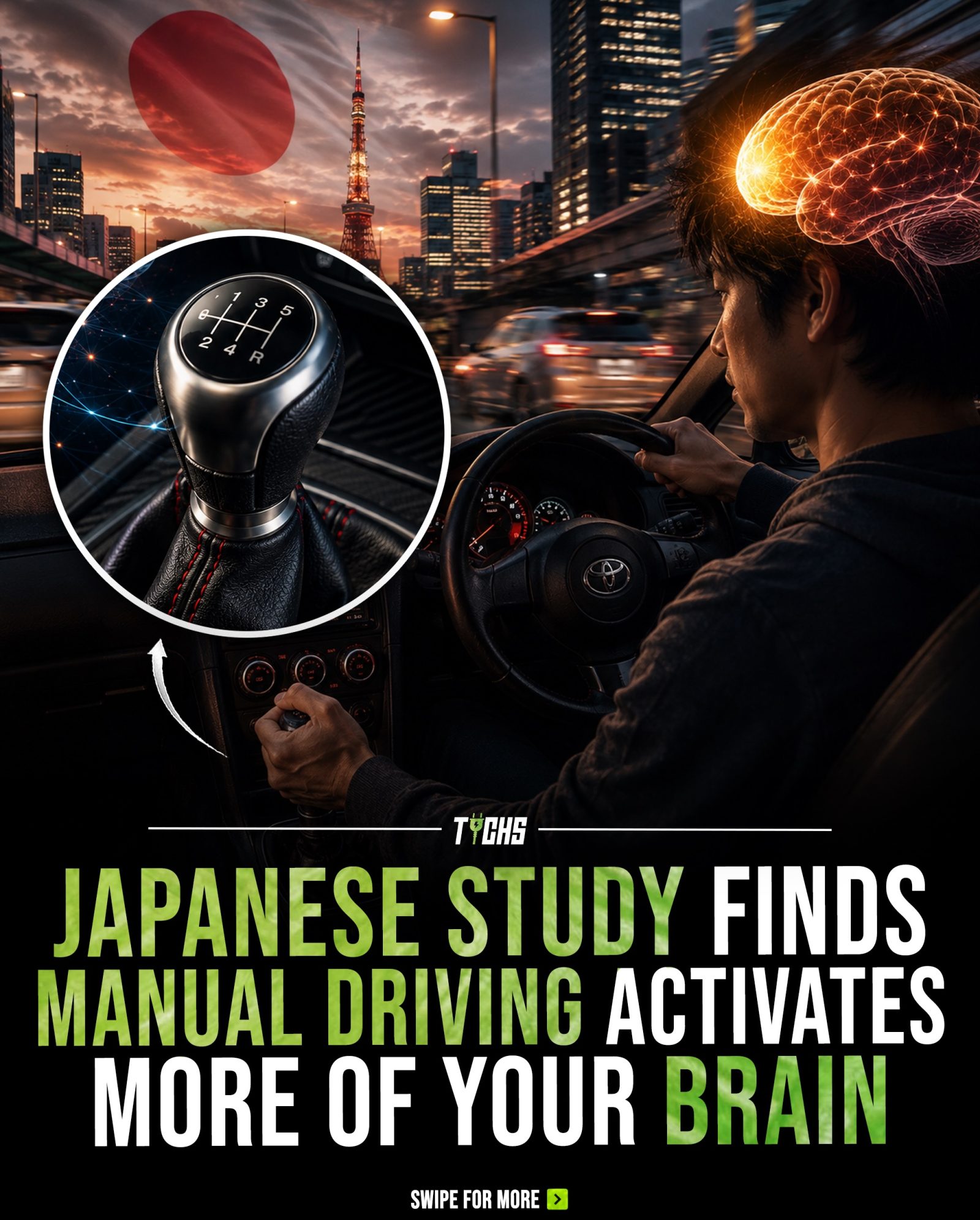
Driving a car is something many of us do regularly, but the impact on the brain varies depending on whether you're driving a manual or an automatic. This fascinating contrast was explored in a 2026 study, conducted by researchers at Tohoku University in Japan. The study found that manual driving activates more regions of the brain, specifically the prefrontal cortex, compared to driving an automatic car.
Context
Why this matters? Well, understanding the cognitive demands of driving can have implications for safety, training, and even the design of vehicles. Manual driving requires coordination of multiple tasks, including managing gears, pedals, and steering, all while navigating traffic. This multitasking demands more cognitive processing and engages different parts of the brain. Automatic driving, on the other hand, simplifies the process by handling gear changes automatically, reducing the cognitive load on the driver.
Main Discussion
The Prefrontal Cortex: The Brain's Control Center
The prefrontal cortex is a critical region of the brain responsible for executive functions such as focus, working memory, and decision-making. The study from Tohoku University revealed that manual driving activates this region more intensely than automatic driving. This heightened activation is likely due to the increased cognitive demands of managing a manual transmission, which requires constant adjustments and decisions.
Cognitive Stimulation vs. Intelligence
One important clarification from the study is that greater brain activity does not equate to greater intelligence. While manual driving may provide more cognitive stimulation, it does not necessarily make manual drivers smarter. Instead, it suggests that manual driving offers a more engaging and demanding mental exercise. This distinction is crucial, as it separates the cognitive effort required from the overall intellectual capacity of the driver.
Practical Implications
The findings from this study have several practical implications. For one, it highlights the importance of cognitive training in driver education. Manual driving could be integrated into training programs to enhance cognitive skills, particularly for younger or less experienced drivers. Additionally, for individuals looking to maintain mental sharpness, manual driving could be a beneficial activity. It's a unique form of mental exercise that keeps the brain active and engaged.
Future Research
Further research could explore additional aspects of how driving affects the brain. For instance, studies could examine the long-term effects of manual driving on cognitive function, or compare the brain activity of experienced manual drivers versus new drivers. Additionally, research could delve into how different driving conditions, such as heavy traffic or night driving, impact cognitive processing.
Practical Tips
If you're considering switching to a manual car or want to incorporate more cognitive stimulation into your driving routine, here are a few tips:
- Start Slowly: If you're new to manual driving, practice in a safe and controlled environment. Gradually build up to more challenging conditions.
- Stay Focused: Keep your attention on the road and avoid distractions. Manual driving requires constant engagement, so stay alert and aware of your surroundings.
- Practice Regularly: Like any skill, the more you practice, the more comfortable and proficient you'll become. Regular practice will help you feel more at ease with the demands of manual driving.
Important Takeaways
Here are the key points to take away from the study:
- Manual driving activates more regions of the brain, particularly the prefrontal cortex, compared to automatic driving.
- Greater brain activity from manual driving does not necessarily indicate higher intelligence; instead, it suggests increased cognitive stimulation.
- Manual driving can provide a form of mental exercise that keeps the brain active and engaged.
- Understanding the cognitive demands of driving can have implications for safety, training, and vehicle design.
Conclusion
Driving a manual car can be a more cognitively demanding task than driving an automatic, but it also offers unique benefits in terms of brain activity and cognitive stimulation. For those looking to stay mentally sharp, manual driving could be an enjoyable and practical way to keep the mind active. Whether you're a seasoned driver or new to the road, understanding the cognitive aspects of driving can enhance your overall experience and safety.
Watch the Reel
Questions readers ask
What parts of the brain are more active during manual driving?
Manual driving stimulates several regions of the brain, notably the prefrontal cortex. This area is responsible for executive functions, enhancing focus, and improving decision-making abilities. The increased activity in these regions makes manual driving a more engaging mental exercise, compared to automatic driving.
How does manual driving improve focus and decision-making?
Engaging in manual driving requires managing multiple tasks, such as shifting gears, controlling the car's speed, and navigating traffic, all at the same time. This multifaceted engagement activates the prefrontal cortex, which is responsible for cognitive functions like focus and decision-making, thereby enhancing these skills.
What are the implications of the 2026 Tohoku University study for vehicle design?
The findings from the 2026 Tohoku University study suggest that vehicle design could incorporate elements that challenge the driver's cognitive abilities, similar to the way manual driving does. This could involve designing interfaces that require more engagement and coordination, potentially enhancing safety by keeping drivers more alert and mentally active.
What are the benefits of manual driving for driver training?
Manual driving offers a more demanding mental exercise, which can be beneficial in driver training. It helps new drivers develop better focus, decision-making, and multitasking skills, all of which are crucial for safe driving. By learning to drive a manual car, individuals can gain a deeper understanding of vehicle dynamics and improve their overall driving proficiency.
Does manual driving have any impact on brain health?
Manual driving acts as a cognitive workout, engaging various regions of the brain and enhancing mental functions such as focus, decision-making, and multitasking. Regular engagement in this type of mental exercise can potentially contribute to maintaining and improving brain health, as it keeps the mind active and engaged.
How does the cognitive demand of manual driving compare to automatic driving?
Manual driving places a higher cognitive demand on the brain compared to automatic driving. While driving an automatic car, the brain is less engaged in the driving process, but driving a manual vehicle requires the coordination of multiple tasks, making it a more challenging and stimulating mental exercise.
What are the advantages of manual driving for brain stimulation?
Manual driving stimulates the brain in a way that automatic driving does not. Because it requires the driver to use their hands and feet to manage the vehicle, and to think ahead about traffic, gear shifting, and other factors, the brain is more active, leading to better stimulation and focus.
Related deep dives
Similar reads based on topic and creator.

Recent articles
Fresh deep dives from the latest Reels we unpacked.




Comments
Be the first to comment.