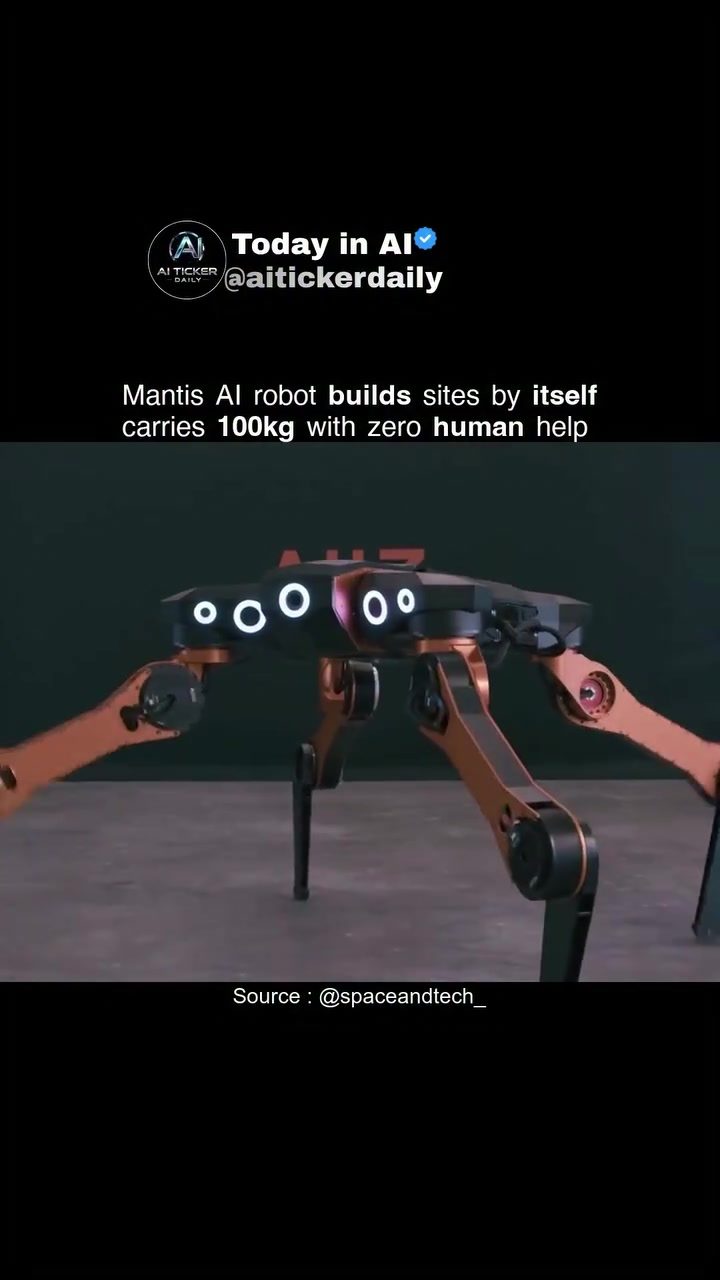
Autonomous Construction Robots: Introducing Mantis
Autonomous construction robots are revolutionizing the building industry. One standout example is Mantis, a cutting-edge robot designed for real-world construction sites. Built by the London-based construction technology company All3, Mantis is part of an end-to-end construction platform that integrates AI-driven design with robotic fabrication.
Why This Matters
The construction industry is ripe for automation. Traditional methods are often slow, labor-intensive, and prone to human error. Autonomous robots like Mantis address these issues by increasing efficiency, reducing errors, and minimizing the need for human intervention. This shift not only speeds up the construction process but also enhances safety and precision.
The Technology Behind Mantis
The All3 System
Mantis is powered by the All3 system, an innovative platform that combines AI-powered design with robotic fabrication. This integration allows Mantis to perform a variety of tasks, including part replacement, fastening, finishing, and inspection. The AI component is trained on real building data, enabling the robot to navigate complex construction sites with unmatched accuracy.
Key Capabilities
Payload and Tool Switching: One of Mantis' standout features is its ability to carry up to 100 kilograms. This significant payload capacity, coupled with the robot’s tool-switching capability, makes it highly versatile. Mantis can handle different tasks by simply switching tools, which is crucial in dynamic construction environments.
Autonomous Operation: Mantis operates independently, performing tasks such as part replacement, fastening, finishing, and inspection without human involvement. This level of autonomy reduces the need for constant supervision, allowing human workers to focus on more complex tasks.
Model-Aware Positioning: The AI is trained on real construction data, which means Mantis can move accurately through complex sites and position components with precision. This model-aware positioning is essential for maintaining the integrity and quality of the construction project.
Practical Tips for Integrating Autonomous Construction Robots
Assessment and Planning
Before integrating an autonomous robot like Mantis into a construction project, it is essential to assess the site and plan accordingly. This includes mapping out the site, identifying potential obstacles, and determining the specific tasks the robot will perform. Proper planning ensures that the robot can operate efficiently and effectively.
Training and Maintenance
While Mantis is designed to operate autonomously, ongoing training and maintenance are crucial. Regular updates to the AI system and routine maintenance of the robot’s mechanical components will ensure optimal performance. Additionally, training human personnel on how to interact with and maintain the robot is essential for a smooth integration process.
Safety Protocols
Safety is a top priority in any construction project. When using autonomous robots, it is important to establish clear safety protocols. This includes setting up safety zones, ensuring that the robot can operate without human interference, and having emergency protocols in place in case of any malfunctions.
Collaboration and Communication
While autonomous robots can perform many tasks independently, collaboration between the robot and human workers is still necessary. Clear communication channels and defined roles will ensure that the project runs smoothly. Human workers should be able to monitor the robot’s progress, intervene if necessary, and provide any required support.
Important Takeaways
Mantis represents a significant step forward in the automation of the construction industry. Its ability to carry heavy loads, switch tools, and operate autonomously makes it a valuable asset on any construction site. The All3 system, which integrates AI-powered design with robotic fabrication, ensures that Mantis can perform a wide range of tasks with precision and efficiency.
Additionally, the practicality of Mantis extends beyond its technical capabilities. Its ability to reduce the need for human intervention, enhance safety, and increase efficiency makes it a game-changer in the construction industry. Integrating such advanced technology requires careful planning, training, and safety protocols, but the benefits far outweigh the challenges.
Conclusion
Autonomous construction robots like Mantis are transforming the way we build. With its advanced AI capabilities, significant payload, and autonomous operation, Mantis exemplifies the future of construction technology. By leveraging the power of AI and robotics, the construction industry can achieve new levels of efficiency, precision, and safety. As these technologies continue to evolve, we can expect to see even more innovative solutions that further revolutionize the way we build.
Watch the Reel
Questions readers ask
What is the Mantis robot and how does it work in construction?
The Mantis robot is an autonomous construction robot developed by All3, designed to operate in real-world building sites. It combines AI-driven design with robotic fabrication to perform tasks autonomously. This integration allows Mantis to increase efficiency, reduce errors, and enhance safety on construction sites.
How does the Mantis robot enhance safety on construction sites?
The Mantis robot enhances safety by minimizing human intervention in hazardous tasks. Its autonomous capabilities reduce the risk of accidents and injuries typically associated with manual labor in the construction industry. Additionally, by increasing precision and reducing errors, it mitigates risks related to structural integrity.
What are the key benefits of using AI in construction with robots like Mantis?
Using AI in construction with robots like Mantis offers several key benefits, including increased efficiency, reduced errors, and enhanced safety. AI-driven design ensures precise and optimized construction plans, while robotic fabrication executes these plans with high accuracy. This integration speeds up the construction process, lowers costs, and improves overall quality.
Who developed the Mantis robot and where is it based?
The Mantis robot was developed by All3, a London-based construction technology company. All3 specializes in creating innovative solutions for the construction industry, with a focus on integrating cutting-edge technologies like AI and robotics to improve building processes.
What is the significance of integrating AI-driven design with robotic fabrication in the Mantis robot?
The integration of AI-driven design with robotic fabrication in the Mantis robot allows for a seamless and efficient construction process. AI-driven design ensures that the construction plans are optimized for precision and efficiency, while robotic fabrication executes these plans with high accuracy. This integration reduces the need for human intervention, minimizes errors, and enhances overall construction quality.
How does the Mantis robot reduce errors in the construction process?
The Mantis robot reduces errors by leveraging AI-driven design and robotic fabrication. The AI ensures that the construction plans are precise and optimized, while the robotic fabrication executes these plans with high accuracy. This combination minimizes human error and ensures that the construction process is consistent and reliable.
Related deep dives
Similar reads based on topic and creator.




Recent articles
Fresh deep dives from the latest Reels we unpacked.




Comments
Be the first to comment.