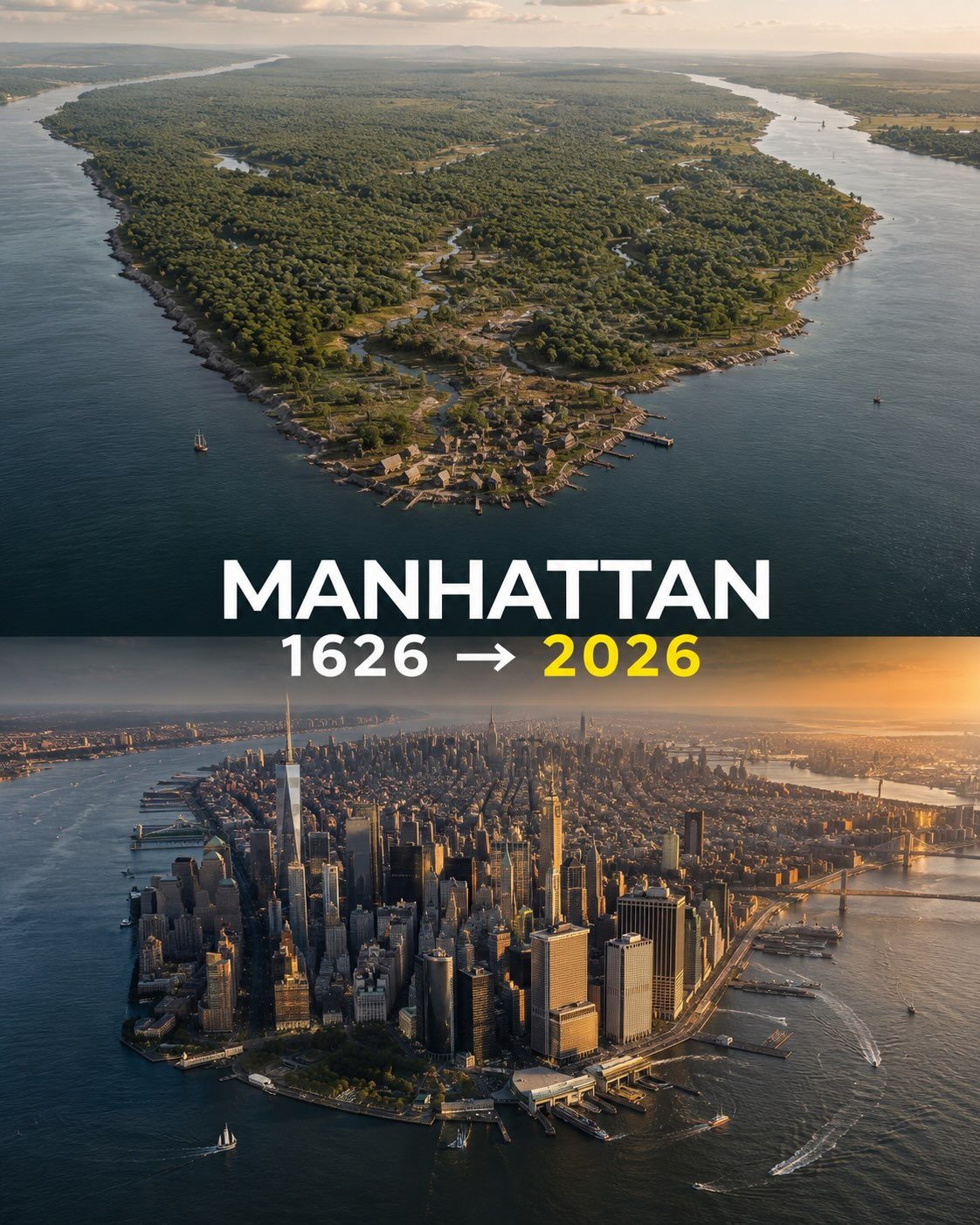
Manhattan at its Prime
Manhattan is as much a state of mind as it is a piece of land. If you want to understand the city's unique rhythm. Situated in the heart of New York, this island is a natural but dynamic environment, serving as a constant amid the ceaseless tide of societal change. The story of Manhattan is one of resilience, adaptation, and perpetual change. From 1626 through 2026, this small island has weathered countless storms. Compared to its original 1650 form, when it was a colony named Nieuw Amsterdam, the island is unrecognizable. Yet, despite the centuries of transformation, the island's geographical identity remains the same. Manhattan’s metamorphosis is a tale of consistent evolution. At times, it is hard to imagine 1850 as a quiet century, yet it was. When it received the name New York City, it was a time of growth. The transformation from Nieuw Amsterdam to New York City could not have been more dramatic. In a span of 250 years, Manhattan Island grew from a sparsely populated colony to a bustling metropolis, altering its silhouette and skyline, buildings popping up on fields and forests. Jet-setting to 2026 means peering into the future of Manhattan, assuming the island remains as it is now. Even as the city grows ever larger and more vibrant, the island itself stays the same size. This constant presence gives Manhattan its timeless allure.
Changing Face of the City
The boundless blueprints bring these architectural transitions alive. Visionaries like Peter Minuit, the merchant who purchased the island, and George Washington, the soldier who helped free it, oversaw these early changes. In 1626, Manhattan was a far cry from the urban jungle it is today, forests and streams filled the landscape. The first permanent Dutch settlers arrived in 1624, followed by the English in 1664. The island's transformation began soon after. Dutch settlers constructed the first buildings on the island. The Dutch called this massive settlement Nieuw Amsterdam. This name and title would not last for long. The year 1650 was pivotal in the island's history. Nieuw Amsterdam transitioned into a cityscape of cobbled streets and canal crisscrossings. Known for its Dutch mechanical ways, Nieuw Amsterdam was filled with lush gardens and European buildings. Nieuw Amsterdam was a sprawling metropolis of colonial heritage. But the evolution did not stop there. From here, New York City became a haste for change. By 1750, the British renamed the city New York to honor the then- Duke of York and Albany, when the Treaty of Breda transferred the colony to Britain. The year 1850 was another critical juncture. The city grew in size and diversity. From the shores of the Hudson River, large-scale immigration and industrialization reshaped the profile of New York. Thus, since colonial times, immigrant communities have continually redefined the city's character, according to the visuals on screen. The city's legacy of resilience and adaptability has sustained through centuries of conflict, crisis, and cultural flux.
Cliffhangers & Change
The fascinating timeline showcasing New York in four epochs — 1626, 1650, 1850, and 2026 — underscores the principle that change is constant. For Dutch settlers, this island was a beacon of hope. For the English who came next, this island was a prize "won" in war. While for the immigrants who came later, it became a dreamland. The change which reshaped this island can be attributed to this—the arrival of different communities. The same island has consistently borne witness to these transformations, evolving to accomodate the people. Manhattan is a metaphor for continuity in the face of change, and an enduring presence amidst constant flux. A synonym for rhythm amidst chaos. Four centuries have passed, and Manhattan remains the same island, but the city it hosts is unrecognizable. The island's endurance over a 400 year span is a testament to its resilience and adaptability. Manhattan's record of resilience and its ability to adapt to these changes is astounding. From colonial times through the Industrial Revolution and beyond, the island maintains a consistent form amidst a whirlwind of urban development.
Watch the Reel
Related deep dives
Similar reads based on topic and creator.



Recent articles
Fresh deep dives from the latest Reels we unpacked.




Comments
Be the first to comment.