Mammal Lifespans
The lifespan of mammals varies widely, from just a few years to over two centuries. Understanding these lifespans provides valuable context for conservation efforts and biological research.
Why This Matters
Knowing the average lifespans of different mammals is crucial for conservation strategies. It helps in assessing the health of populations, understanding the impacts of human activities, and planning long-term conservation plans. For example, species with longer lifespans might require more extensive protection to ensure their survival over generations. Additionally, understanding the lifespan of mammals can offer insights into their reproductive cycles, feeding habits, and social structures, which are all vital for comprehending their ecological roles.
Comparative Lifespans
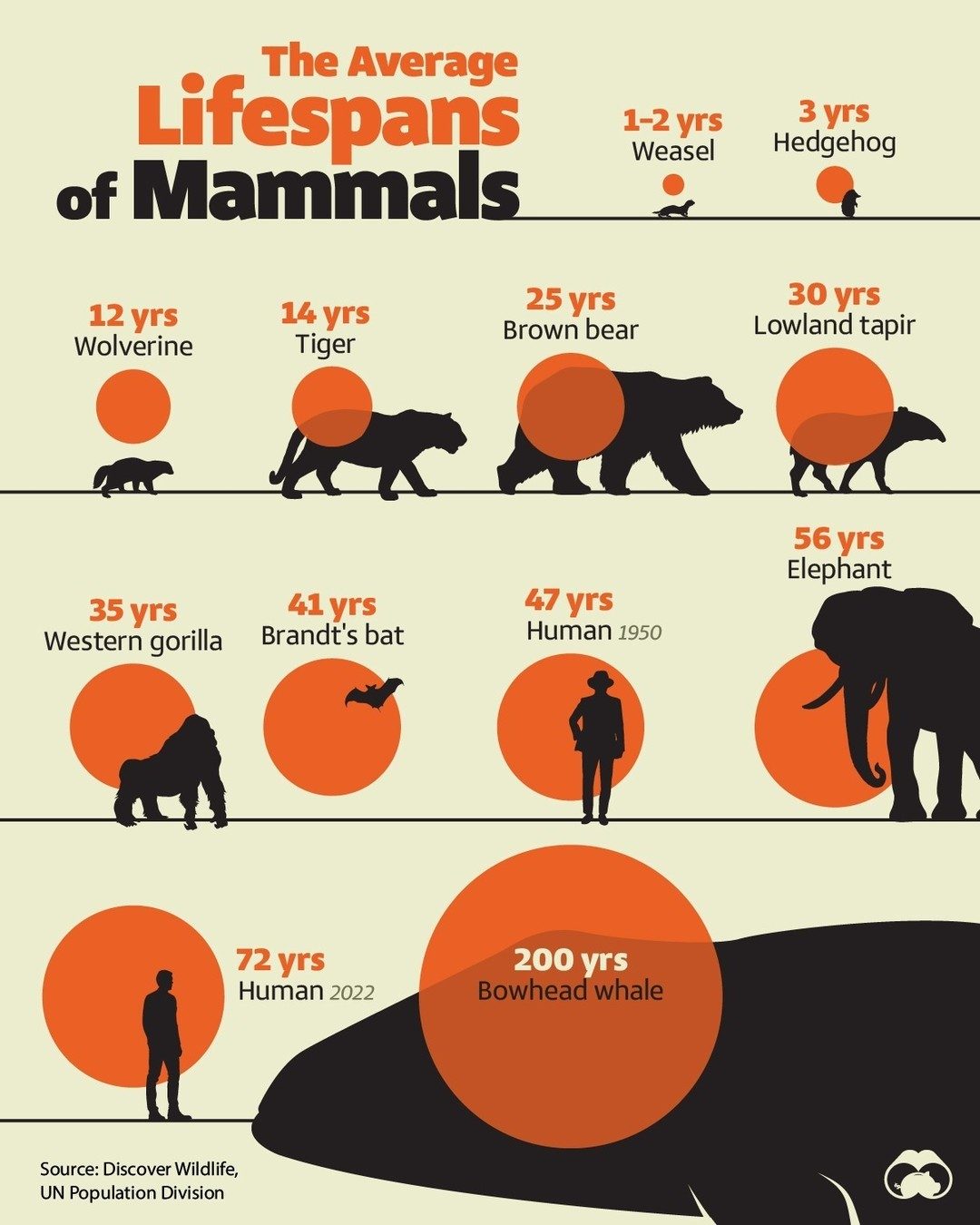
The infographic depicted in the post gives a detailed comparison of the average lifespans of various mammals. Below are some of the key points highlighted:
Small Mammals
Small mammals generally have shorter lifespans. For instance:
- Weasels have a lifespan of 1-2 years. Their short lifespans are typical of many small, predatory mammals, which often face high mortality rates due to predation and environmental factors.
- Wolverines live for approximately 12 years. These mammals are known for their robust and solitary nature, which contributes to their relatively long lifespan compared to smaller mammals.
Medium-Sized Mammals
Medium-sized mammals have a broader range of lifespans:
- Tigers have a lifespan of around 14 years. In the wild, tigers face numerous threats, including poaching, habitat loss, and conflicts with humans, which can significantly reduce their lifespan.
- Brown bears can live for 25 years. Bears are known for their adaptability and resilience, contributing to their longer lifespans in both wild and captive environments.
- Lowland tapirs, which live for about 30 years, are another example of medium-sized mammals with a relatively long lifespan. Their herbivorous diet and adaptability to various habitats play a crucial role in their longevity.
Large Mammals
Large mammals tend to have longer lifespans:
- Western gorillas live for around 35 years. Gorillas are social animals, and their social structure and strong bonds within groups are thought to contribute to their relatively long lifespans.
- Brandt's bats live for approximately 41 years. Bats are known for their longevity, with some species living much longer than other mammals of similar size.
- Elephants live for about 56 years. Elephants are among the longest-lived land mammals, known for their complex social structures and intelligence.
Humans
Human lifespans have significantly increased over the past century:
- In 1950, the average human lifespan was 47 years. This was a time of significant global health improvements, including advances in medicine and sanitation.
- By 2022, the average human lifespan had increased to 72 years. This increase is attributable to continued advancements in healthcare, improved living standards, and better nutrition.
Marine Mammals
Marine mammals, particularly the Bowhead whale, have some of the longest lifespans among all mammals:
- Bowhead whales can live for an impressive 200 years. Their longevity is a testament to their adaptability and resilience in the harsh Arctic environment.
Practical Tips for Conservation
For those interested in contributing to mammal conservation, here are some practical tips:
- Support Conservation Organizations: Organizations like the United Nations and Discover Wildlife are at the forefront of conservation efforts. Supporting their work can help protect endangered species and their habitats.
- Reduce Environmental Impact: Individual actions, such as reducing plastic use, conserving water, and minimizing carbon footprint, can have a cumulative positive impact on wildlife.
- Promote Awareness: Educating others about the importance of biodiversity and the threats facing various species can inspire collective action.
- Participate in Wildlife Research: Volunteering for wildlife research projects or contributing to citizen science initiatives can provide valuable data for conservation efforts.
Important Takeaways
Understanding the lifespans of different mammals provides critical insights into their biology, ecology, and conservation needs. Key points to remember include:
- Small mammals generally have shorter lifespans, often due to high mortality rates from predation and environmental factors.
- Medium-sized mammals exhibit a range of lifespans, influenced by factors such as diet, social structure, and habitat.
- Large mammals like elephants and bats have relatively long lifespans, which can be attributed to their adaptability and complex social structures.
- Human lifespans have significantly increased over the past century, reflecting improvements in healthcare and living standards.
- Marine mammals like the Bowhead whale have some of the longest lifespans, highlighting their resilience and adaptability.
Conclusion
The lifespans of mammals offer a fascinating glimpse into the diversity and complexity of the animal kingdom. From the short lives of weasels to the extraordinary longevity of Bowhead whales, each species tells a unique story. By understanding and appreciating these lifespans, we can better advocate for their protection and ensure that future generations continue to marvel at the wonders of the natural world.
Watch the Reel
Questions readers ask
Why do mammal lifespans vary so greatly?
Mammal lifespans vary greatly due to numerous factors such as size, metabolism, diet and environment. Smaller mammals like weasels typically have shorter lifespans due to higher metabolic rates and increased predation risks, while larger mammals like whales can live much longer.
What is the lifespan of the longest living mammal?
The bowhead whale holds the record for the longest lifespan among mammals, living over 200 years. This extraordinary longevity is due to its slow metabolism, large size, and low environmental stressors, making it a fascinating subject in ecological research.
How does understanding mammal lifespans aid in conservation efforts?
Understanding mammal lifespans helps in creating effective conservation strategies. It allows researchers to assess population health, understand the impacts of human activities, and develop long-term plans. For instance, species with longer lifespans, like elephants, need more extensive protection and time to recover from threats.
What is the average lifespan of a weasel?
Weasels have a relatively short lifespan, typically ranging from 1 to 2 years. Their brief lifespan is influenced by factors such as high metabolic rates, significant predation, and the demands of their active hunting lifestyle.
How do mammal lifespans influence their ecological roles?
Mammal lifespans significantly influence their reproductive cycles, feeding habits, and social structures. For example, shorter-lived mammals often have more frequent breeding cycles to ensure population continuity, while longer-lived species may have complex social hierarchies and slower reproduction rates.
Recent articles
Fresh deep dives from the latest Reels we unpacked.




Comments
Be the first to comment.