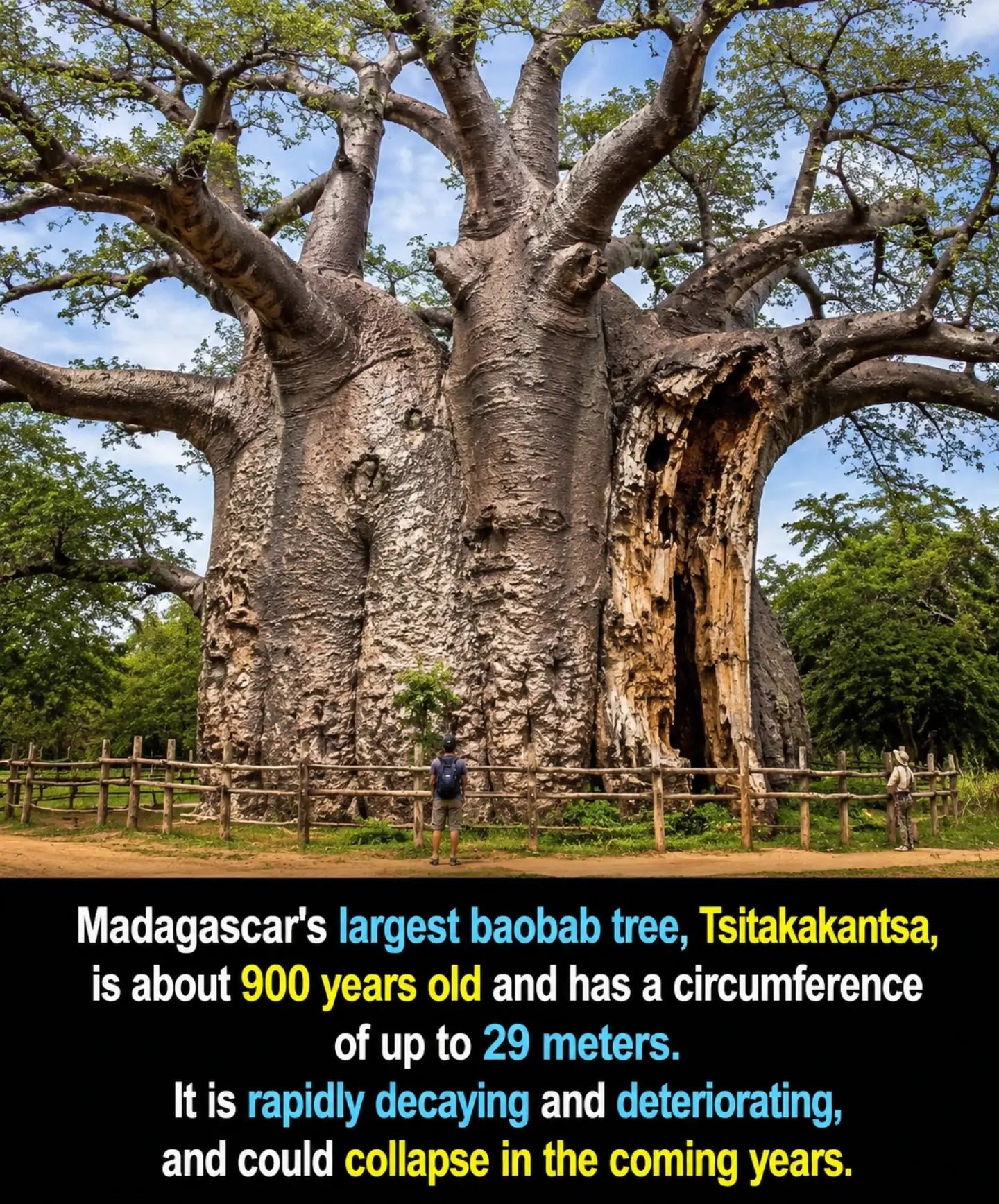
Madagascar's Baobab Tree Tsitakakantsa
The Giant Baobab Tree Tsitakakantsa is located in Madagascar. At an estimated age of 900 years, this tree is a marvel of nature. Tsitakakantsa towers over the landscape, with a circumference of up to 29 meters. It is not just its size that sets this tree apart, but also the complex relationship between its grandeur and its decay.
Why Tsitakakantsa Matters
Tsitakakantsa is significant for several reasons. It stands as a testament to the endurance and resilience of nature. The tree's vast age and size make it a crucial part of Madagascar's natural heritage, serving as a vital habitat for various wildlife species. Understanding the state of this tree provides deeper insights into the broader health of Madagascar's ecosystems, especially given that the tree is rapidly decaying and deteriorating.
The Magnificence of Baobabs
The Biology of Baobabs
Baobab trees are renowned for their distinctive shape, with thick trunks and branchless stems. These trees store water in their trunks, enabling them to survive in harsh, arid environments. Baobabs are native to the savannas and dry woodlands of Africa, where they can reach heights of up to 30 meters and live for thousands of years.
Unique Features of Tsitakakantsa
Tsitakakantsa stands out among its peers due to its immense size and age. The tree's thick, expansive trunk is a result of centuries of growth, providing shelter and sustenance to various species. Its vast circumference — up to 29 meters — is a testament to its longevity. The tree’s unique features make it a focal point for scientific research and conservation efforts.
The Current State of Tsitakakantsa
Rapid Decay and Deterioration
Tsitakakantsa is currently in a state of rapid decay. Despite its age, the tree has been deteriorating rapidly in recent years. This decay is evident in the crumbling bark and the weakening of its structure. Scientists and conservationists are studying the tree to understand the factors contributing to its decline. Environmental changes, climate shifts, and increasing human activity around the tree are potential causes.
Potential Collapse
The current state of Tsitakakantsa raises concerns about its potential collapse in the near future. The tree's decaying condition suggests that it may not be able to withstand environmental stressors for much longer. This possibility has heightened the urgency for conservation efforts to preserve the tree and the surrounding ecosystem.
Conservation Efforts and Community Involvement
Scientific Research
Scientists are conducting extensive research to understand the health of Tsitakakantsa. Their efforts include studying the tree's biology, monitoring environmental changes, and assessing the impacts of human activity. This research is crucial for developing strategies to preserve the tree and similar baobab populations.
Community Engagement
The local community plays a vital role in the conservation of Tsitakakantsa. Community members are engaged in efforts to protect the tree and its ecosystem. These efforts include awareness campaigns, sustainable practices, and regular monitoring of the tree's health. Community involvement is essential for the long-term preservation of this natural heritage.
Practical Tips for Visiting Tsitakakantsa
Planning Your Visit
If you plan to visit Tsitakakantsa, it's essential to prepare thoroughly. The tree is located in a remote area, and access can be challenging. Ensure you have a guide or a reliable map to navigate the terrain. It's also crucial to be mindful of the tree's fragile condition and avoid activities that could cause further damage.
Respect for the Environment
Respect for the environment is paramount when visiting Tsitakakantsa. Follow the guidelines set by local authorities and conservationists. Avoid littering, damaging the tree or its surroundings, and adhere to any restrictions in place. Your actions can significantly contribute to the preservation of this natural wonder.
Important Takeaways
Tsitakakantsa is a symbol of both the grandeur and fragility of nature. Its rapid decay serves as a reminder of the urgent need for conservation efforts. By understanding the tree's biology, monitoring its health, and engaging the community in conservation efforts, we can work towards preserving this natural heritage.
Conclusion
Tsitakakantsa's vast age and size make it a remarkable natural wonder. However, its rapid decay highlights the need for immediate and sustained conservation efforts. By adopting a holistic approach that includes scientific research, community involvement, and responsible tourism, we can ensure that Tsitakakantsa stands as a testament to nature's resilience for generations to come.
Watch the Reel
Questions readers ask
Why is the Tsitakakantsa baobab tree significant to Madagascar's natural heritage?
The Tsitakakantsa baobab tree is significant due to its vast age and size, making it a crucial part of Madagascar's natural landscape. Its existence highlights the island's unique biodiversity and serves as a vital habitat for various wildlife species, contributing to the overall health of local ecosystems.
What are the signs of decay in the Tsitakakantsa baobab tree?
While the article mentions that Tsitakakantsa is facing rapid decay, specific signs are not detailed. However, common indicators of decay in ancient trees like Tsitakakantsa include hollowed-out trunks, cracking bark, and the presence of fungi or insects, which can compromise the tree's structural integrity.
What measures are being taken to prevent Tsitakakantsa from collapsing?
The article does not specify conservation efforts for Tsitakakantsa, but typical measures might include monitoring the tree's health, preventing human interference, and addressing environmental stressors. Local authorities or conservation groups may also be involved in efforts to preserve this natural wonder.
How does the health of Tsitakakantsa relate to the broader ecosystem of Madagascar?
The health of Tsitakakantsa serves as an important indicator of the overall ecosystem health in Madagascar. Given its age and size, the tree supports a diverse range of wildlife and its condition can reflect the environmental impact on the surrounding area, including factors like deforestation and climate change.
What role does Tsitakakantsa play in local culture and traditions?
Tsitakakantsa stands as a symbol of the endurance and resilience of nature. As a 900-year-old tree, it is deeply rooted in the local culture and traditions. It is often seen as a sacred site, reflecting the cultural heritage and connection to the natural world of the island's inhabitants.
How can the public support the preservation of Tsitakakantsa?
The public can support the preservation of Tsitakakantsa by raising awareness about the tree's significance and the threats it faces. Additionally, visitors can support local conservation initiatives and follow guidelines for responsible tourism when visiting the site to minimize any negative impact on the tree and its habitat.
What are the potential impacts if Tsitakakantsa collapses?
If Tsitakakantsa collapses, it would be a significant loss for Madagascar's natural heritage. The collapse would not only result in the loss of a 900-year-old tree but also disrupt the habitat of various wildlife species that depend on it, potentially affecting the broader ecosystem and the cultural significance associated with the tree.
Related deep dives
Similar reads based on topic and creator.




Recent articles
Fresh deep dives from the latest Reels we unpacked.




Comments
Be the first to comment.