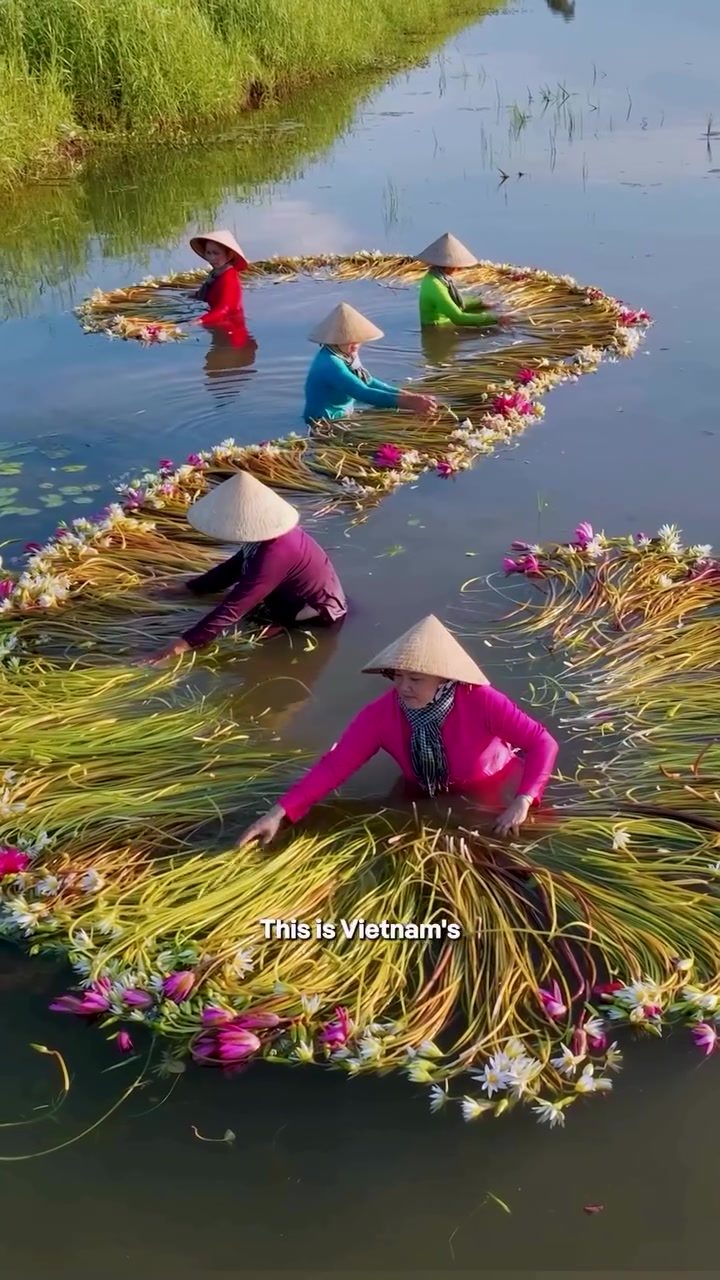
Lotus Flower Art in Vietnam
The lotus flower, a symbol of purity and enlightenment in many cultures, is not just a beautiful sight in Vietnam, but an integral part of the country's cultural heritage, especially in the Mekong River Delta. This region, with its lush landscapes and vibrant waterways, is home to a unique and captivating art form: the creation of intricate designs on the water's surface using lotus flowers and other aquatic plants.
Why This Matters
Vietnam's Mekong River Delta is a place of immense natural beauty, and the lotus flower is a central part of this landscape. The art of arranging lotus flowers in the water is deeply rooted in the local culture. By exploring this practice, we can gain a deeper appreciation for the region's natural beauty and cultural traditions.
The Art of Lotus Flower Designs
The Season of Blooming
From September to mid-November, the Mekong River Delta transforms into a vibrant tapestry of colors as lotus flowers bloom in shades of purple, red, white, and pink. This high water season is the perfect time for local women to gather these blossoms, which are not only beautiful but also hold significant cultural and practical value.
The Gathering Process
Local women, often seen wearing traditional conical hats, gather the lotus flowers with a gentle splash, collecting the blossoms that float on the water's surface. This process is not just about harvesting the flowers; it's about imbuing the act with a sense of grace and tradition. The women meticulously cleanse the flowers and then assemble them into neat bundles, which are carefully laid on small wooden boats. These boats, a common sight in the delta, transport the lotus flowers to nearby markets where they are sold for various purposes, including food, traditional medicine, and craft-making.
The Cultural Significance
The lotus flowers are not just valued for their aesthetic appeal. They are also used in traditional medicine, crafts, and as offerings in ceremonies. The Dong Tak Mui region and other provinces in the Mekong Delta are known for their bustling markets where these flowers are traded, showcasing the rich cultural tapestry of the region.
The Artistry
Creating Designs on Water
One of the most captivating aspects of this tradition is the creation of large circular and letter-shaped designs on the water's surface using the lotus flowers and other plants. This art form, unique to the Mekong Delta, is a testament to the creativity and skill of the local people. The designs are meticulously crafted, often involving intricate patterns and shapes that float gracefully on the water.
The Role of Conical Hats
The traditional conical hats worn by the workers are not just practical items to shield from the sun but also a cultural emblem. These hats are an iconic part of the Mekong Delta landscape, adding to the visual charm of the scene.
The Beauty of the Mekong Delta
The Mekong River Delta, with its sprawling waterways and lush landscapes, provides the perfect backdrop for this art form. The blooming lotus flowers, the gentle sway of the wooden boats, and the graceful movements of the women working on the water create a mesmerizing visual spectacle. This harmony between nature and human effort is a key aspect of the Mekong Delta's allure.
Practical Tips for Experiencing Lotus Flower Art
Best Time to Visit
For those interested in experiencing this unique and beautiful tradition, the best time to visit is from September to mid-November. This is when the lotus flowers are in full bloom, and the local markets and waterways come alive with the vibrant colors and scents of the blossoms.
What to Look For
When visiting the Mekong Delta, keep an eye out for the intricate designs made from lotus flowers and other plants. These designs are often found in the waterways and are a stunning example of the region's artistic and cultural heritage. The local markets are also a great place to see the lotus flowers in action, as they are sold and used in various ways.
Engaging with the Locals
Interacting with the local women who gather and arrange the lotus flowers can provide a deeper understanding of the tradition. Many are happy to share their knowledge and demonstrate their techniques, making for a memorable and educational experience.
Important Takeaways
The Mekong River Delta's lotus flower art is more than just a beautiful sight; it is a deeply rooted cultural tradition that reflects the region's natural beauty and the skill and creativity of its people. The art of arranging lotus flowers on the water's surface, the gathering process, and the cultural significance of the flowers all contribute to a unique and captivating experience.
This art form is a testament to the harmonious relationship between the Mekong Delta's people and their environment. It showcases how nature and human effort can come together to create something truly beautiful and meaningful.
Conclusion
The Mekong River Delta's lotus flower art is a treasure of Vietnam, offering a window into the region's rich cultural heritage. By experiencing this tradition, visitors can gain a deeper appreciation for the natural beauty and cultural significance of the Mekong Delta. Whether you're admiring the intricate designs on the water or interacting with the local people, the experience is sure to be one of awe and inspiration.
Watch the Reel
Questions readers ask
What is the significance of lotus flowers in Vietnamese culture, particularly in the Mekong River Delta?
Lotus flowers hold deep cultural significance in Vietnam, symbolizing purity and enlightenment. In the Mekong River Delta, they are a central part of the landscape and a key element in the region's artistic traditions. The intricate designs created on the water's surface using these flowers are a unique expression of the local culture and natural beauty.
Who are the primary practitioners of lotus flower art in the Mekong River Delta?
The art of lotus flower arrangements on water is predominantly practiced by the women of the Mekong River Delta. These women are skilled in harvesting the flowers and arranging them into beautiful, intricate designs.
When is the best time to see lotus flowers in the Mekong River Delta?
The best time to witness the splendor of lotus flowers in the Mekong River Delta is during the blooming season, which typically occurs from June to August. However, the exact timing can vary slightly each year and depends on the weather conditions.
What kinds of vessels are used for lotus harvesting and arranging in the Mekong Delta?
Traditional wooden boats are commonly used for lotus harvesting and arranging in the Mekong Delta. These boats provide a stable platform for the women to work on the water, allowing them to create their intricate designs with ease and grace.
Are there specific techniques used in creating lotus flower designs on water?
Creating lotus flower designs on water involves a combination of artistic skill and knowledge of the materials. The women have developed techniques for selecting the right flowers and aquatic plants, and arranging them in ways that create visually stunning patterns while considering the natural movement of the water.
Is there a notable figure who has contributed to the promotion of Mekong Delta's lotus art?
Daniel Kordan is a photographer who has significantly contributed to the promotion of Mekong Delta's lotus art. Through his stunning visual documentation, he has brought global attention to the beauty and cultural importance of this unique art form, encouraging others to appreciate and preserve it.
How has the art of lotus flower arrangement on water in the Mekong Delta evolved over time?
The art of lotus flower arrangement on water in the Mekong Delta has evolved through generations, with techniques and designs being passed down from mother to daughter. While the core practices remain rooted in tradition, contemporary influences and the need for preservation have also shaped the way this art is practiced and perceived today.
Related deep dives
Similar reads based on topic and creator.




Recent articles
Fresh deep dives from the latest Reels we unpacked.




Comments
Be the first to comment.