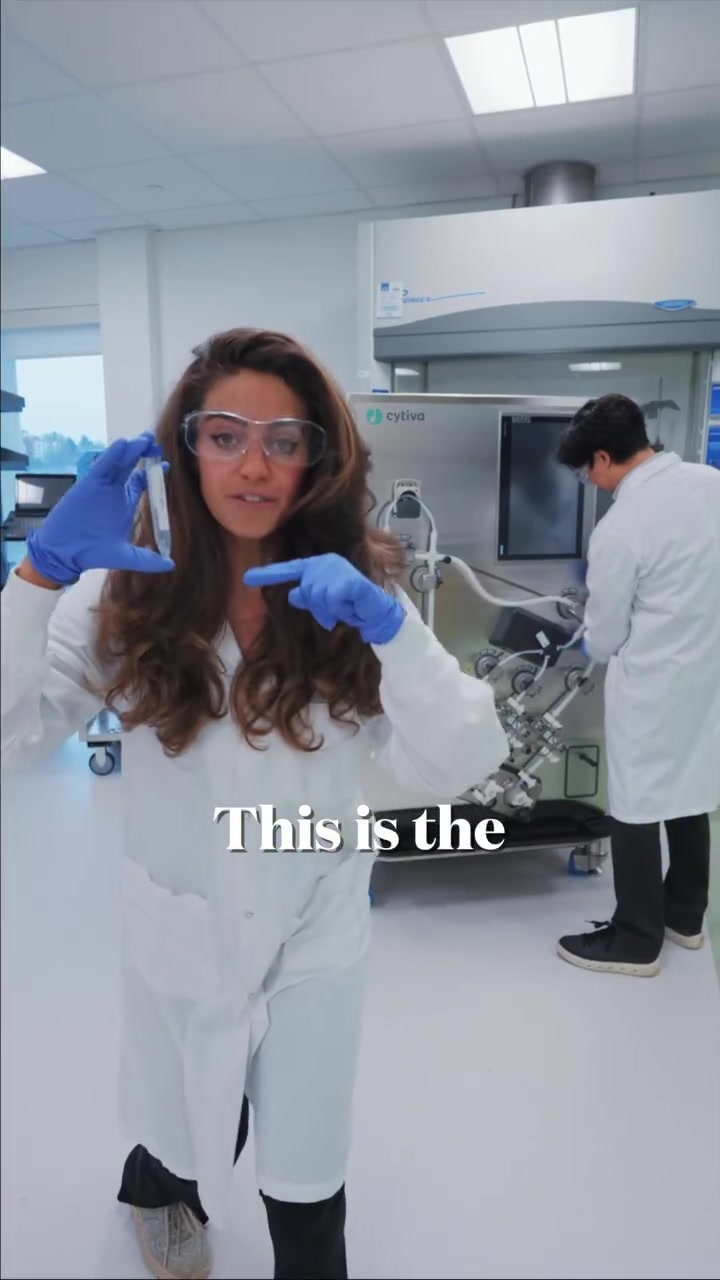
Targeted Medicine: The Promise of Lipid Nanoparticles (LNPs)
In a lab in Vancouver, Canada, a vial holds more than a mere liquid. It contains a revolutionary approach to cancer treatment: lipid nanoparticles, or LNPs, which can navigate and target cancer cells. Unlike conventional treatments, the technology does not harm healthy cells alongside cancerous ones, which can have severe side effects. This precision medicine offers a future where cancer treatments may be profoundly more effective and less brutal on the body. Cytiva, a leading biotech company, has assembled top scientists and engineers around the world to develop this cutting-edge technology.
The Future of Precision Medicine
With the future of medicine relying on targeted therapies, LNPs are at the vanguard of this trend. Treating cancer without harming healthy cells and making treatments more effective than what has been around. However, LNP technology had its start decades ago. Its use is not limited to cancer treatment. It's also used in messenger RNA (mRNA) vaccines. Chemotherapy, for example, can destroy healthy cells in its sweep, but LNPs are designed to zero in on cancer cells, with fuller-body chemotherapies often completely ineffective. LNPs are essentially protective fat bubbles that deliver molecules directly to the cells. They could revolutionize the way cancer is treated. Such targeted therapies may reduce side effects that hurt healthy cells in the body. The technology and its uses are revolutionary. This technology represents one of the most advanced methods to deliver medicine to the cell, and could reduce the impact of chemotherapy on healthy cells.
The Case of the Protective Bubble
The Engine Behind the Medicine
Lipid nanoparticles (LNPs) offer a way to deliver genes or RNA to cells with precision, holding the molecules just as a protective capsule. Lipid nanoparticles transport the molecules to the cell. LNPs are really just protective fat bubbles. In essence, lipid nanoparticles form when lipids are dissolved in ethanol. When mixed, the lipids spontaneously create particles. These particles can transport molecules directly to targeted cells. Cyciva has gathered the world's most passionate scientists and engineers to figure out the technology for the treatment of many diseases. This process has not been one of gradual development, scientists are racing to find such a solution.
Fixing the Body’s Software
LNPs have been used to deliver mRNA vaccines. What makes targeted therapy stand out is its precision. When a specific code in the body has a bug, the targeted medicine can go directly into the source to fix the issue. When the targeted medicine reaches the issue, it delivers instructions that prompt the body to make the proteins. This process corrects the issue at the source. The precision of targeted treatments makes them more effective than chemotherapies.
The Vancouver Experiment
Cooking Up Targeted Solutions
In Vancouver, Canada, a recent experiment showcased the speed and simplicity of creating lipid nanoparticles. In under a minute, lipids dissolved in ethanol spontaneously formed LNPs. This process highlights the efficiency and potential of LNPs in delivering targeted medicine. Lipid nanoparticles have been around since the 1970s. The potential of targeted medicine is vast. It is revealing the huge medical possibilities of these tiny molecules. It is the most advanced effective way to deliver medicine to the cell. This is being built right now. These molecules have been especially important in the delivery of mRNA vaccines.
Getting Personal with Your Medical Care
Creating a Precision Medicine Strategy
Patients should consider the following to achieve a treatment strategy:
- Consult Specialists: Engage with doctors who specialize in targeted therapies, especially those involved in LNP research and clinical trials. Employing these specialists can offer insights into cutting-edge treatments unavailable in conventional clinical settings.
- Explore Clinical Trials: Enroll in clinical trials for targeted therapies. These trials assess experimental treatments and offer access to potentially groundbreaking solutions.
- Ask about compatibility: Due to the nature of LNP treatments, they can be used in conjunction with other treatments. Discuss with specialists which treatments are best suited for your specific cancer and if they can pair these treatments with your lifestyle. Patients should consult with a health care provider to get the best and most effective care. They can make the process less scary, and less detrimental to your body. Cybervita has gathered scientists and engineers to come up with the best treatments for many diseases. They employ scientists and engineers to perform ongoing research to figure out how to maximize LNP treatments.
Watch the Reel
Questions readers ask
What exactly are lipid nanoparticles (LNPs) and how do they work in cancer treatment?
Lipid nanoparticles, or LNPs, are essentially tiny fat bubbles designed to carry and deliver molecules, such as RNA or genes, directly to specific cells. In the context of cancer treatment, LNPs are engineered to target only cancer cells, leaving healthy cells unharmed. This is achieved by encapsulating the therapeutic molecules within the lipid particles, which then navigate to and fuse with the targeted cancer cells, delivering the payload precisely where it's needed.
Can LNPs be used for anything other than cancer treatment?
Yes, LNPs have already been used in mRNA vaccines, which gained widespread attention during the COVID-19 pandemic. Their ability to deliver genetic material with precision makes them a versatile tool for various medical applications, including treating genetic disorders and other diseases besides cancer.
How do LNPs compare to traditional chemotherapy?
Unlike chemotherapy, which can indiscriminately harm both cancerous and healthy cells, LNPs are designed to target only cancer cells. This targeted approach not only increases the effectiveness of the treatment but also significantly reduces the side effects that patients typically experience with traditional chemotherapy.
Are LNPs a new technology, or have they been around for a while?
The concept of LNPs has been around for decades, but their application in cancer treatment is relatively new. They've already been successfully used in mRNA vaccines, and now researchers are exploring their potential in precision medicine for cancer and other diseases. The technology's versatility and effectiveness are driving its rapid development and implementation in various medical fields.
What makes LNPs so effective in targeted therapies?
The effectiveness of LNPs in targeted therapies lies in their ability to deliver genetic material directly to the cells. They act as protective capsules, ensuring that the therapeutic molecules reach their intended target without being degraded. This precision allows for more effective treatments with fewer side effects, as only the affected cells are targeted.
Recent articles
Fresh deep dives from the latest Reels we unpacked.




Comments
Be the first to comment.