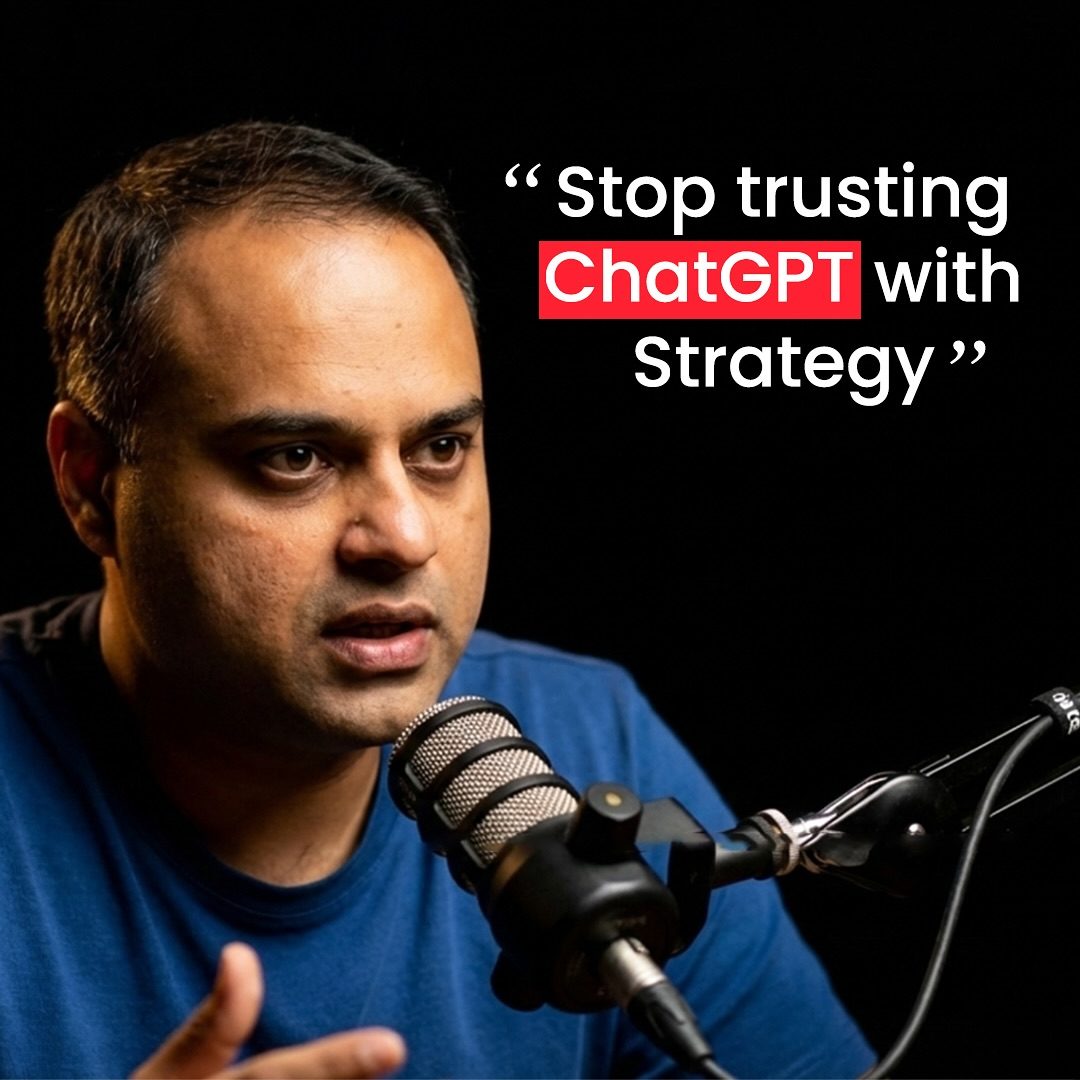
Leverage AI for Effective Research and Strategy
Artificial Intelligence (AI) offers immense potential for enhancing research and strategy. However, to make the most of AI tools, it's essential to use them correctly. Many professionals rely heavily on general AI tools like ChatGPT for their strategies, but this approach has its pitfalls.
Why This Matters
AI can process vast amounts of data quickly, offering insights that would be impossible for humans to achieve alone. However, the raw outputs from AI are often generic and need refinement. Relying solely on generic AI results can hinder the depth and specificity needed for successful strategies. To truly leverage AI, it's crucial to understand how to integrate it into a bespoke research and strategy engine that fits your unique needs.
Navigating AI in Research and Strategy
The Limitations of Generic AI Tools
Generic AI tools, while powerful, have their limitations. They provide broad, general information that might not be tailored to your specific needs. For instance, ChatGPT can generate a wide range of responses, but it may lack the nuanced understanding required for in-depth research. The outputs can be generic, leading to strategies that are not unique or actionable.
To illustrate, consider a marketing campaign. ChatGPT might suggest a generic social media strategy that works for a broad audience. However, to excel, you need a strategy that accounts for your specific audience, market trends, and competitor analysis. This is where refining AI outputs becomes crucial.
The Depth vs. Shortcut Dilemma
Many marketers use AI as a shortcut, relying on it to generate quick solutions. While this can save time, it often compromises on the quality and effectiveness of the strategy. Depth in research and strategy comes from a thorough understanding of the data and the ability to tailor it to specific needs. By incorporating AI into a custom research and strategy engine, you can achieve both efficiency and effectiveness.
Building a Custom Research and Strategy Engine
One of the most effective ways to leverage AI is by building a custom research and strategy engine. This engine can be tailored to your specific needs, ensuring that the AI-generated insights are relevant and actionable. A well-built engine can process data, identify patterns, and provide insights that are uniquely suited to your goals.
There are several key steps to building this engine:
-
Define Your Objectives: Clearly outline what you want to achieve with your research and strategy. This could be market penetration, brand awareness, or customer engagement.
-
Gather Data: Collect data from various sources, including social media, customer feedback, market trends, and competitor analysis. Ensure that the data is comprehensive and relevant to your objectives.
-
Integrate AI Tools: Use AI tools to analyze the data. This could involve natural language processing (NLP) for text analysis, machine learning for pattern recognition, or predictive analytics for forecasting.
-
Refine the Outputs: The raw data from AI tools might be generic. Refine it by adding context, industry-specific knowledge, and tailored insights. This step is crucial to ensure that the outputs are actionable.
-
Automate and Scale: Once your engine is built, automate the process to ensure continuous improvement and scalability. This will help you stay ahead of the curve and adapt to changing market dynamics.
Practical Tips
Choose the Right Tools
There are various AI tools available, each with its strengths and weaknesses. Choose tools that align with your objectives and data needs. For instance, if you need text analysis, tools like NLP might be more suitable. If you need image recognition, consider tools like computer vision.
Learn to Refine AI Outputs
AI-generated outputs are often raw and need refinement. Learn to interpret the data and add context to make it more actionable. This could involve industry-specific knowledge, customer insights, or competitor analysis. The more you refine, the more valuable the insights will be.
Continuously Update Your Engine
AI and research methodologies evolve rapidly. Ensure that your research and strategy engine is continuously updated to incorporate the latest tools, techniques, and data sources. This will help you stay ahead of the curve and adapt to changing market dynamics.
Engage with AI Communities
Participating in AI forums and communities can provide valuable insights and keep you updated on the latest trends and tools. Engaging with experts can also help you refine your strategies and stay competitive.
Important Takeaways
Personalize Your Strategy
Relying solely on generic AI tools can limit the effectiveness of your strategies. Personalize your approach by building a custom research and strategy engine that aligns with your unique needs and objectives.
Prioritize Depth
Depth in research and strategy comes from a thorough understanding of the data. Use AI to gather and analyze data, but ensure that the insights are tailored and actionable.
Stay Adaptable
The landscape of AI and research is constantly evolving. Stay adaptable by continuously updating your tools, techniques, and data sources. Engage with communities to stay informed and refine your strategies.
Conclusion
AI offers tremendous potential for enhancing research and strategy. However, to truly leverage its benefits, it's essential to move beyond generic tools and build a custom research and strategy engine. By defining your objectives, integrating the right tools, and refining the outputs, you can achieve depth and effectiveness in your strategies. Embrace the power of AI, but remember that the key to success lies in personalization and adaptation.
Watch the Reel
Questions readers ask
What are the common mistakes when using AI for strategy development?
One of the most common mistakes is relying too heavily on generic AI tools like ChatGPT, which often provide broad, non-specific insights. Another mistake is failing to integrate AI into a custom strategy engine tailored to specific needs, leading to a lack of depth and specificity in strategies. Additionally, not refining the raw outputs from AI can hinder the development of effective strategies.
How can I maximize the potential of AI in my research and strategy?
To maximize AI's potential, start by understanding your unique needs and integrating AI thoughtfully into a custom strategy engine. This involves refining the raw outputs from AI to gain specific insights and using AI to process vast amounts of data quickly, which can then be analyzed to inform your strategies.
What is a custom AI strategy engine and how do I build one?
A custom AI strategy engine is a tailored system that integrates AI tools to fit your specific research and strategy needs. To build one, start by identifying your unique requirements and then select and configure AI tools that align with these needs. This may involve using multiple AI tools in conjunction and creating a workflow that refines and analyzes AI outputs to generate actionable insights.
How can AI help in processing large datasets for strategy building?
AI can process vast amounts of data swiftly, which is beneficial for strategy building. AI can identify patterns, correlations, and trends in large datasets that might be impossible for humans to detect alone. However, it's crucial to refine these outputs to ensure they are specific and relevant to your unique strategy needs.
What are the key steps to integrate AI into my existing strategy framework?
To integrate AI into your existing strategy framework, first identify where AI can add the most value. Then, select appropriate AI tools and configure them to fit your specific needs. Create a workflow that combines AI insights with human analysis to refine and validate the outputs, ensuring they are actionable and relevant to your strategy.
Can AI be used effectively for event strategy planning?
Yes, AI can be a powerful tool for event strategy planning. By processing data from past events, AI can help identify trends, predict attendee behavior, and optimize logistics. To use AI effectively, integrate it into a custom strategy engine that refines these insights to provide specific recommendations tailored to your event.
Related deep dives
Similar reads based on topic and creator.




Recent articles
Fresh deep dives from the latest Reels we unpacked.




Comments
Be the first to comment.