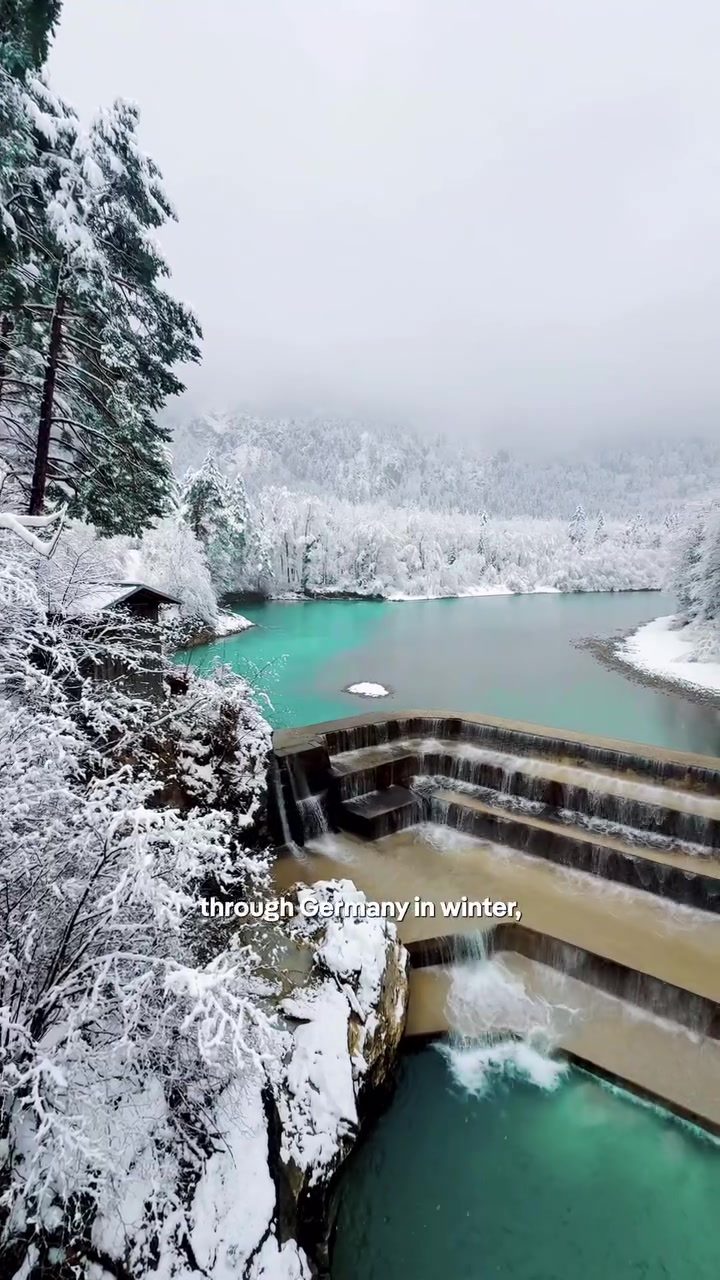
Lech Falls is a breathtaking winter destination nestled near Füssen, Germany, close to the Austrian border. The falls are a natural marvel sculpted by the Lech River over thousands of years. The landscape transforms into a winter wonderland, offering a unique opportunity to witness the striking contrast between flowing water and ice.
Context / Why this matters
Lech Falls is more than just a picturesque spot; it is a significant historical and geographical landmark. The falls were enhanced with five stone steps in 1787 to harness the river's power for mills, and by the 20th century, it was a source of hydroelectric energy. The Lech River's dramatic drop over an artificial step creates a spectacle that is even more enchanting in winter. This natural wonder is part of the broader Bavarian Alps region, known for its stunning landscapes and recreational activities.
Location and Accessibility
Located just a short walk from Füssen's city center, Lech Falls is easy to access. For those planning a road trip, it is also a quick drive from Neuschenstein Castle, making it a convenient stop on any itinerary. The fall’s proximity to the city center and major landmarks makes it an ideal destination for both locals and tourists.
Unique Winter Experience
The contrast between the vibrant turquoise water and the snowy landscape creates a visually stunning scene. The falls partially freeze in winter, adding an ethereal quality to the surroundings. The reduced crowd during this season allows for a more serene and intimate experience, perfect for a peaceful walk along the Lechfall Circular Trail. The trail is approximately 3 kilometers long, taking around an hour to complete, and is relatively easy, making it accessible for most visitors.
Main discussion
Geological and Historical Background
The Lech River, which runs through Lech Falls, has been shaping the landscape for millennia. The addition of stone steps in 1787 not only enhanced the falls' beauty but also transformed it into a practical resource. By the 20th century, the falls were harnessed for hydroelectric power, demonstrating the resourcefulness of the region’s inhabitants. The historical significance of Lech Falls adds depth to the experience, making it a destination rich in both natural beauty and cultural heritage.
The Lechfall Circular Trail (3km, easy, ~1 hour)
The Lechfall Circular Trail is a must for anyone visiting during winter. The trail offers a comprehensive view of the falls, allowing visitors to appreciate the unique contrast between the icy cascades and the flowing water. The trail is well-marked and easy to navigate, making it suitable for all levels of hikers. The serene atmosphere and stunning views make it a perfect spot for photography enthusiasts. The trail’s accessibility ensures that visitors can enjoy the beauty of Lech Falls without the hassle of navigating challenging terrain.
Best Views
For the best view of Lech Falls, head to Maxsteg Bridge. This prime photography spot offers an unobstructed view of the falls, making it ideal for capturing the magic of the natural landscape. The bridge is easily accessible from the Lechfall Circular Trail, providing a convenient location for both photography and sightseeing.
Practical Tips
Planning a trip to Lech Falls, especially in winter, requires careful preparation. Here are some tips to make the most of your visit:
What to Wear
Winter in the Bavarian Alps can be quite chilly, so dressing in layers is essential. Opt for thermal wear, insulated jackets, and waterproof boots to stay warm and dry. Gloves and a hat are also recommended to protect against the cold.
Best Time to Visit
While Lech Falls is enchanting all year round, winter offers a unique experience. The falls partially freeze, creating a breathtaking contrast between ice and flowing water. The reduced crowds during this season make it an ideal time for a peaceful visit.
Photography Tips
Lech Falls is a paradise for photographers. The vibrant turquoise water against the white snow provides stunning visual contrast. For the best photos, choose a sunny day with clear skies. The Maxsteg Bridge offers a prime vantage point for capturing the falls in all their glory.
Nearby Attractions
Lech Falls is part of a larger region filled with natural wonders. For those visiting the area, consider exploring nearby attractions such as Neuschenstein Castle and the Bavarian Alps. These sites add depth to your trip, offering a diverse range of experiences.
Important Takeaways
Visiting Lech Falls in winter is an unforgettable experience. The unique landscape, where ice and flowing water coexist, and the serene atmosphere make it a perfect destination for nature lovers and photographers. The historical significance of the falls and their role in the region's hydroelectric power add a layer of depth to the visit.
Conclusion
Lech Falls stands as a testament to the natural beauty and historical richness of the Bavarian Alps. Its stunning winter landscape, accessibility, and cultural significance make it a must-visit destination. Whether you are a nature enthusiast, a history buff, or a photography enthusiast, Lech Falls offers a unique and awe-inspiring experience that will leave you with lasting memories.
Watch the Reel
Questions readers ask
Is Lech Falls accessible during winter?
Lech Falls is indeed accessible during winter. It is located near Füssen, and its proximity to the city center makes it an ideal destination for a serene winter walk. The falls are easily reachable by foot, offering a picturesque landscape even in the colder months.
What makes Lech Falls unique in winter?
In winter, Lech Falls offers a unique contrast between flowing water and ice, creating a mesmerizing sight. The snow-covered surroundings transform the area into a winter wonderland, providing visitors with a distinct winter landscape to explore and enjoy.
What is the historical significance of Lech Falls?
Lech Falls holds historical importance as it was enhanced with five stone steps in 1787 to utilize the river's power for mills. By the 20th century, it became a source of hydroelectric energy. The falls have been part of the broader Bavarian landscape, attracting visitors for centuries.
How does the Lech River contribute to the falls?
The Lech River is the driving force behind Lech Falls. Over thousands of years, the river has sculpted the falls, and its dramatic drop over an artificial step creates a breathtaking spectacle. The combination of the river and the artificial step enhances the overall beauty and majesty of the falls.
What are the best times to visit Lech Falls?
Lech Falls is enchanting year-round, but winter offers a special charm with its snowy landscapes and the contrast of ice and flowing water. Visitors often find the fall and winter months to be the most captivating due to the striking visuals and the refreshing crisp air.
Are there other attractions near Lech Falls?
Yes, Lech Falls is surrounded by other notable attractions. Nearby Füssen, Germany, offers a charming medieval town with historic sites, museums, and local cuisine. The Bavarian Alps provide ample opportunities for winter sports and scenic hikes, adding to the overall experience.
What kind of winter activities can be enjoyed near Lech Falls?
While the main attraction is the falls, the surrounding Bavarian Alps area offers a variety of winter activities. These include snowshoeing, cross-country skiing, and winter hiking. Visitors can also enjoy cozy cafes and local German cuisine in the nearby town of Füssen.
Related deep dives
Similar reads based on topic and creator.




Recent articles
Fresh deep dives from the latest Reels we unpacked.




Comments
Be the first to comment.